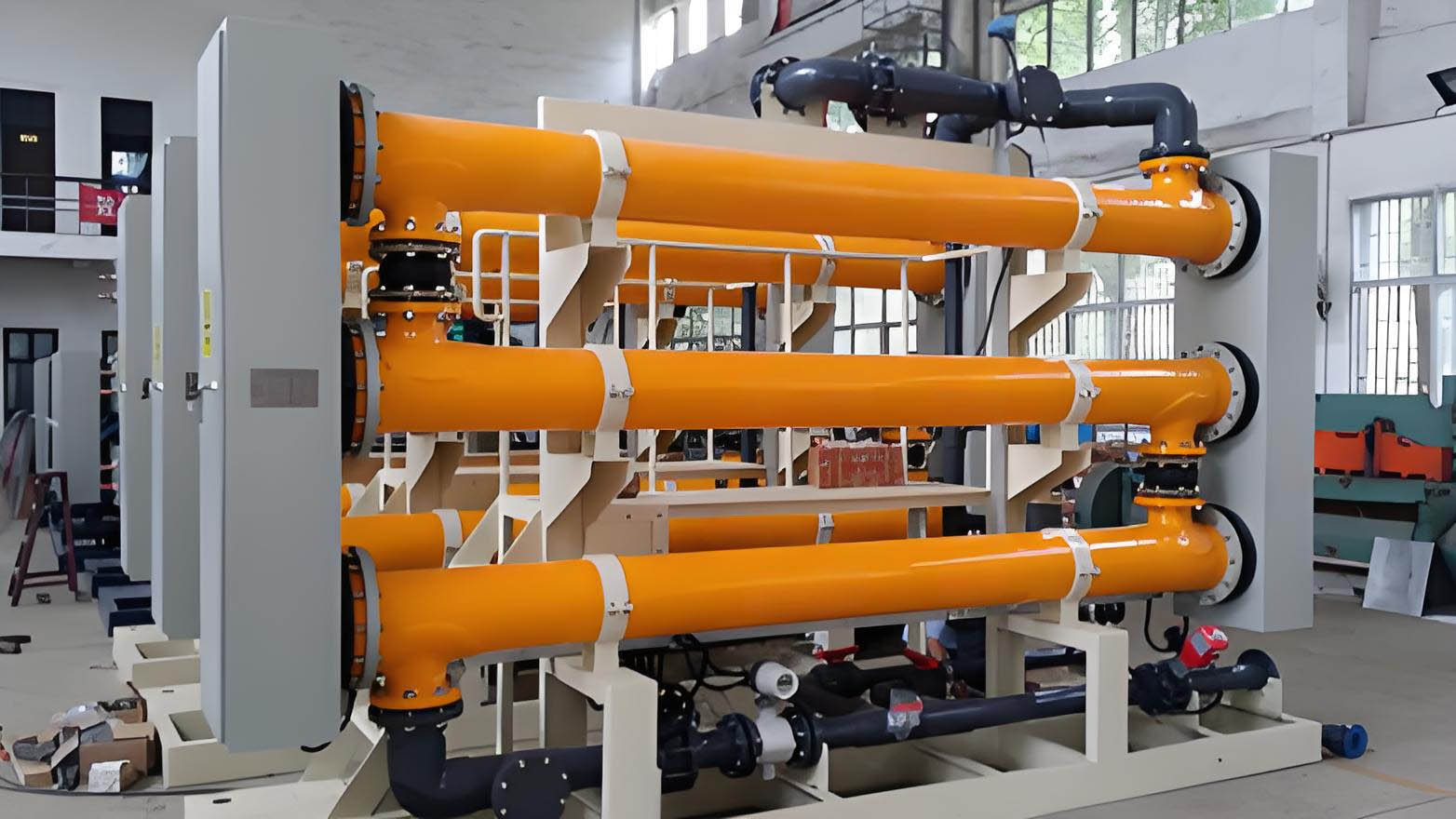
Coastal gas-fired power plants rely heavily on seawater circulating cooling systems to dissipate waste heat and sustain stable unit operation. As a core heat-exchange component, the condenser’s heat-transfer efficiency directly determines the power generation efficiency, energy consumption level, and operational stability of the entire power plant. However, raw seawater contains abundant chloride ions, marine microorganisms, algae spores, and suspended sediments, which easily cause biofouling, scaling, and microbial corrosion on condenser tube walls during long-term operation. These problems severely block heat exchange channels, reduce heat-transfer efficiency, increase condenser backpressure, and even lead to unit load reduction and unplanned downtime. To solve these industry pain points, professional seawater electrolysis water treatment solutions have become a reliable, efficient, and eco-friendly technical choice for coastal gas-fired power plants to stabilize condenser performance.
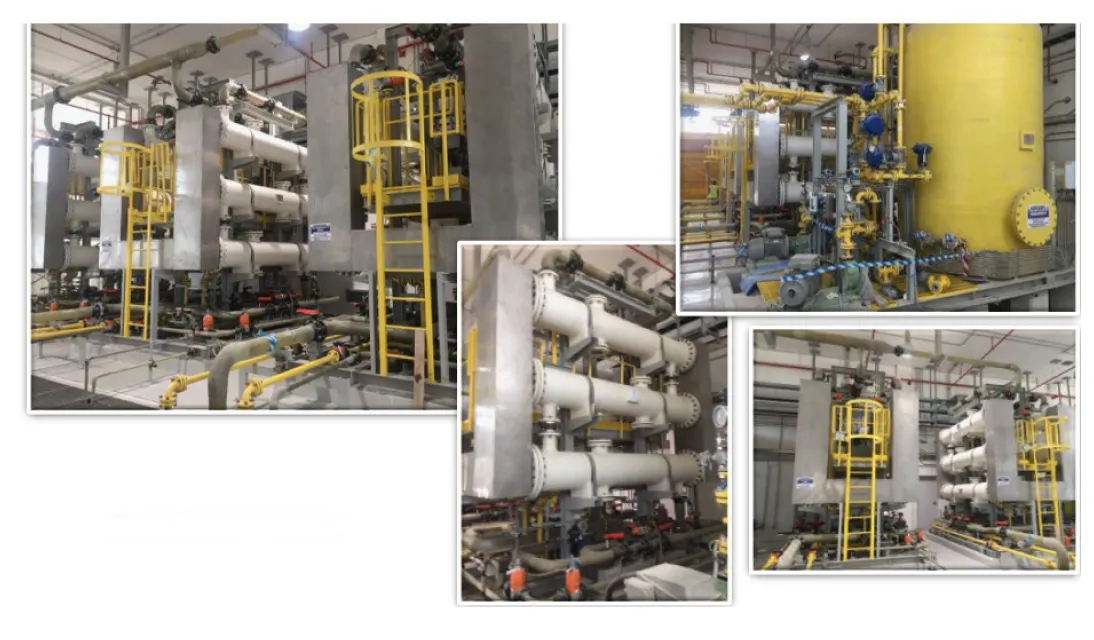
The Core Challenges of Condenser Heat-Transfer Efficiency in Coastal Gas-Fired Power Plants
Different from inland thermal power plants using fresh water cooling, coastal gas-fired power plants face unique operational challenges brought by seawater medium, all of which directly erode condenser heat-transfer capacity. First of all, biofouling is the primary cause of efficiency attenuation. Seawater is rich in barnacle larvae, shellfish spores, and various algae and bacteria. These microorganisms adhere to the inner wall of condenser cooling tubes and multiply rapidly, forming dense biofilms and biological sludge. The biofilm forms a thermal resistance layer on the tube wall, greatly hindering the heat exchange between cooling seawater and internal steam, resulting in a continuous drop in condenser heat-transfer efficiency.
Secondly, long-term seawater circulation will cause mild chemical scaling and microbial-induced corrosion. The salt ions in seawater precipitate and adhere to the tube wall under temperature changes, forming inorganic scale layers. Combined with the metabolic waste of microorganisms, it further thickens the fouling layer. On the other hand, the microbial activity will destroy the passive film on the metal tube wall, triggering local corrosion and pitting, damaging the structural integrity of the condenser cooling system, and indirectly affecting the stability of heat exchange operation.
In addition, traditional seawater treatment methods have obvious limitations. Chemical dosing with single disinfectants has poor sustainability, prone to drug resistance of microorganisms, and excess chemical agents will cause secondary pollution to marine environments. Manual regular cleaning requires unit shutdown, which reduces power generation efficiency and increases operation and maintenance costs. These traditional methods cannot realize real-time, continuous, and stable protection of condenser heat-transfer efficiency.
Working Principle of On-Site Seawater Electrolysis Technology for Condenser Protection
The trace hypochlorite can efficiently and rapidly inactivate algae spores, shellfish larvae, bacteria and other microorganisms in cooling seawater, inhibit their adhesion and reproduction on the condenser tube wall, and fundamentally prevent the formation of biofilms and biological fouling. At the same time, the mild oxidizing property of hypochlorite can inhibit the adhesion and accumulation of inorganic sediments, reduce scaling probability, and keep the inner wall of the condenser cooling tube smooth for a long time, so as to maintain the optimal heat-transfer state.
Key Advantages of Our Seawater Electrolysis Solutions for Power Plant Condensers
1. Sustained Heat-Transfer Efficiency Stabilization
Different from periodic cleaning and remedial treatment of traditional processes, the seawater electrolysis system supports 24/7 continuous and unattended operation. It realizes real-time inhibition of biological fouling and scaling, avoids periodic attenuation of condenser heat-transfer efficiency, and maintains long-term stable heat exchange performance. Practical operation data of many coastal gas-fired power plants show that after adopting this solution, the condenser heat-transfer efficiency remains above 98% of the design value for a long time, and the power generation efficiency is effectively guaranteed.
2. Low Operation and Maintenance Cost & High Economy
The system uses natural seawater as the raw material for electrolysis, eliminating the need for frequent purchase and storage of chemical disinfectants, greatly reducing chemical procurement and transportation costs. The fully automatic operation mode reduces manual intervention and labor costs. Meanwhile, stable condenser operation avoids efficiency loss caused by fouling and shutdown loss caused by pipeline blockage and equipment corrosion, effectively improving the overall economic benefit of power plant operation.
3. Green and Environmentally Friendly with Low Secondary Pollution
The on-site electrolysis reaction is controllable, and the generated low-concentration hypochlorite will be automatically decomposed after completing the sterilization and anti-fouling work, with no residual harmful substances. It will not cause chemical pollution to the discharged seawater and fully complies with international marine environmental protection standards and coastal power plant emission specifications. Compared with traditional chemical dosing methods, it has significant environmental advantages and helps power plants achieve green and low-carbon operation.
4. Strong Adaptability & Easy System Integration
Our seawater electrolysis equipment is customized for the high-flow and continuous operation scenarios of coastal gas-fired power plant circulating water systems. It can be seamlessly connected with existing condenser cooling systems without large-scale transformation of original equipment. The system supports intelligent monitoring of electrolysis parameters, automatic adjustment of dosing concentration according to seawater temperature, salinity and microbial activity, and adapts to seasonal changes of coastal water quality and complex operating conditions.
Industry Application Value & Operational Prospect
For coastal gas-fired power plants, the stability of condenser heat-transfer efficiency is the core link to ensure efficient energy conversion and safe operation. Biofouling and scaling problems caused by seawater cooling have long been key factors restricting the long-cycle stable operation of power plants. The seawater electrolysis solution fundamentally solves the efficiency attenuation problem of condensers through physical and electrochemical combined treatment, realizing the integration of anti-fouling, anti-corrosion and efficiency maintenance.
With the continuous improvement of power plant energy efficiency standards and marine environmental protection requirements, traditional high-consumption and high-pollution water treatment processes are gradually phased out. Efficient, green and intelligent seawater electrolysis technology has become the mainstream development trend of circulating cooling water treatment for coastal thermal power plants. It not only helps power plants reduce energy consumption, stabilize power output, and extend the service life of condenser equipment, but also provides a reliable technical guarantee for the sustainable and green development of coastal power industry.