
Coastal combined heat and power (CHP) plants deliver stable electricity and thermal energy for industrial parks and urban districts, yet they face dual water treatment burdens: continuous biofouling control for seawater cooling circuits and compliant discharge of plant wastewater. Traditionally, cooling water disinfection and wastewater polishing are designed and operated as separate systems, which leads to redundant equipment, higher chemical inventory, and complex compliance management. An integrated seawater electrochlorination layout offers a streamlined way to address both objectives, helping coastal CHP operators balance reliability, operational cost and marine discharge regulations.
Dual Water Challenges Faced by Coastal CHP Facilities
Coastal CHP plants draw large volumes of seawater for once-through or recirculating cooling. Marine organisms including shellfish larvae, algae and biofilm bacteria easily colonize intake screens, heat exchangers and pipelines. Biofouling reduces heat transfer efficiency, increases pumping power consumption and may trigger unplanned maintenance shutdowns. Meanwhile, CHP sites generate multiple wastewater streams: blowdown from cooling loops, boiler drain water, chemical cleaning wastewater and sanitary effluent. These streams carry suspended solids, organic contaminants and residual biocides. Direct discharge without proper treatment will violate local marine environmental standards, and over-dosing of biocide for cooling water will raise total oxidant levels in final effluent.
Separate treatment trains often mean two independent biocide supply chains. Liquid chlorine or bulk sodium hypochlorite brings transportation risks, storage hazards and unstable dosing accuracy. Wastewater disinfection is frequently under-monitored, leaving operators exposed to discharge non-compliance penalties.
How Integrated Electrochlorination Works for Both Workflows
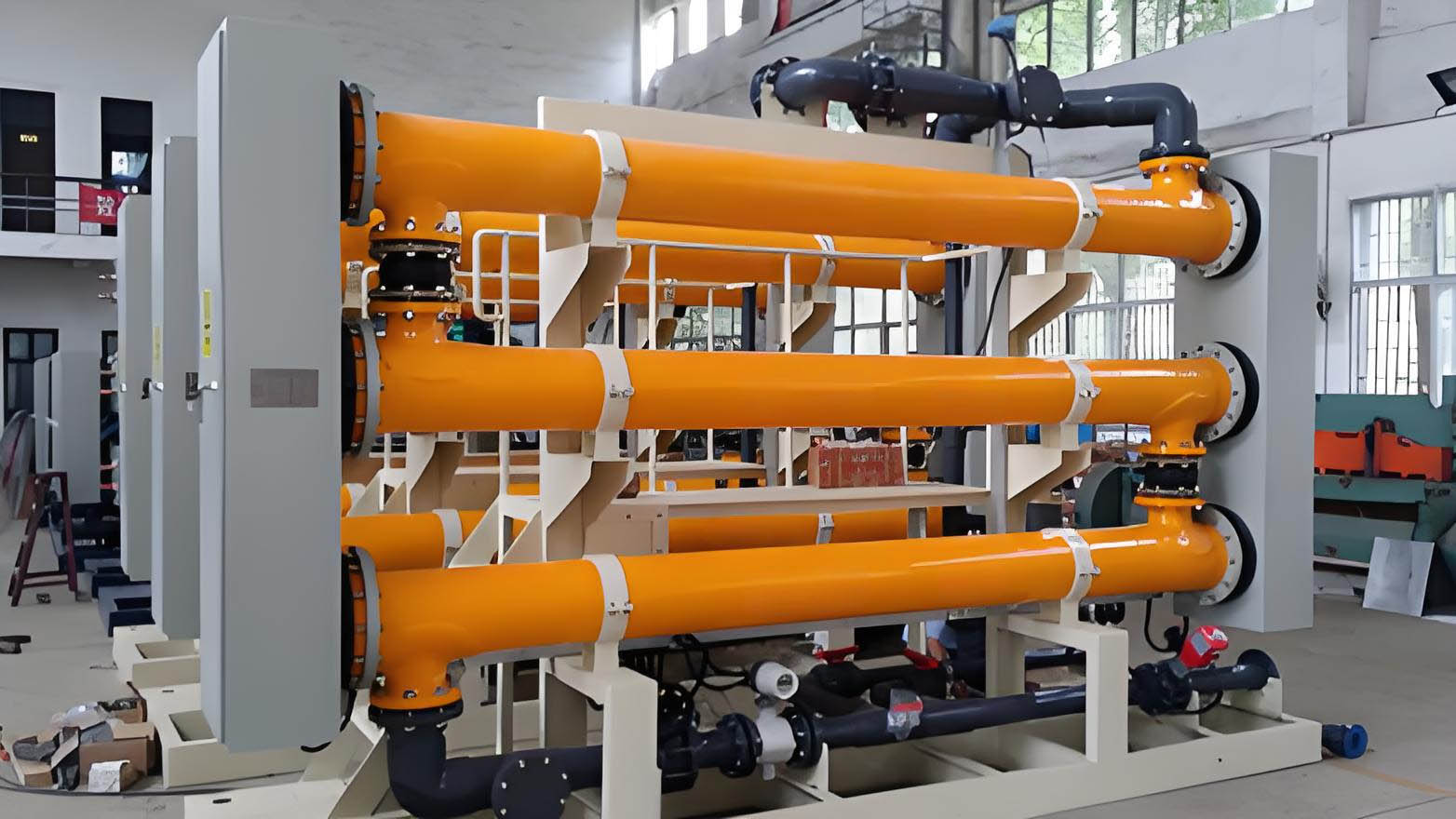
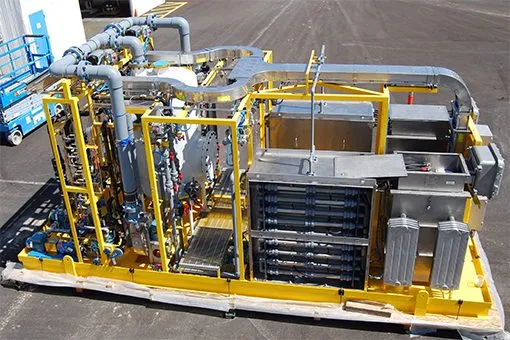
The integrated solution shares a central seawater electro-chlorinator package that generates sodium hypochlorite on-site from raw seawater. No bulk chlorine chemical delivery or storage is required.
For the cooling water side, low, continuous residual chlorine is dosed at the intake to suppress larval settlement and biofilm growth. Real-time residual chlorine sensors feed signals back to the PLC control system, adjusting output dynamically according to seawater temperature, tidal variation and organism activity. This maintains condenser performance and minimizes over-chlorination.
For wastewater treatment, a portion of the generated hypochlorite is diverted to the wastewater polishing unit after biological and clarification steps. It serves as the final disinfection stage to reduce pathogens and oxidize residual organics. Automatic dechlorination modules are installed downstream of the wastewater discharge point to eliminate excess active chlorine before release into coastal waters. This design avoids the need for a second hypochlorite generator and simplifies residual control across the whole plant water network.
Core Benefits of the Combined Treatment Setup
First, capital and operational expenditure is optimized. Shared electrochlorination hardware, control platform and maintenance schedule cut redundant investment compared with standalone cooling and wastewater disinfection skids. Operators only manage one set of electrodes, power supply and monitoring system.
Second, safety is significantly improved. Removing bulk hazardous chlorine chemicals eliminates risks from tanker unloading, tank leakage and manual handling. The system produces disinfectant on demand and stops generation when idle.
Third, discharge compliance becomes easier to sustain. Synchronized residual monitoring on cooling outlets and wastewater effluent helps operators track total chlorine load. The dechlorination step ensures the final effluent meets marine protection limits, which is critical for coastal CHP projects under strict environmental permits.
Fourth, the design supports flexible expansion. For CHP projects under EPC delivery, the integrated skid can be sized in phases. Extra dosing points or sensor channels can be added later if wastewater flow or cooling capacity is upgraded.
Practical Design & Operation Notes for Project Implementation
Successful integration relies on clear flow segregation and dosing logic. Cooling water anti-fouling requires continuous low-level chlorination, while wastewater disinfection usually needs batch or contact-tank dosing with defined retention time. Engineers must separate these two dosing branches and set independent PID loops to avoid cross-interference of residual readings.
Material selection is critical in high-salt coastal environments. Wetted parts, electrolytic cells and sensors need titanium, high-grade PVC or duplex stainless steel to resist chloride corrosion. The control system should log residual chlorine, flow rate, cell current and dechlorination status for environmental reporting and audit.
Operators also need to establish routine electrode maintenance schedules. Seawater quality fluctuation, silt and heavy fouling can shorten coating life. Remote monitoring and alarm functions help the maintenance team respond before performance drops.
Conclusion
For coastal CHP plants, decoupling cooling water biofouling control and wastewater disinfection is no longer the only default route. Combined electrochlorination deployment unifies on-site biocide production, simplifies monitoring and reduces environmental footprint. It creates a more resilient water treatment layout that protects heat exchange assets while keeping wastewater discharge within regulatory boundaries. As marine environmental rules tighten for coastal energy facilities, this integrated approach will become a preferred option for new CHP construction and retrofitting upgrades.