
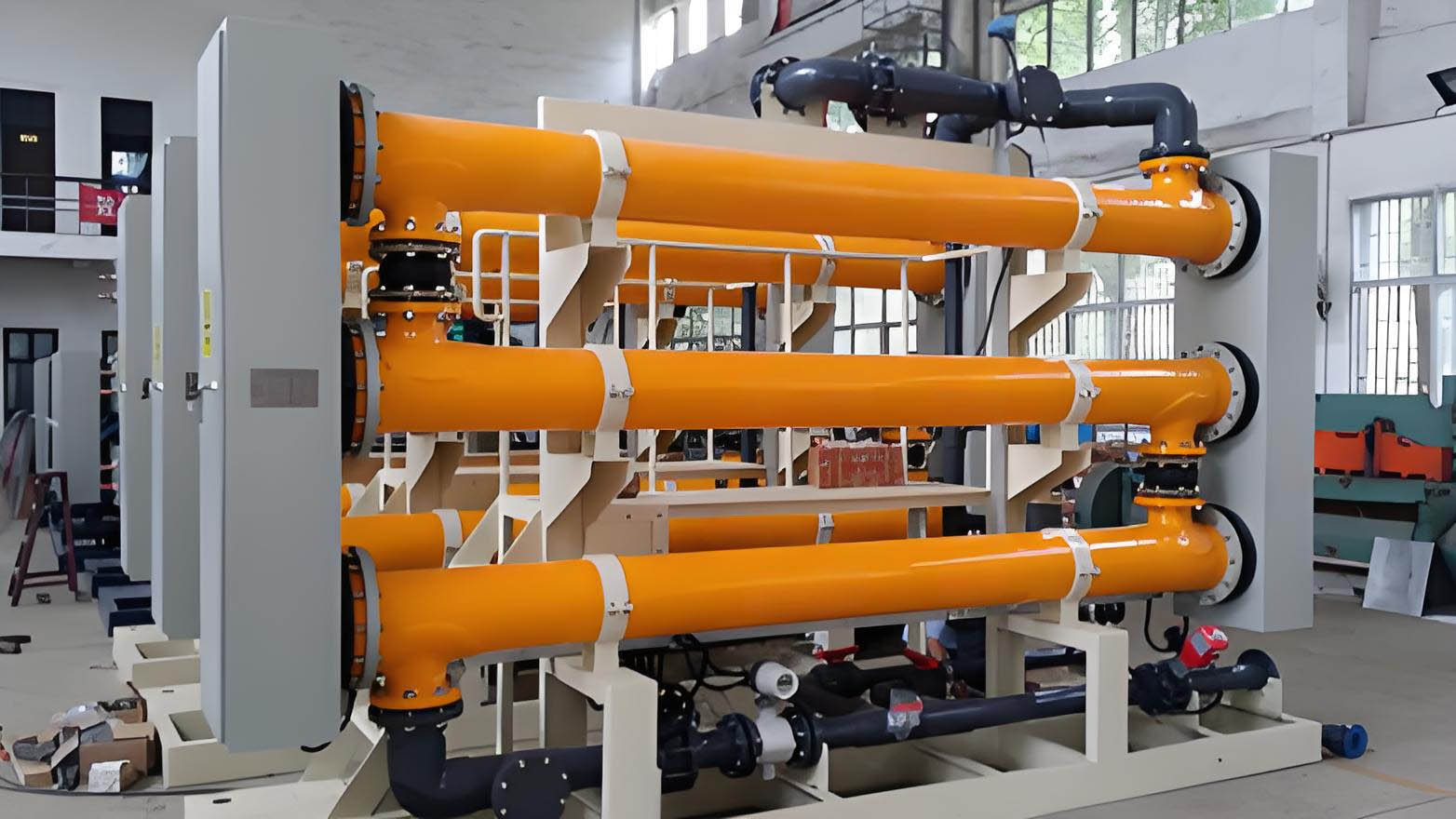
Coastal power plants rely on continuous seawater intake to supply cooling water for condensers and auxiliary systems. However, shellfish such as mussels and oysters pose a persistent operational threat. Their larvae drift into intake screens, pipelines and cooling channels, attach to inner surfaces, grow rapidly and eventually form dense colonies. This shellfish buildup reduces flow capacity, clogs strainers and intake pipelines, increases pumping energy consumption, and may trigger unplanned shutdowns that cost power operators millions in lost generation revenue.
Traditional mitigation approaches, including manual cleaning, chemical biocide delivery and mechanical scraping, come with obvious drawbacks. Manual cleaning requires periodic outages; bulk chemical transportation and storage create safety risks and environmental compliance burdens. Today, seawater electrolysis (electrochlorination) stands as a proven, sustainable technology to stop shellfish settlement at the source: the seawater intake.
How Shellfish Infestation Disrupts Power Plant Intake Operations
Shellfish fouling is not just a surface contamination issue. Once barnacle and mussel larvae attach to intake structures, they form thick, rigid layers that narrow pipe cross-sections and block intake screens. Reduced cooling water flow impairs condenser performance, raises backpressure and lowers overall plant efficiency. In severe cases, sudden blockages force emergency shutdowns.
Maintenance teams must schedule costly, labour-intensive underwater inspection and cleaning cycles. In addition, residual shellfish debris can travel downstream to condensers, heat exchangers and valves, expanding the fouling risk across the whole circulating water system. Seasonal plankton blooms amplify larval concentrations, making intake protection a year-round requirement for coastal power assets.
Working Principle of Seawater Electrolysis for Intake Anti-Fouling
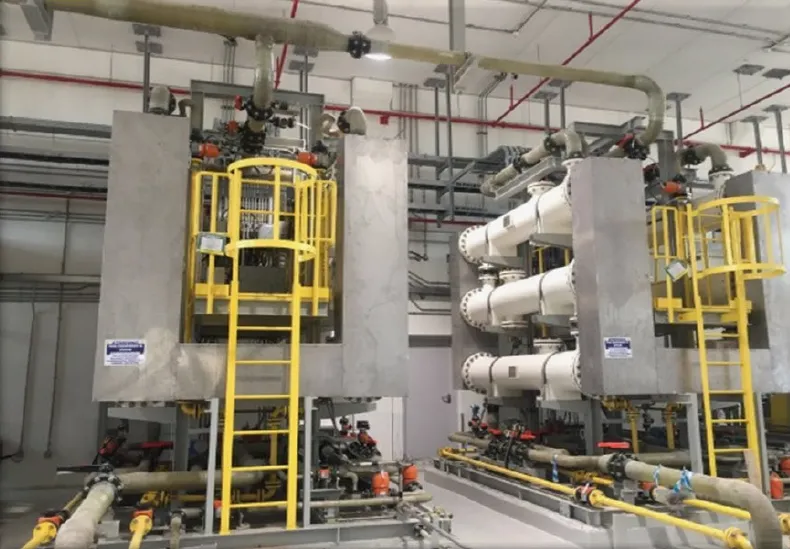
Seawater electrolysis systems tap natural chloride ions in raw seawater. When seawater flows through electrolytic cells with coated titanium electrodes, direct current triggers electrochemical reactions to produce low-concentration sodium hypochlorite (NaClO) on-site. This mild oxidant is continuously dosed into the intake channel to suppress shellfish larval settlement and inhibit algae and biofilm growth.
Unlike bulk chemical dosing, the system only consumes seawater and electricity. No hazardous chemicals need to be shipped or stored on-site. The dosing concentration is precisely controlled to target shellfish larvae before they attach to surfaces. The active chlorine decays naturally after passing through the cooling circuit, easing environmental impact compared with conventional chemical biocides.
Key Benefits of Seawater Electrolysis for Power Plant Intake Protection
- Stop clogging before it happens: Continuous, low-level biocide generation prevents larval attachment rather than removing fully grown shellfish, cutting downtime for mechanical cleaning.
- Enhanced operational safety: Eliminates risks associated with transportation, storage and handling of liquid chlorine or hypochlorite drums.
- Lower operational expenditure: Reduces pumping power loss caused by blocked pipelines and cuts the frequency of offshore diving and intake maintenance work.
- Flexible modular design: Units can be scaled to match intake flow rates, with adjustable output to respond to seasonal changes in marine larval activity.
- Environmental compliance: On-site generated hypochlorite breaks down rapidly, minimising long-term residual chlorine discharge to the marine environment when properly controlled.
Practical Implementation Considerations
Successful deployment requires careful engineering of sampling points, injection locations and online monitoring sensors. Operators maintain stable residual chlorine levels in the intake line without over-dosing. System integration includes automated control panels, flow interlocks and safety alarms. Regular electrode inspection and maintenance preserve long-term electrolysis efficiency.
Our seawater electrolysis packages are engineered for harsh coastal environments, with corrosion-resistant materials to withstand seawater, sand and variable water temperatures. We provide full lifecycle support from design, manufacturing, site installation, commissioning to after-sales service for power plant circulating water anti-fouling projects.
Conclusion
Shellfish clogging remains one of the most troublesome operational headaches for coastal power plants. Seawater electrolysis delivers a reliable, safer and cost-effective method to protect intake structures, stabilise cooling water flow and avoid unexpected outages. By generating biocide on demand directly from seawater, power operators can control shellfish fouling proactively while simplifying chemical management and meeting marine environmental regulations.