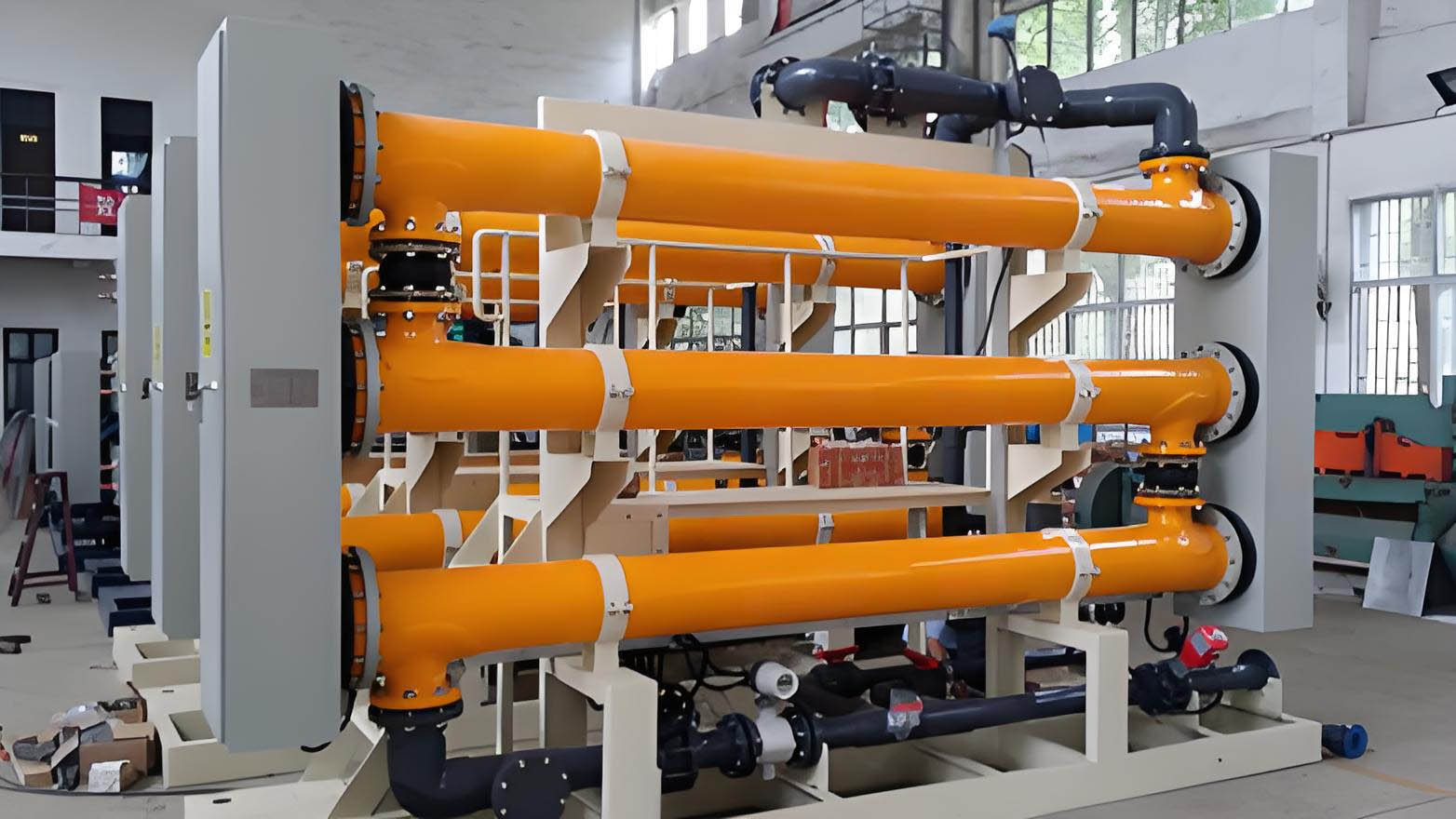
Marine biofouling has long been a pervasive challenge for coastal industrial facilities, offshore platforms, seawater cooling systems, and marine vessels. The uncontrolled growth of bacteria, algae, barnacles, shellfish, and other marine organisms on pipeline inner walls, heat exchangers, and underwater equipment surfaces severely impairs operational efficiency, accelerates equipment corrosion, increases energy consumption, and even triggers system shutdown risks. Traditional anti-biofouling methods, including manual cleaning, chemical agent dosing, and coating protection, are plagued by high costs, secondary pollution, and unstable long-term effects. As an eco-friendly, efficient, and automated water treatment technology, electrolytic seawater chlorination has become the mainstream anti-biofouling solution for modern marine water systems.
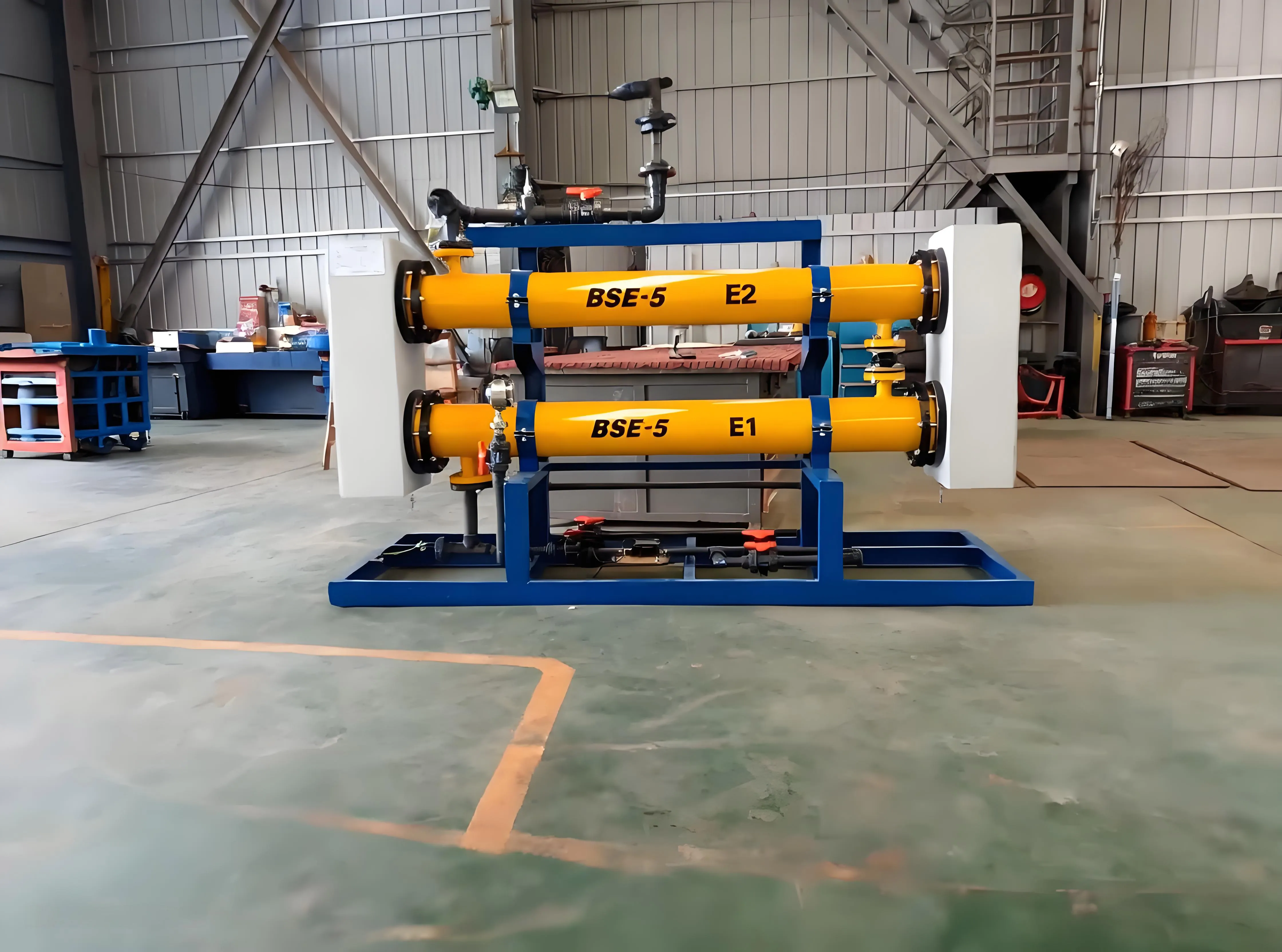
1. Core Working Principle of Electrolytic Seawater Chlorination for Anti-Biofouling
Electrolytic seawater chlorination is an on-site electrochemical disinfection and anti-fouling technology that leverages the natural chloride ions in seawater to generate active sterilizing substances without adding external chemical reagents. The entire process is simple, safe, and controllable, adapting to continuous marine water treatment scenarios.
During operation, filtered raw seawater is delivered to a sealed electrolytic cell equipped with high-performance MMO titanium electrodes. Under precise current control, the chloride ions dissolved in seawater undergo targeted electrochemical reactions to produce low-concentration active chlorine substances, mainly including hypochlorous acid (HOCl) and hypochlorite ions (OCl⁻).
These active chlorine components feature strong oxidizing properties. They can rapidly penetrate the cell membranes of marine microorganisms, inactivate intracellular enzymes, degrade microbial nucleic acids, and completely inhibit the reproduction and adhesion of bacteria, algae, and macro-organisms such as barnacles and mussels. Unlike traditional chemical disinfection, the active chlorine generated by seawater electrolysis works efficiently within seconds to minutes, achieving a microbial inactivation rate of over 99.99%, and fundamentally eliminates the root cause of biofouling formation.
2. Key Advantages Over Traditional Anti-Biofouling Technologies
Compared with conventional anti-biofouling methods, electrolytic seawater chlorination stands out in industrial and marine applications with its unique technical and environmental strengths, solving multiple pain points of traditional processes.
On-Site Generation, Zero Chemical Storage Risks
Traditional chlorine disinfection relies on the manual storage and dosing of liquid chlorine or sodium hypochlorite agents, which poses potential safety hazards such as leakage and explosion, and requires strict professional management. The electrolytic seawater chlorination system uses raw seawater as the only raw material, realizing on-demand and on-site chlorine generation. There is no need for transportation, storage, and manual handling of hazardous chemicals, greatly reducing operational risks and labor costs for enterprises.
Stable and Long-Lasting Anti-Biofouling Effect
Marine environmental changes such as water temperature and salinity fluctuations often lead to unstable efficacy of traditional anti-fouling coatings and regular chemical dosing. The electrolytic system supports automatic constant-current operation, maintaining stable low-concentration active chlorine in the water system for a long time. It continuously suppresses microbial growth and organism adhesion, effectively preventing biofilm accumulation and hard fouling formation on equipment surfaces, and ensuring long-term stable operation of seawater systems.
Eco-Friendly and Compliance-Friendly
The active chlorine generated by seawater electrolysis will naturally decompose within a short period after completing the anti-fouling and disinfection process, without producing residual toxic substances or secondary pollution to the marine environment. The technology fully complies with IMO ballast water management conventions and international marine environmental protection standards, making it suitable for various offshore and coastal industrial scenarios with strict environmental requirements.
Low Operation and Maintenance Costs
The system features a compact structure, small floor space, and low power consumption. It supports full-automatic intelligent operation with minimal manual intervention. It avoids frequent shutdown maintenance, coating replacement, and large-scale chemical dosing required by traditional processes, significantly reducing the overall operation and maintenance cycle cost of seawater systems.
3. Main Industrial Application Scenarios
With its reliable anti-biofouling performance and high adaptability, electrolytic seawater chlorination technology has been widely applied in marine engineering, coastal industrial production, and marine equipment operation, covering core scenarios as follows:
Seawater Cooling Circulation Systems
For coastal power plants, chemical plants, and desalination plants, seawater cooling pipelines and heat exchangers are highly susceptible to biofouling. Fouling accumulation will reduce heat exchange efficiency, increase pipeline resistance, and raise unit energy consumption. The electrolytic chlorination system continuously inhibits biological adhesion, maintains smooth pipeline circulation and efficient heat exchange, and ensures stable production of industrial units.
Marine Vessel & Offshore Platform Systems
It is applicable to ship ballast water treatment, offshore platform seawater intake systems, and underwater pipeline anti-fouling. The technology effectively controls biological growth in ballast water, meets international ballast water discharge standards, and prevents equipment fouling and corrosion caused by marine organism adhesion, extending the service life of marine equipment.
Coastal Aquaculture & Marine Water Treatment
In coastal aquaculture water circulation and marine environmental water treatment projects, the technology efficiently removes harmful algae and pathogenic microorganisms, avoids biological fouling blockage of water circulation equipment, and creates a stable and clean water environment while ensuring ecological safety.
4. Conclusion
Biofouling is an inevitable hidden danger in all seawater circulation and marine water system operations. Traditional anti-fouling methods can no longer meet the dual requirements of modern industries foroperational efficiency, safety, and environmental protection. Electrolytic seawater chlorination technology, with its advantages of on-site preparation, intelligent operation, efficient sterilization and anti-fouling, and green environmental protection, provides a systematic and reliable solution for marine biofouling control.
As marine environmental protection regulations become increasingly stringent and industrial water treatment standards continue to upgrade, electrolytic seawater chlorination will further replace traditional processes and become the preferred core technology for marine anti-biofouling and seawater purification in global coastal industries and marine engineering fields.