
Introduction
Seawater electrochlorination equipment operates in extremely harsh marine environments all year round, facing dual corrosion threats from high-salinity seawater electrochemical erosion and offshore salt spray atmospheric corrosion. Unlike conventional industrial water treatment equipment, electrochlorination units involve high-current electrolysis reactions, active chlorine oxidation and hydrogen evolution reactions, which will greatly accelerate material aging, pitting corrosion and structural damage if without professional anti-corrosion design. Unreasonable anti-corrosion configuration is the main cause of electrode failure, pipeline leakage, shell rust and shortened equipment service life in coastal and offshore electrochlorination projects.
Scientific anti-corrosion design runs through the whole process of equipment material selection, structural optimization, surface coating, sealing matching and system layout. Standardized marine anti-corrosion design can effectively isolate corrosive media, suppress electrochemical corrosion, reduce equipment failure rate, and ensure long-term uninterrupted stable operation of electrochlorination systems in complex seawater working conditions. This article systematically sorts out the core anti-corrosion design key points of industrial seawater electrochlorination devices.
1. Corrosion Mechanism Characteristics of Marine Electrochlorination Systems
The corrosion failure of seawater electrochlorination equipment mainly comes from three core mechanisms. First, high-salinity seawater has strong conductivity, which triggers violent electrochemical corrosion on metal components during long-term immersion. Chloride ions in seawater easily penetrate material surfaces to form pitting corrosion, causing irreversible damage to metal substrates.
Third, offshore and coastal environments have perennial salt spray, high humidity and temperature alternating changes, leading to atmospheric corrosion of equipment shells, supports and electrical components. The superposition of electrochemical corrosion, oxidative corrosion and salt spray atmospheric corrosion puts forward extremely high requirements for the anti-corrosion design of electrochlorination equipment.
2. Core Anti-Corrosion Material Selection Design Key Points
Material selection is the foundation of electrochlorination anti-corrosion design, and different components need targeted marine-grade anti-corrosion material matching according to operating environment and medium contact characteristics.
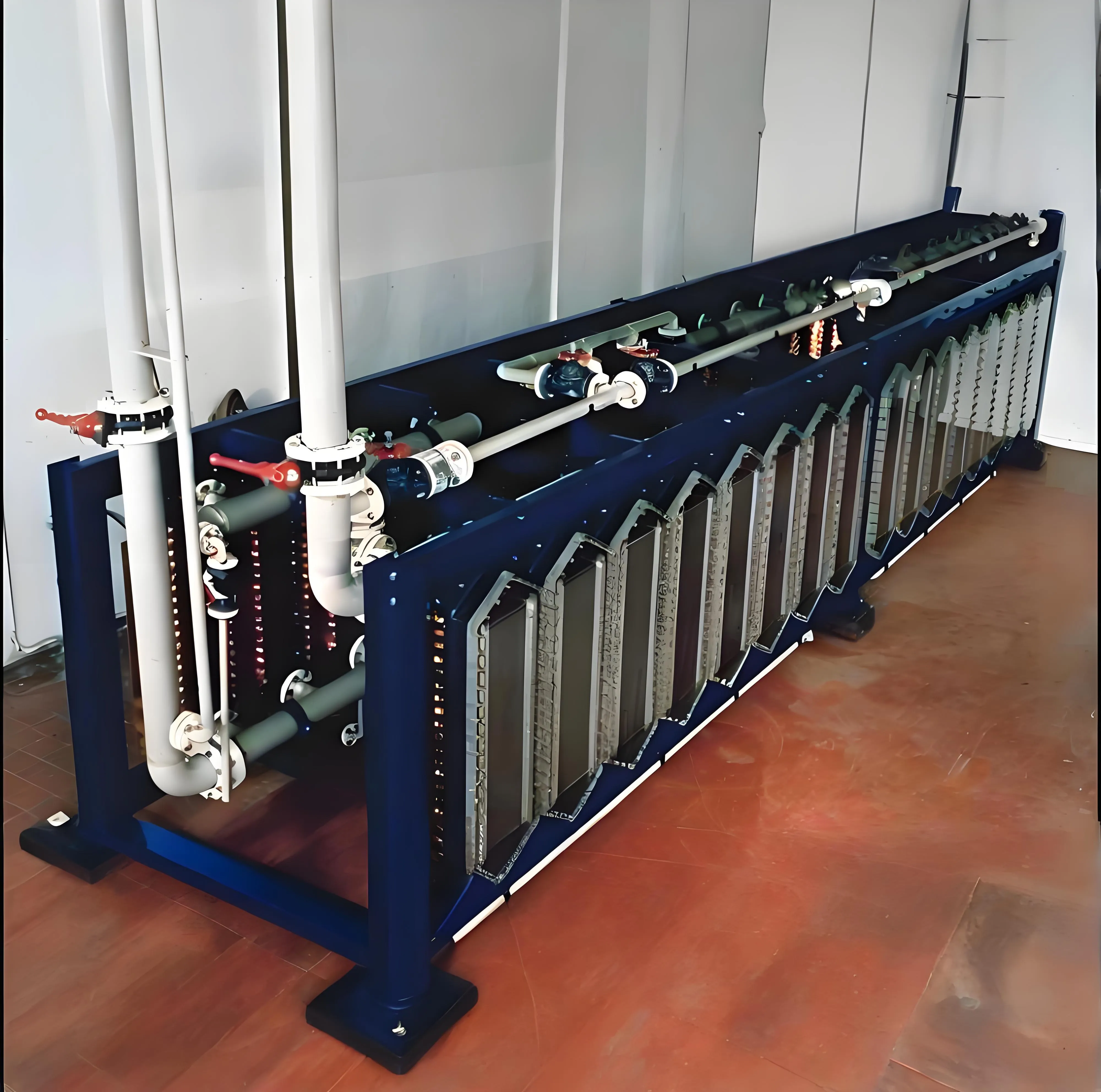
For the core electrolyzer and all seawater wetted parts, high-purity titanium alloy is the standard substrate material. Titanium alloy has excellent resistance to seawater chloride ion erosion and active chlorine oxidation, and can maintain stable structural performance in long-term electrolysis environments, avoiding pitting corrosion and structural damage. Compared with stainless steel and ordinary alloy materials, titanium alloy completely adapts to high-strength marine electrolysis working conditions.
The electrode coating adopts professional ruthenium-iridium (Ru-Ir) mixed metal oxide (MMO) coating, which features high catalytic activity, low chlorine evolution potential and strong anti-oxidation performance. It effectively resists electrochemical corrosion during high-current electrolysis, delays coating aging and peeling, and ensures long-term electrolysis efficiency stability. For ultra-high salinity and harsh pollution sea areas, iridium-tantalum (Ir-Ta) enhanced coating can be selected to further improve corrosion resistance.
Electrical components such as control cabinets and junction boxes are made of 316L stainless steel, which resists coastal salt spray and high humidity corrosion, preventing shell rust and internal circuit damage. Pipeline valves and sealing accessories adopt marine-grade anti-corrosion polymer materials and fluorine rubber sealing parts to avoid aging, deformation and leakage caused by long-term contact with seawater and hypochlorite solution.
3. Structural Anti-Corrosion Optimization Design Specifications
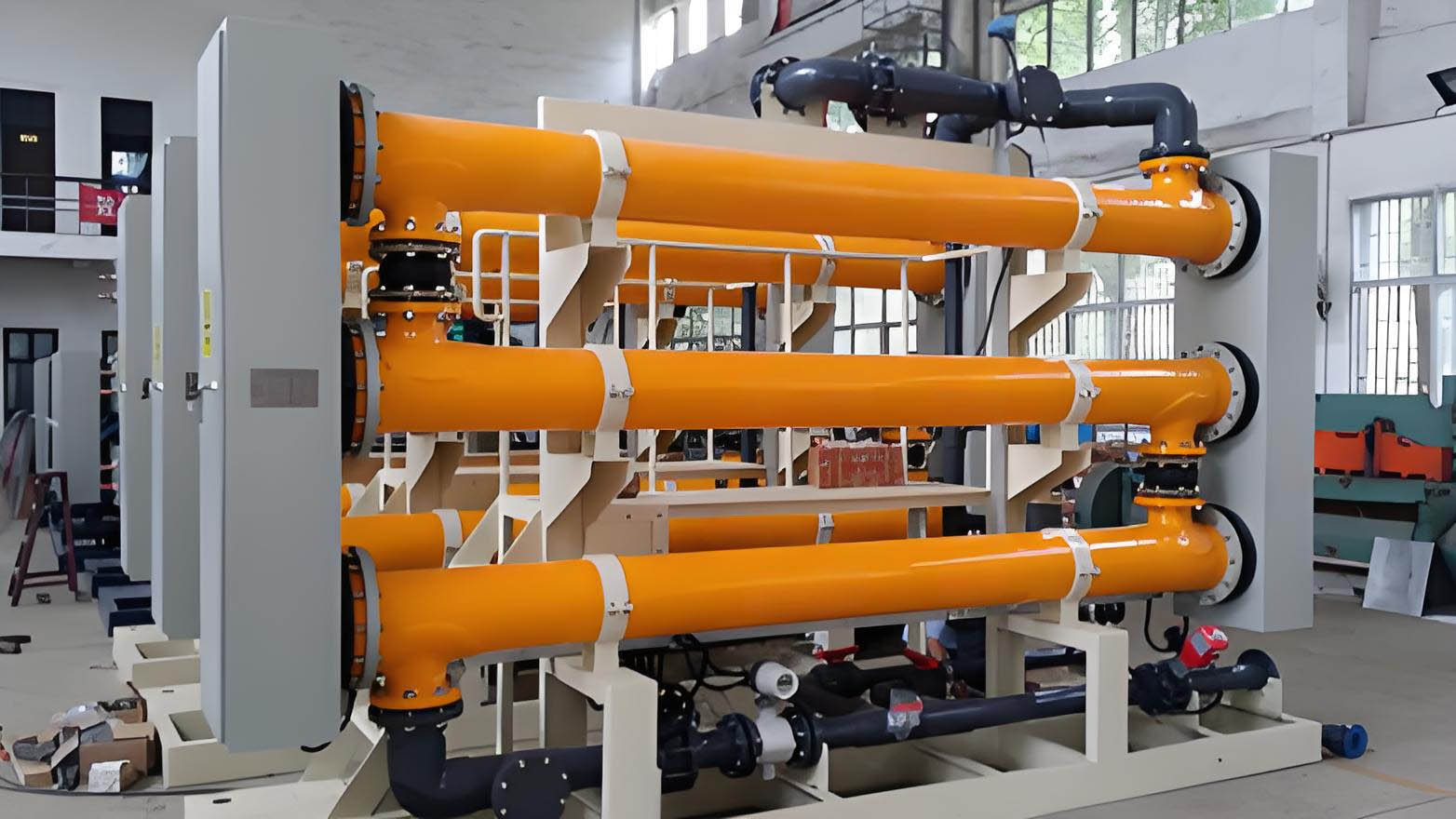
Reasonable structural design can eliminate hidden corrosion risks from the source and avoid local corrosion damage caused by structural defects. First, the equipment adopts fully enclosed integrated skid-mounted structure design to reduce the contact area between internal components and external salt spray humid air, and isolate atmospheric corrosion interference.
Second, the internal flow channel adopts streamlined smooth structure optimization to avoid dead water zones and residual liquid accumulation. Local stagnant seawater will form high-concentration corrosive media, leading to accelerated local pitting corrosion. Smooth flow channel design ensures uniform water flow and consistent corrosion degree of each component.
Third, the equipment support and base structure adopt anti-water-logging and drainage optimization design to avoid long-term water accumulation and tidal soaking. The welding parts of metal structures adopt full welding and polishing treatment to eliminate welding gaps, prevent chloride ion deposition and gap corrosion, and improve overall structural anti-corrosion uniformity.
4. Surface Coating and Marine Heavy-Duty Anti-Corrosion Technology
For non-wetted structural parts such as equipment shell, skid base and support frame, marine heavy-duty anti-corrosion coating process is adopted to adapt to perennial coastal and offshore harsh environments. The standard process includes shot blasting and pickling pretreatment, hot-dip galvanizing primer, intermediate anti-rust coating and weather-resistant topcoat spraying.
Multi-layer composite coating can effectively isolate salt spray, ultraviolet radiation and temperature alternating erosion, prevent structural steel rust and peeling, and maintain long-term appearance and structural stability of the equipment. Different from ordinary industrial coatings, marine anti-corrosion coatings have strong salt spray resistance and weather resistance, which can resist extreme weather such as coastal storms and high-temperature exposure.
The electrode surface adopts professional selective barrier layer design, which can intercept chloride ion penetration while ensuring electrolysis reaction efficiency, further inhibiting electrochemical corrosion of the electrode substrate and extending the service life of core components.
5. Electrical and Safety Anti-Corrosion Auxiliary Design
The equipment is equipped with reasonable cathodic protection design to form a balanced electrochemical environment, suppress metal substrate oxidation reaction, and reduce electrolysis equipment loss caused by potential difference corrosion. At the same time, the ventilation and dehumidification system is optimized to keep the equipment operation cabin dry, reduce indoor humidity and salt spray concentration, and weaken atmospheric corrosion intensity.
6. Operational Anti-Corrosion Matching Design and Maintenance Reserve
According to the seasonal changes of seawater salinity and turbidity in different sea areas, the equipment reserves load adjustment and anti-corrosion adaptation functions. For high-pollution and high-salinity sea areas, enhanced anti-corrosion configuration and thickened protective structure are reserved to cope with extreme working condition corrosion.
Conclusion
The anti-corrosion design of seawater electrochlorination devices is a systematic project covering material selection, structural optimization, surface protection, electrical insulation and operational adaptation. The superposition of seawater electrochemical corrosion, active chlorine oxidation corrosion and marine salt spray atmospheric corrosion puts forward strict requirements for equipment design. Adopting marine-grade titanium alloy substrate, MMO anti-corrosion electrode coating, streamlined anti-corrosion structure and heavy-duty marine coating technology can completely solve various corrosion problems in marine electrolysis systems.
Standardized anti-corrosion design not only avoids equipment leakage, failure and structural damage, but also effectively extends the service life of electrolyzers and core components, reduces long-term maintenance and replacement costs, and provides reliable structural safety guarantee for long-term stable operation of coastal and offshore electrochlorination disinfection systems.