
Is it technically feasible to prepare sodium hypochlorite using calcium hypochlorite and soda ash?
Currently, most industrial production of sodium hypochlorite uses industrial salt, process water, and electricity as raw materials. The sodium hypochlorite solution of varying concentrations is obtained through the electrolytic reaction of salt and water in an electrolytic cell, followed by further processing. However, some people believe that sodium hypochlorite solution can be prepared using calcium hypochlorite and soda ash via a metathesis process, enabling industrial production. But is this method feasible? Can it be used for industrial production? This article will answer these questions.
Reaction principle
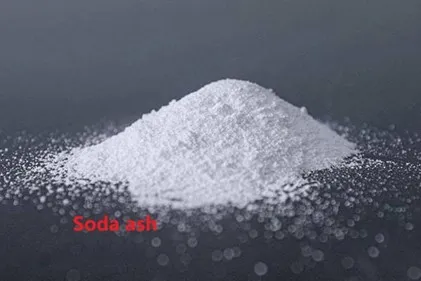
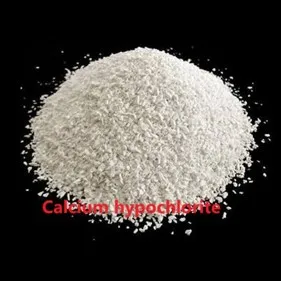
This method is also called the bleaching powder metathesis method because calcium hypochlorite is the main active ingredient in bleaching powder. The core reaction between calcium hypochlorite and soda ash is a metathesis precipitation reaction: the aqueous solution of calcium hypochlorite reacts chemically with sodium carbonate to form calcium carbonate precipitate, and the supernatant is the sodium hypochlorite solution.
Reaction equation: Ca(ClO) ₂+Na₂CO₃= 2NaOCl+CaCO₃↓
However, commercially available calcium hypochlorite is not pure; it contains many other impurities, such as calcium chloride and calcium hydroxide. These impurities can cause side reactions during chemical reactions, generating other precipitates that ultimately affect the quality, efficiency, and available chlorine stability of sodium hypochlorite products.
CaCl₂+ Na₂CO₃= 2NaCl + CaCO₃↓
Ca (OH)₂+ Na₂CO₃= 2NaOH + CaCO₃↓
Therefore, this method is only theoretically feasible and is not suitable for industrial production.
Technical shortcomings and risks
1. The product has a high impurity content and poor effective chlorine stability.
The finished product contains impurities such as sodium chloride, residual carbonates, and calcium ions . Residual calcium ions can cause blockages; high salt content accelerates the decomposition of sodium hypochlorite, making it unsuitable for long-term storage.
2. A large amount of sediment will be produced.
The reaction produces a large amount of calcium carbonate precipitate. Treating these solid precipitates (filtration, washing, disposal) requires additional equipment and incurs costs .
3. It is difficult to prepare a high concentration of 15% sodium hypochlorite solution.
Because some of the raw materials are used to generate other impurities during the reaction, many customers require a high concentration of 15% sodium hypochlorite solution. It is difficult to prepare this solution stably using calcium hypochlorite and soda ash, and only a lower concentration of 2.5%-3% sodium hypochlorite solution can be produced.
4. The raw material cost is higher than that of membrane electrolysis.
Compared with mainstream electrolytic chlorine production processes, the overall cost of raw materials for calcium hypochlorite + soda ash is higher and the cost-effectiveness is lower when producing on a large scale in a continuous manner .
5. High security risk
Calcium hypochlorite is a strong oxidizing agent. It easily decomposes and releases chlorine gas when it comes into contact with acids, organic matter, or high temperatures. The production process requires strict temperature and pH control, as well as closed ventilation. Slight carelessness can lead to chlorine gas leakage and poisoning.
Compared with the mainstream membrane electrolysis method for chlorine production
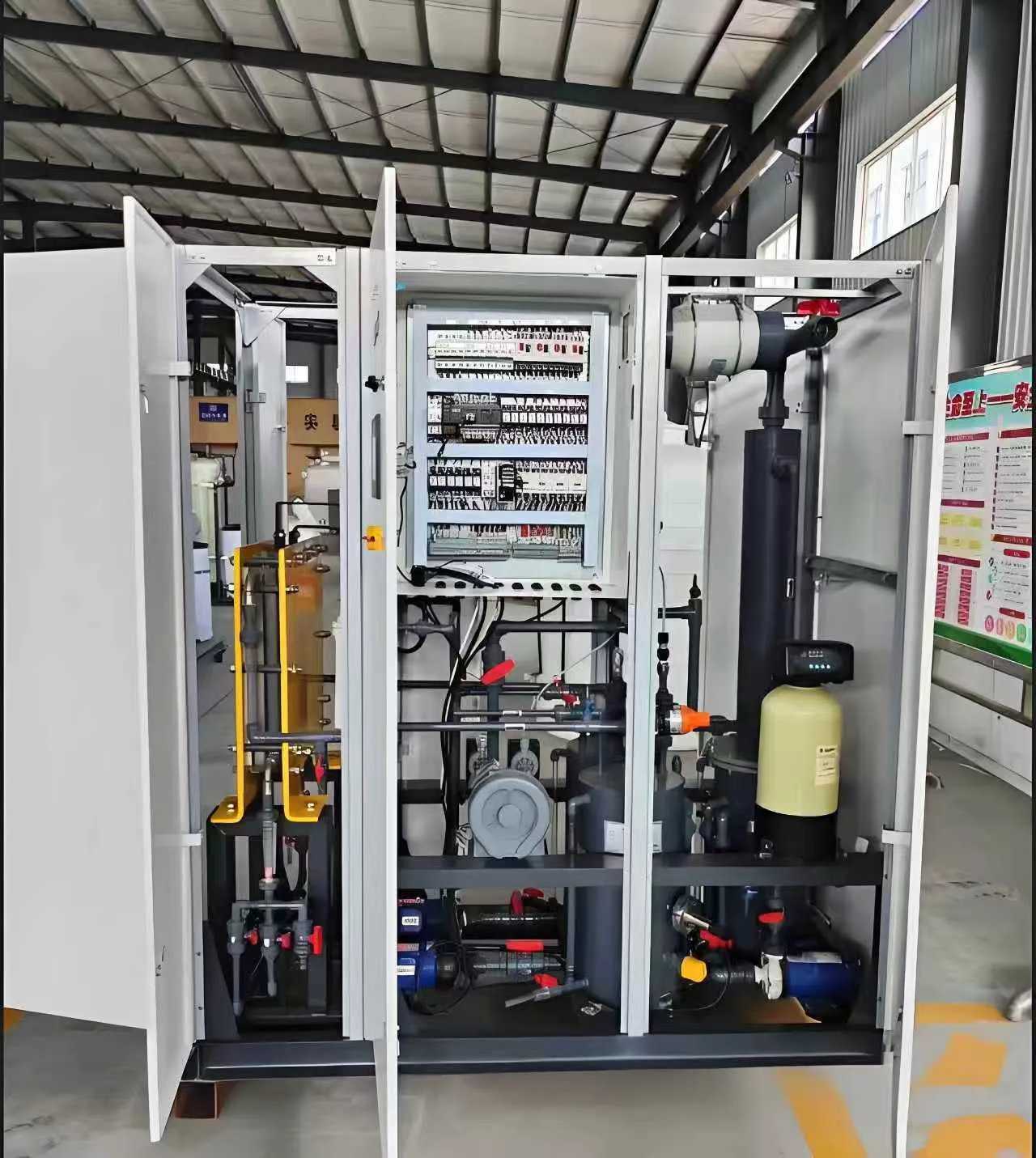
Electrolysis of brine to produce sodium hypochlorite: This is the most commonly used industrial preparation method. The principle involves using a chlor-alkali process to electrolyze high-purity industrial salt through an ion-exchange membrane electrolytic cell , generating chlorine , hydrogen, and sodium hydroxide. The chlorine and sodium hydroxide then react to produce a 10%-15% sodium hypochlorite solution. (This chemical reaction requires precise control of the flow rates of chlorine and alkali, as well as the reaction temperature within the reactor, to prevent the formation of sodium chlorite (NACLO2). This method has a relatively fast reaction rate, widely available raw materials, low cost , high degree of automation, and few impurities , making it suitable for long-term stable production (Reference source: https://en.wikipedia.org/wiki/Sodium_chloride ).
The calcium hypochlorite + soda ash metathesis method has the following drawbacks: high impurities, limited output, large amount of filter residue , unstable production efficiency, and low concentration of sodium hypochlorite solution produced.
Summarize
the preparation of sodium hypochlorite from calcium hypochlorite using soda ash is technically feasible, it has significant limitations . Due to constraints related to impurities, filtration, production stability , and storage stability, it cannot replace the mainstream membrane electrolysis process for chlorination and is unsuitable for industrial-scale production .