
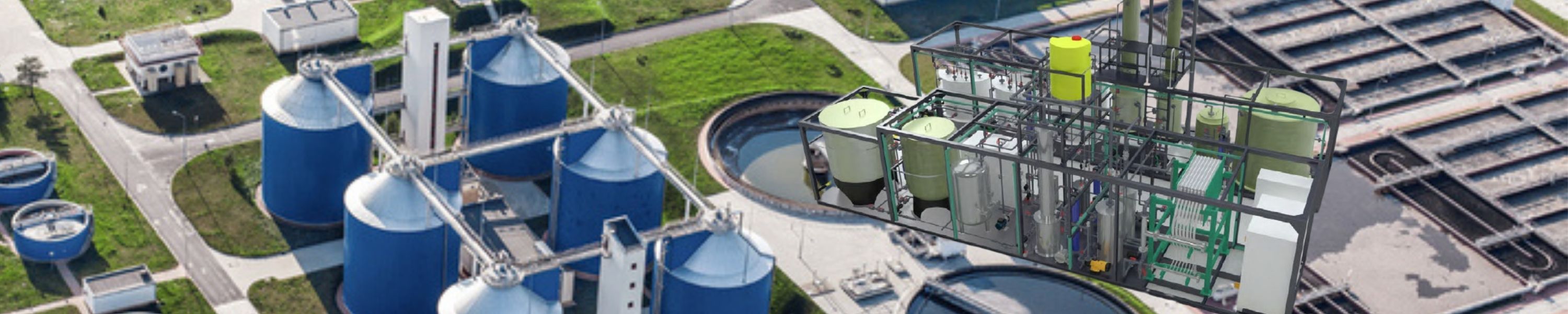
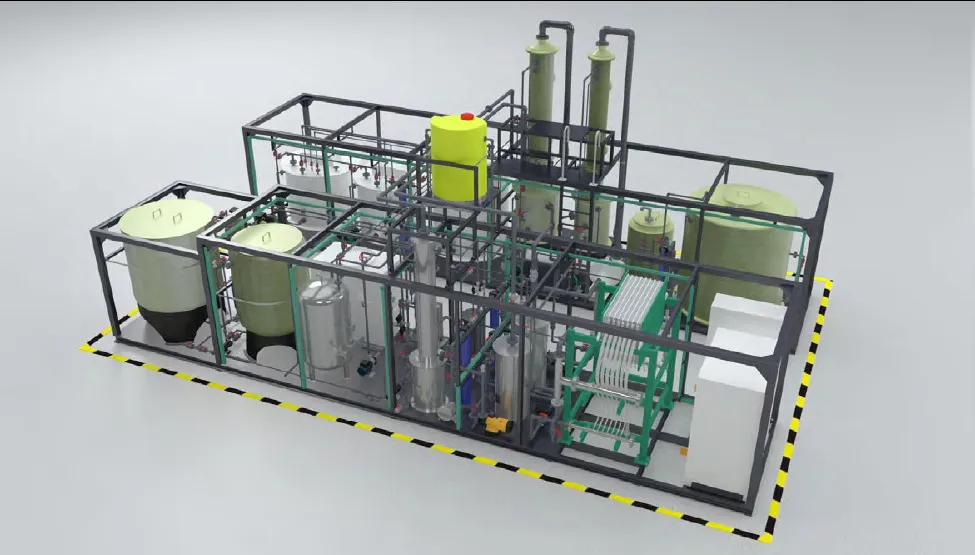
5%-15% sodium hypochlorite bleaching and disinfection production equipment is widely used and serves as the core disinfection equipment in fields such as municipal water disinfection, food processing equipment disinfection and industrial wastewater treatment. However, during the operation of high-concentration sodium hypochlorite generators, many factors affect operating efficiency, such as water quality, salt quality and temperature. Among them, salt quality directly determines core issues such as the stability of the electrolysis reaction, the operating efficiency of the electrodes in the ion-exchange membrane electrolyzer (chlor-alkali) and the available chlorine index of the final product; it is a key factor affecting the electrolysis efficiency of the sodium hypochlorite generator and the quality of the final product. This article will give you an in-depth understanding of how salt purity affects the electrolysis reaction.
Salt Purity Parameters and Specifications
Industrial salt is graded according to its sodium chloride content and its impurity content, and only salt that reaches a specific grade can be used to produce sodium hypochlorite.
|
Salt Grade |
NaCl Purity |
Typical Source |
Suitability for NaClO Generation |
|
Vacuum salt (refined) |
Underground rock salt, solution mining |
Excellent — recommended for all systems |
|
|
Solar salt (premium) |
98.5–99.5% |
Solar evaporation ponds |
Good — suitable with proper brine treatment |
|
Solar salt (standard) |
95–98.5% |
Solar evaporation (lower grade) |
Fair — requires a robust purification system |
|
Rock salt (crushed) |
90–95% |
Mined rock salt |
Poor — not recommended for membrane systems |
|
Industrial crude salt |
85–90% |
Low-grade mining or unprocessed salt |
Not suitable — causes rapid system degradation |
Industrial salt is classified by its sodium chloride content:
Among them, the salt quality best suited for producing high-concentration sodium hypochlorite is vacuum salt with a purity of≥99.5%. Vacuum salt has high sodium chloride purity and low impurity content, which better improves the operating efficiency of the electrolysis reaction in high-concentration sodium hypochlorite generators and extends the service life of the electrolyzer.
Why Is Salt Quality So Important?
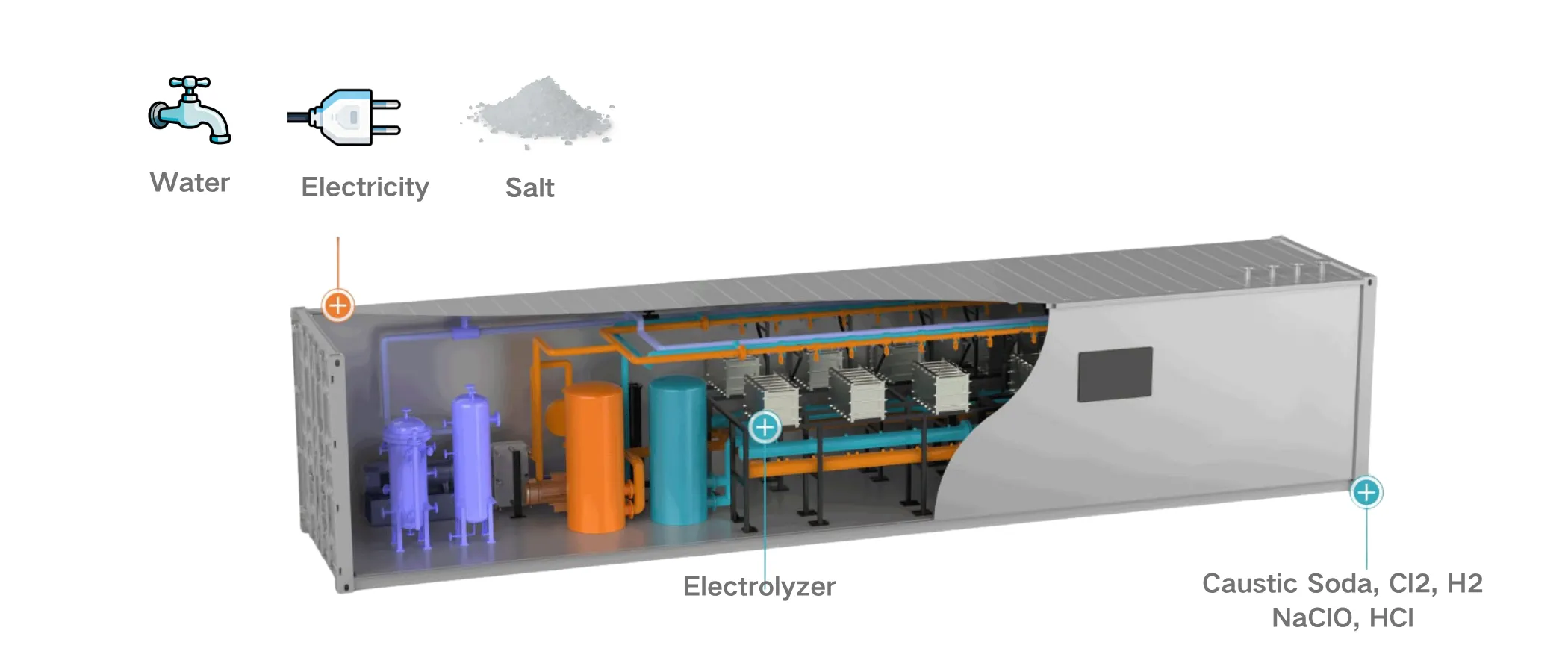
Salt is an indispensable raw material in the electrochlorination reaction, and the chemical reaction is as follows:
2NaCl + 2H₂O→Cl₂+ 2NaOH + H₂
It can be seen that salt quality directly affects the quality of downstream products and the reaction efficiency. If the salt quality does not meet the requirements, not only will efficiency slow down, but the calcium and magnesium ions in the salt will also precipitate, directly affecting the service life of the electrolyzer.
Main Impurities in Salt and Their Damage to the Electrolysis Process
Impurities in salt not only affect efficiency and output, but also directly damage the electrolysis equipment and shorten equipment life.
Calcium and Magnesium Ions
Calcium and magnesium are the most harmful impurities in salt. Calcium and magnesium ions raise the pH in the cathode compartment area during the electrolysis reaction, forming sparingly soluble white precipitates such as CaCO₃and Mg(OH)₂that firmly adhere to the electrode surface. The scale layer increases the resistance between the electrodes and directly blocks the electron transfer path. After long-term operation, a hard scale layer forms that cannot be removed by routine flushing and must be stripped by soaking in 8% dilute hydrochloric acid.
Once the electrode surface is scaled, conductivity drops sharply, the operating voltage of the electrolyzer rises noticeably and system energy consumption increases substantially. Current efficiency declines along with the scale thickness, and sodium hypochlorite output drops significantly.
For detailed information about the 15% sodium hypochlorite generator, please visit:
https://www.chlory.com/product/high-concentration-sodium-hypochlorite-plant.html
Sulfate Ions
Sulfate ions compete with chloride ions and directly affect chlorine production efficiency. This leads to higher power consumption and lower available chlorine output, and also accelerates corrosion of electrolyzer components.
Heavy Metals Such as Iron, Manganese and Aluminum
Trace amounts of iron and manganese catalyze the decomposition of the sodium hypochlorite produced, severely reducing available chlorine output, affecting equipment operating efficiency and shortening product storage time.
What If the Salt Quality Does Not Meet the Standard?
If high-purity refined salt is difficult to purchase locally, the salt quality can be improved by filtering and purifying the salt.
- Softening system: remove calcium and magnesium ions with an ion-exchange water softener to reduce brine hardness before the brine enters the electrolyzer.
- Multi-stage filtration: remove suspended solids and sediments.
- Brine blowdown: periodically discharge part of the circulating brine to prevent the continuous accumulation of sulfates and heavy metals.
- Online monitoring: continuously measure brine hardness, conductivity and turbidity, and trigger an alarm when impurities exceed the limits.
Conclusion
Salt quality is the foundation for stable sodium hypochlorite production. Purity determines the level of impurities, which in turn governs scaling, current efficiency, power consumption, electrode and membrane life and final available chlorine quality. For a 15% high-concentration sodium hypochlorite plant, vacuum refined salt of above 99.5% purity is the optimal choice. If lower-purity salt is used, a brine softening and filtration system must be provided. Using high-purity industrial salt improves the operating efficiency of the electrolyzer (ion-exchange membrane electrolyzer), stabilizes product quality and reduces the long-term operating cost of the electrolysis system of high-concentration sodium hypochlorite generators.

Next
No Information