
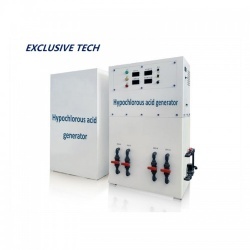
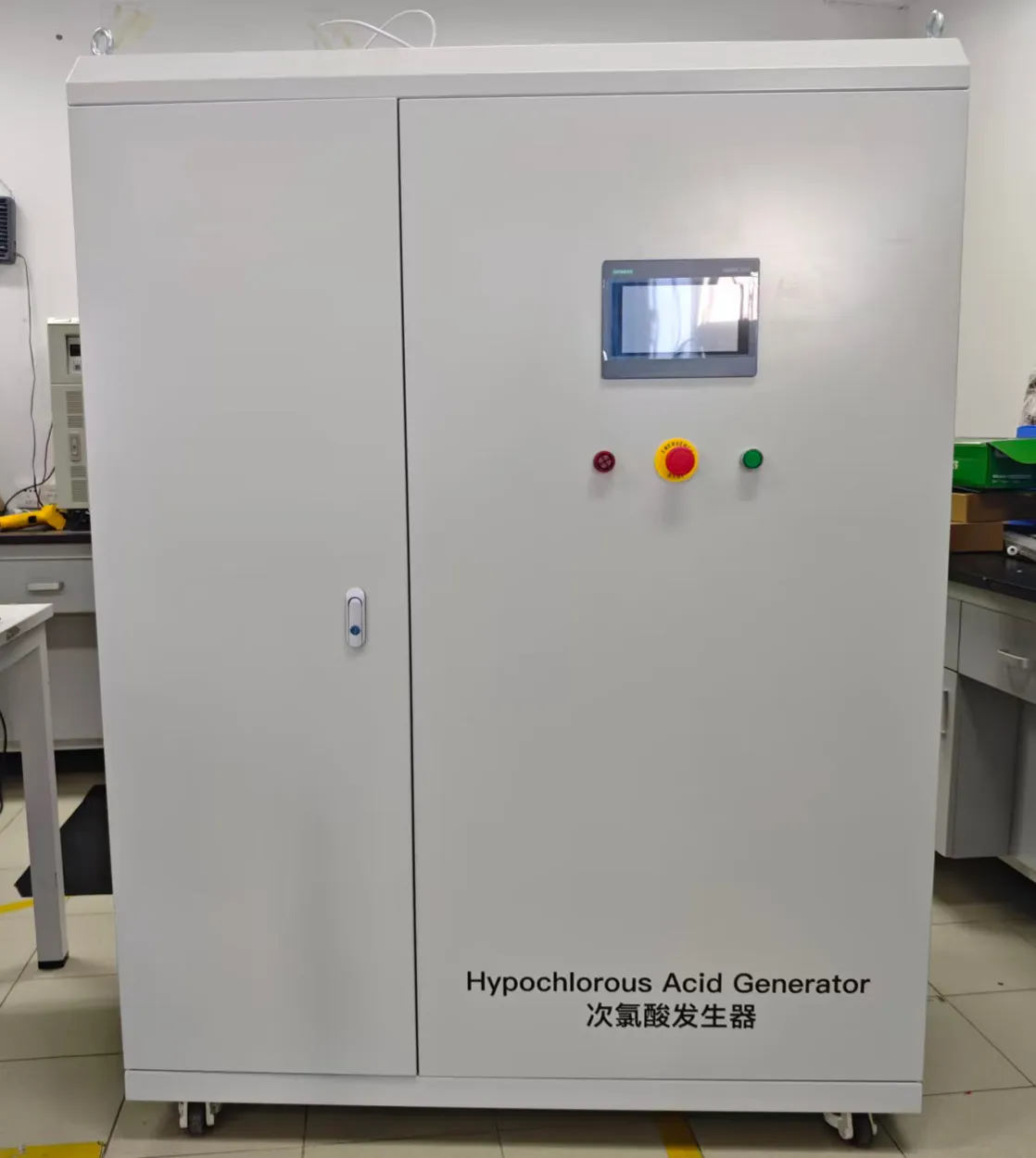
Bottled water and beverage production demand rigorous microbiological control across the whole production line. Even minor microbial contamination can trigger product spoilage, shorten shelf life and lead to compliance risks. Many bottling factories are shifting from traditional chemical sanitizers to on-site hypochlorous acid (HOCl) generation systems, which deliver food-grade, low-residue disinfection and fit seamlessly into hygienic production workflows. Our hypochlorous acid generator produces HOCl solution on demand via electrolysis of diluted brine, only using salt, water and electricity. It eliminates the risks of chemical storage, transportation and deterioration, supporting stable sanitation for every critical node in beverage and bottled water workshops.
Key Sterilization Application Scenarios in Bottled Water & Beverage Lines
Bottle & Cap Rinsing and Sanitization
Empty PET bottles, glass bottles and sealing caps are major contamination entry points. HOCl solution at controlled low concentration is adopted for final rinse before filling. It effectively kills bacteria, yeast and mold attached to inner and outer surfaces without leaving harmful residues. Unlike traditional disinfectants, it will not alter the taste and odor of finished water or beverages, meeting food contact safety requirements.
CIP (Clean-in-Place) Pipeline Sanitization
Biofilm easily accumulates inside filling pipelines, mixing tanks and conveying circuits, which is hard to remove by regular hot cleaning. HOCl penetrates and dissolves biofilm structure, continuously inhibiting microbial regrowth inside closed CIP loops. Factories can integrate the generator with automatic CIP programs to realize automatic dosing, concentration monitoring and circulation disinfection, cutting down reliance on alkaline and acidic chemical agents.
Process Water and Makeup Water Disinfection
Raw water and production process water are the foundation of bottled water quality. The HOCl system provides continuous, adjustable disinfection for process water before it enters the production line. It maintains stable microbial indicators, avoids secondary pollution of water bodies, and is suitable for both pure water and carbonated, non-carbonated beverage production water treatment.
Production Environment and Equipment Surface Sanitization
Conveyor belts, filling machines, packaging platforms and workshop floors can be sanitized by spraying or wiping with HOCl. It also supports fogging disinfection for confined filling rooms to reduce airborne microbial loads. After use, HOCl decomposes into water and chloride, with no toxic waste, friendly to on-site operators.
Packaging Material and Finished Zone Hygiene Maintenance
Packaging films, labels and finished product temporary storage areas can adopt regular HOCl mist disinfection to cross-contamination between finished products and raw packaging materials. It helps factories pass third-party food safety audits and GMP inspection smoothly.
Core Advantages of HOCl Disinfection for Beverage Bottling Factories
First, on-site generation removes the hassle of purchasing and storing bulk disinfectants, lowering procurement cost and chemical safety hazards. Second, broad-spectrum and fast bactericidal performance works against common beverage spoilage microorganisms at low ppm levels. Third, neutral or slightly acidic HOCl is gentle on stainless steel production equipment, reducing corrosion compared with strong chlorine disinfectants. Fourth, easy automation: the generator connects with online ORP and chlorine sensors to auto-adjust output concentration, suitable for continuous 24-hour bottling operation.
Practical Tips for Stable Implementation
Before deployment, map out disinfection points and set target HOCl concentrations for each station separately. Conduct regular microbial sampling verification for rinse water, pipeline swabs and finished products. Train operation teams for equipment routine maintenance and concentration calibration. We provide customized system design, installation guidance and after-sales support tailored to different production capacities of bottled water and beverage plants.
For bottled water and beverage manufacturers pursuing stable product safety and simplified sanitation management, hypochlorous acid disinfection is a reliable, future-oriented water treatment and sanitation solution.