
Slaughterhouse wastewater is one of the most complex and high-risk industrial wastewater types. Loaded with organic residues, blood, grease, fecal matter, and diverse harmful microorganisms, it generates persistent foul odors and carries severe environmental and public health hazards if discharged without professional treatment. Traditional disinfection and deodorization methods often suffer from low efficiency, excessive chemical residues, harmful byproducts, and high operational costs. As a green, high-efficiency water treatment solution, hypochlorous acid (HOCl) has become a game-changing technology for slaughterhouse wastewater treatment, achieving dual efficient removal of odor pollutants and pathogenic microorganisms.
The Unique Challenges of Slaughterhouse Wastewater Treatment
Unlike ordinary domestic sewage, slaughterhouse wastewater features high organic concentration, high turbidity, and complex pollutant components, bringing two core challenges to water treatment operations. First, persistent malodor pollution. Anaerobic decomposition of residual proteins, fats, and excreta in wastewater produces hydrogen sulfide, mercaptans, and other odorous volatile substances, forming pungent, long-lasting stench that pollutes factory surroundings, disturbs nearby residents, and violates environmental emission standards.
Second, severe pathogen contamination. The wastewater harbors a large number of pathogenic bacteria including Salmonella, E. coli, Listeria, and various viruses. These pathogens can spread through water bodies, triggering waterborne diseases and posing huge threats to ecological safety and public health. Traditional treatment processes such as sodium hypochlorite disinfection and physical aeration deodorization can only solve single problems partially, with incomplete treatment effects and unstable effluent quality.
Why HOCl Outperforms Traditional Disinfection & Deodorization Methods
Hypochlorous acid (HOCl) is a weak acidic oxidizing substance with powerful oxidative and bactericidal properties, and it is the core active ingredient of efficient green disinfection solutions. Compared with traditional chlorine-based disinfectants and physical treatment technologies, HOCl has unparalleled advantages in slaughterhouse wastewater treatment.
In terms of deodorization, HOCl acts as a strong oxidizer that can rapidly oxidize and decompose odorous molecules such as hydrogen sulfide and organic mercaptans in wastewater, converting them into non-toxic, odorless inorganic substances like sulfate. It fundamentally eliminates odor sources rather than covering up stench, realizing long-lasting and thorough deodorization. It effectively solves the problem of residual odor caused by incomplete oxidation in traditional deodorization processes.
In terms of sterilization, HOCl boasts excellent pathogen removal capacity. It can quickly penetrate the cell walls of bacteria, viruses, and fungi, destroy their internal proteins and nucleic acid structures, and inactivate all kinds of pathogenic microorganisms in a short time. Professional tests show that HOCl is 80 to 100 times more effective in killing pathogens than sodium hypochlorite at the same concentration, achieving a nearly 100% removal rate of common slaughterhouse wastewater pathogens.
More importantly, HOCl is extremely safe and environmentally friendly. After completing disinfection and oxidation reactions, it decomposes into water and trace chloride ions without producing harmful disinfection byproducts such as trihalomethanes (THMs). It leaves no chemical residues, causes no secondary pollution, and meets the strict environmental protection standards for industrial wastewater discharge.
Core Working Mechanism of HOCl in Wastewater Purification
The efficient purification performance of HOCl stems from its dual oxidation and bactericidal mechanism, which targets both odor pollutants and pathogens in slaughterhouse wastewater in a targeted manner. For odorous organic and inorganic pollutants, HOCl breaks the chemical bonds of malodorous substances through strong oxidation, completely degrading odor-causing components and inhibiting the anaerobic bacterial reproduction that leads to odor regeneration.
For pathogenic microorganisms, HOCl adopts a contact sterilization mode without delayed reaction. It instantly destroys the metabolic system and genetic structure of microbes, preventing bacterial reproduction and biofilm formation. This mechanism effectively avoids the problem of pathogen regrowth often seen in traditional disinfection processes, ensuring stable and qualified effluent microbial indicators.
Practical Application Benefits for Slaughterhouse Facilities
Adopting HOCl water treatment solutions brings comprehensive economic and environmental benefits to slaughterhouse enterprises. Firstly, it simplifies the treatment process. HOCl integrates deodorization, disinfection and partial organic pollutant degradation into one step, reducing the need for multiple chemical agents and complex equipment, and lowering equipment investment and manual operation costs.
Secondly, it reduces operational risks. The green and residue-free characteristics of HOCl avoid the hidden dangers of excessive chemical residues and harmful byproduct emissions, helping enterprises pass environmental inspections stably and reduce environmental penalty risks. Thirdly, it improves the factory production environment. Thorough odor removal optimizes the working environment for employees and eliminates resident complaints caused by wastewater stench.
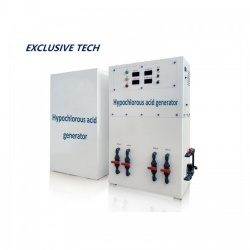
In addition, the on-site HOCl generation system can produce disinfectant through electrolysis of salt water, with low raw material cost and convenient operation, greatly reducing the long-term chemical procurement cost of enterprises, suitable for long-term continuous operation of large and medium-sized slaughterhouse wastewater treatment projects.
Conclusion
Slaughterhouse wastewater treatment puts forward high requirements for deodorization efficiency, pathogen removal effect and environmental compliance. As an advanced green water treatment technology, HOCl efficiently solves the two major pain points of odor pollution and microbial contamination with its strong oxidation performance, efficient bactericidal capacity and zero secondary pollution advantages. It replaces traditional inefficient and high-risk treatment methods, helping slaughterhouse enterprises realize standardized, low-cost and environmentally friendly wastewater discharge. With the continuous upgrading of industrial environmental protection standards, HOCl will become the mainstream preferred solution for slaughterhouse wastewater purification.