

Industrial circulating cooling water is a core component of production lines across manufacturing, power plants, chemical factories, HVAC systems and food processing facilities. During long-term cyclic operation, circulating water is prone to bacterial reproduction, algae growth, pipeline biofilm accumulation, scaling and corrosion. These common water quality problems easily lead to reduced heat exchange efficiency, blocked pipelines, increased equipment maintenance costs and even unexpected production downtime.
Most factories still rely on traditional chemical biocides, liquid sodium hypochlorite and chlorine dosing devices for daily water disinfection. However, these conventional methods face prominent pain points: strong pipeline corrosion, harmful disinfection by-products, high chemical storage risks, unstable sterilization effect and high overall operational costs. As a professional water treatment solution provider, we recommend on-site hypochlorous acid (HOCl) generators to replace outdated disinfection methods, delivering stable, safe, low-cost and eco-friendly full-cycle sterilization for industrial circulating water.
1. Main Hidden Risks of Poor Disinfection in Industrial Circulating Water
Without continuous and efficient water sterilization, industrial circulating water systems will gradually form a vicious cycle affecting production stability and equipment service life. The most common hazards are listed below:
- Biofilm and slime buildup: Massive bacteria and microorganisms adhere to inner pipe walls and heat exchangers, forming dense biofilms that greatly reduce heat transfer efficiency and increase enterprise power consumption.
- Algae outbreak and pipeline clogging: Nutrients accumulated in circulating water trigger rapid algae growth, blocking filters, cooling towers and narrow pipelines, requiring frequent manual cleaning.
- Microbial-induced corrosion (MIC): Anaerobic bacteria and sulfate-reducing bacteria accelerate metal pipeline corrosion, causing pipe leakage and shortening the service life of expensive cooling equipment.
- Excessive residual chlorine and harmful by-products: Over-dosing of traditional chlorine-based disinfectants produces trihalomethanes and other carcinogenic by-products, failing to meet industrial wastewater discharge standards.
Targeted, real-time and mild disinfection is essential to solve the above problems fundamentally, rather than regular high-dose chemical dosing for emergency treatment.
2. How Does a Hypochlorous Acid Generator Work for Circulating Water Sterilization?
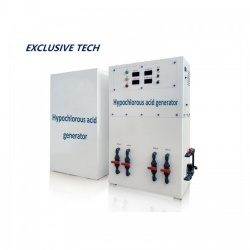
Our industrial hypochlorous acid generator adopts advanced diaphragm-free electrolysis technology, which only uses tap water, edible salt and electricity as raw materials, with no extra chemical additives required. The whole on-site electrolysis process is safe, simple and fully automatic.
Working principle: The equipment electrolyzes dilute salt water to generate high-purity, stable neutral hypochlorous acid solution on demand. With a pH value maintained between 5.5-6.5, the produced HOCl achieves the strongest sterilization activity. Different from sodium hypochlorite with strong alkalinity, neutral HOCl features low corrosiveness to carbon steel, stainless steel and copper pipelines in circulating water systems.
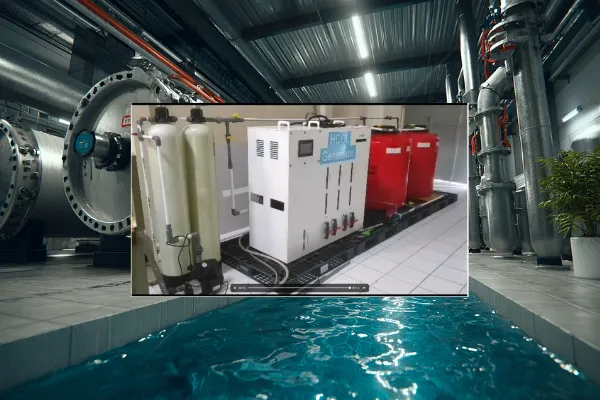
The generator supports automatic proportional dosing linked with circulating water flow sensors. It can adjust HOCl concentration intelligently in real time according to water temperature, turbidity and microbial content, maintaining stable residual chlorine in circulating water all the time. It realizes 24-hour unattended automatic disinfection for cooling tower circulating water, closed circulating water and process reclaimed water.
3. Core Advantages of HOCl Generator vs Traditional Circulating Water Disinfection Methods
Compared with chlorine gas dosing, bulk sodium hypochlorite and composite biocides, hypochlorous acid generators bring comprehensive upgrades in safety, cost, disinfection performance and environmental compliance:
3.1 Ultra-low pipeline corrosion, protecting industrial equipment
Neutral hypochlorous acid causes negligible corrosion to metal pipelines and heat exchange equipment. It avoids pipeline thinning and leakage caused by long-term use of alkaline sodium hypochlorite, cutting equipment replacement costs significantly.
3.2 Powerful biofilm removal capability
HOCl molecules have strong permeability, which can penetrate and decompose stubborn biofilms attached to pipe walls thoroughly, instead of only killing suspended bacteria in water. It solves the recurring microbial problem fundamentally and restores original heat exchange efficiency.
3.3 Zero chemical storage risk, higher on-site safety
There is no need to purchase, transport or store hazardous liquid chlorine and concentrated disinfectants. The equipment produces HOCl on demand, with no residual disinfectant stored on site, eliminating chemical leakage and safety accidents in factories.
3.4 Lower overall operation cost
Raw materials only include cheap salt and water, with extremely low daily operating cost. The fully automatic design reduces manual dosing and maintenance labor costs. Meanwhile, improved heat exchange efficiency cuts long-term power consumption for enterprises.
3.5 Eco-friendly and compliant discharge
After disinfection, hypochlorous acid is naturally decomposed into water and trace salt rapidly, producing no persistent organic pollutants or toxic disinfection by-products. It fully meets global industrial wastewater discharge and environmental protection standards.
4. Typical Industrial Application Scenarios
Our industrial hypochlorous acid generators are widely applicable to all types of circulating water systems across multiple industries:
- Cooling tower circulating water for power plants, chemical plants and manufacturing workshops
- Central air conditioning closed circulating water for commercial buildings and industrial parks
- Process circulating water and reclaimed water reuse systems in food and beverage factories
- Circulating water sterilization and algae removal for pharmaceutical factories and electronic workshops
- Wastewater pretreatment and circulating water purification for printing and dyeing industry
Conclusion
For modern industrial enterprises pursuing safe production, energy conservation and environmental compliance, traditional chemical disinfection for circulating water has become outdated. The hypochlorous acid generator provides a one-stop circulating water sterilization solution featuring on-site production, low corrosion, biofilm elimination, cost saving and green emission.
Our team provides customized capacity selection, pipeline matching, on-site installation and after-sales debugging services for industrial circulating water projects. Contact us now to optimize your circulating water treatment system and reduce overall water operation costs.