
Most coastal thermal power plants have tried more than one anti-fouling method. Manual cleaning, chemical dosing, and ultraviolet treatment all have their place, but they also have a pattern: they work for a while, then the bio-fouling comes back. The question is not whether these methods can kill marine organisms. The question is whether they can keep a seawater cooling system clean for months and years without adding too much cost, risk, or downtime.
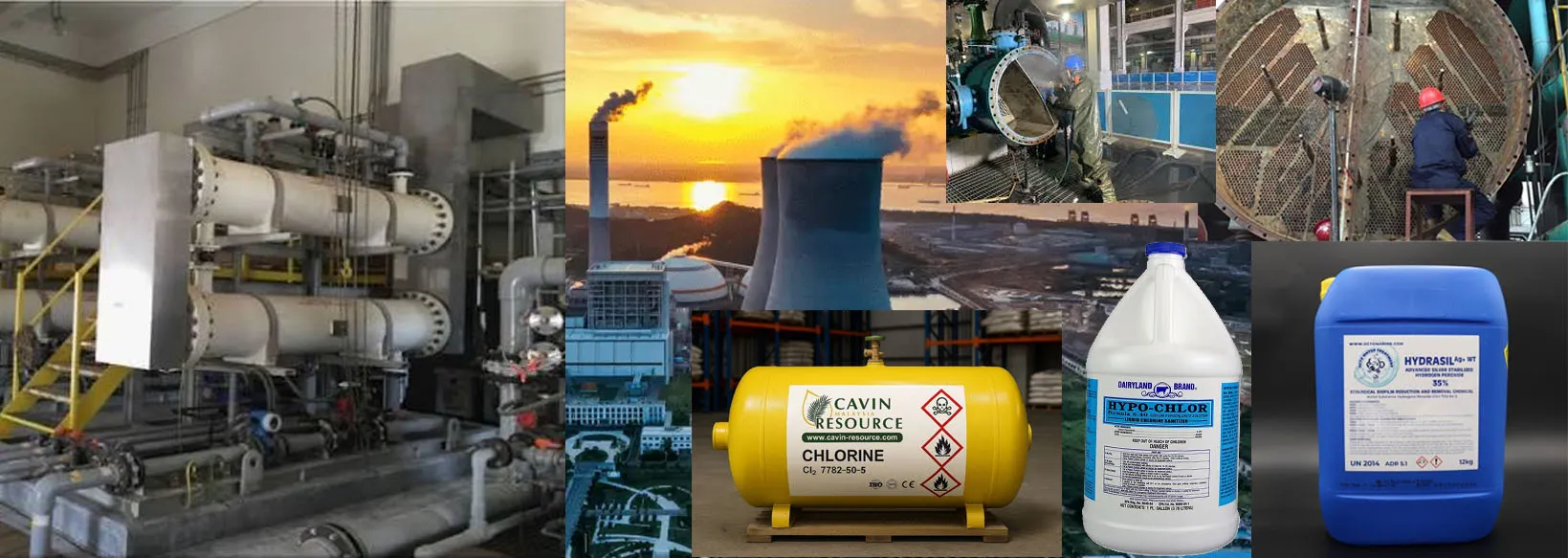
That is where seawater electro-chlorination enters the comparison. Instead of buying and storing chemicals, it generates a low concentration of sodium hypochlorite on site from seawater and electricity. The dosing is continuous, automatic, and usually maintained at 0.1–0.5 mg/L residual chlorine. But electro-chlorination is not the only option, and it is not always the best answer for every plant. This article compares it with the main traditional methods used in coastal power plants.
If you need the full technical background first, read our guide: How Seawater Electro-Chlorination Solves Marine Bio-Fouling for Coastal Thermal Power Plants.
What Actually Matters in an Anti-Fouling Comparison
Anti-fouling decisions often get reduced to chemical cost per ton or equipment price. In practice, those numbers are misleading. A method that looks cheap on paper can become expensive once you add shutdowns, labor, corrosion, environmental compliance, and lost generation.
A fair comparison should look at five things:
- Continuity. Does it prevent attachment around the clock, or only clean after fouling has already formed?
- Safety and compliance. Does it require hazardous chemicals, and what happens to the discharge?
- Operational burden. How much manual intervention, monitoring, and maintenance does it need?
- Total cost. Not just procurement, but transport, storage, labor, downtime, and equipment life.
- Fit with seawater. Turbidity, salinity, temperature, and flow rate all affect performance.
Manual and Mechanical Cleaning
Manual cleaning is the oldest method. It includes brushing, scraping, sponge balls, and high-pressure washing. When a condenser or heat exchanger is already fouled, this is often the only way to remove hard-shell organisms like barnacles and mussels.
The advantages are obvious: no chemicals, no complex equipment, and immediate visible results. The disadvantages show up over time. Cleaning requires shutdowns or reduced load. It is labor-intensive. It cannot reach every internal surface, especially in complex piping. And it does nothing to stop new larvae from attaching the next day.
For a small plant with intermittent operation, manual cleaning may be enough. For a large coastal plant running continuously, it becomes a recurring cost that competes with power generation.
Chemical Dosing: Liquid Chlorine, Sodium Hypochlorite, and Biocides
Chemical dosing has been the default anti-fouling method for decades. Liquid chlorine, sodium hypochlorite, and commercial biocides are effective against algae, bacteria, and larvae. The problem is not effectiveness. The problem is control.
Many plants dose intermittently at higher concentrations. That kills organisms quickly, but it also creates a rebound effect. When the residual chlorine drops, the surviving population grows back. Meanwhile, high-dose chlorination can accelerate corrosion of copper alloys and other materials in the cooling system.
There are also handling costs that do not appear in the chemical price. Liquid chlorine is hazardous. It needs secure storage, leak detection, trained staff, and emergency procedures. Sodium hypochlorite degrades over time, so storage becomes a logistics issue. Residual chlorine in the discharge may also conflict with marine environmental limits.
Chemical dosing can work well for plants that already have strong chemical management systems. But it is not a low-attention solution.
Ultraviolet Sterilization
UV treatment has a clear appeal: no chemicals, no residual disinfectant, and no chemical storage. It is widely used in smaller cooling systems, aquaculture, and pretreatment stages.
The catch is seawater. UV works best in clear water with low turbidity. In coastal seawater, suspended solids, algae, and organic matter reduce UV penetration. More importantly, UV only affects organisms that pass through the reactor. It does nothing for barnacles, mussels, or biofilms already attached to pipe walls and heat exchanger surfaces.
Lamp maintenance is another factor. UV lamps need replacement, cleaning, and power. For a large once-through seawater cooling system, UV is usually not practical as the main anti-fouling barrier. It can be useful as a supplementary treatment, but it does not replace continuous bio-fouling control.
Seawater Electro-Chlorination
Seawater electro-chlorination takes a different approach. It uses the chloride ions already present in seawater. A small side stream of seawater passes through an electrolytic cell, where direct current produces hypochlorous acid and hypochlorite ions. The resulting low-concentration disinfectant is injected back into the cooling water system.
Because the active chlorine is generated on demand, there is no liquid chlorine inventory, no chemical transport, and no storage risk. The system can run 24/7 and adjust output based on seawater temperature, flow, and biological activity. Residual chlorine is typically kept between 0.1 and 0.5 mg/L, which is enough to inhibit attachment without damaging equipment or causing persistent environmental harm.
The method is not maintenance-free. Electrolytic cells need periodic cleaning, and power consumption is part of the operating cost. Seawater salinity and quality also matter. But for continuous protection of condenser tubes, heat exchangers, and intake pipelines, electro-chlorination is one of the few methods that prevents fouling rather than reacting to it.
Side-by-Side Comparison
| Method | Continuity | Chemical Handling | Environmental Risk | Shutdown Need | Best Fit |
|---|---|---|---|---|---|
| Manual / mechanical cleaning | Intermittent | None | Low | High | Small plants, emergency cleaning |
| Chemical dosing | Intermittent or semi-continuous | High | Moderate to high | Low to moderate | Plants with chemical management capacity |
| UV sterilization | Continuous for passing flow | None | Low | Low | Small flows, clear water, pretreatment |
| Seawater electro-chlorination | Continuous 24/7 | None | Low, with rapid decomposition | Low | Medium to large coastal power plants |
How to Choose by Plant Size and Operating Pattern
There is no universal winner. The right choice depends on how the plant runs and what constraints it faces.
Small plants and intermittent operation
If the plant operates seasonally or at low capacity, manual cleaning plus UV may be enough. Chemical dosing can also work, provided the plant has proper storage and trained staff. Electro-chlorination may be harder to justify if the cooling system is small and shutdowns are not expensive.
Medium plants with continuous operation
This is where the comparison becomes more balanced. Chemical dosing is common, but the hidden costs of handling, corrosion, and environmental compliance start to add up. Electro-chlorination becomes attractive because it removes chemical logistics and provides continuous protection. A pilot trial is often the best way to compare actual performance and operating cost.
Large coastal plants with strict environmental limits
For large once-through cooling systems, the priority is continuous anti-fouling with predictable compliance. Electro-chlorination is usually the strongest candidate. It avoids chemical storage, keeps residual chlorine low, and can be integrated with automated monitoring. If the plant already has a seawater intake and reliable power, the infrastructure fit is straightforward.
Practical Notes Before You Decide
Whichever method you choose, a few details decide whether it works in the real world.
- Residual chlorine control. More chlorine is not better. Continuous low-dose treatment is usually more effective and safer than intermittent high-dose shocks.
- Material compatibility. Check gaskets, seals, and heat exchanger materials. Some materials tolerate chlorinated seawater better than others.
- Monitoring. Without reliable residual chlorine monitoring, even a good system can drift out of range.
- Electrode maintenance. Electro-chlorination cells need periodic cleaning. Plan for it rather than treating it as a failure.
- Seasonal biology. Larval settlement peaks vary by location. The system should be able to adjust dosing through the year.
The Bottom Line
Manual cleaning, chemical dosing, and UV treatment are not obsolete. They still have roles in specific situations. But for coastal thermal power plants that run continuously and face persistent marine bio-fouling, the limitations of traditional methods become expensive and difficult to manage.
Seawater electro-chlorination is not a magic fix. It requires proper design, power, and maintenance. But it solves the core problem that other methods struggle with: it keeps the cooling system clean continuously, without chemical storage or repeated shutdowns. For many plants, that combination of continuity, safety, and lower long-term cost is what makes it the better choice.