Product Overview
Application Scenarios & Main Processes:
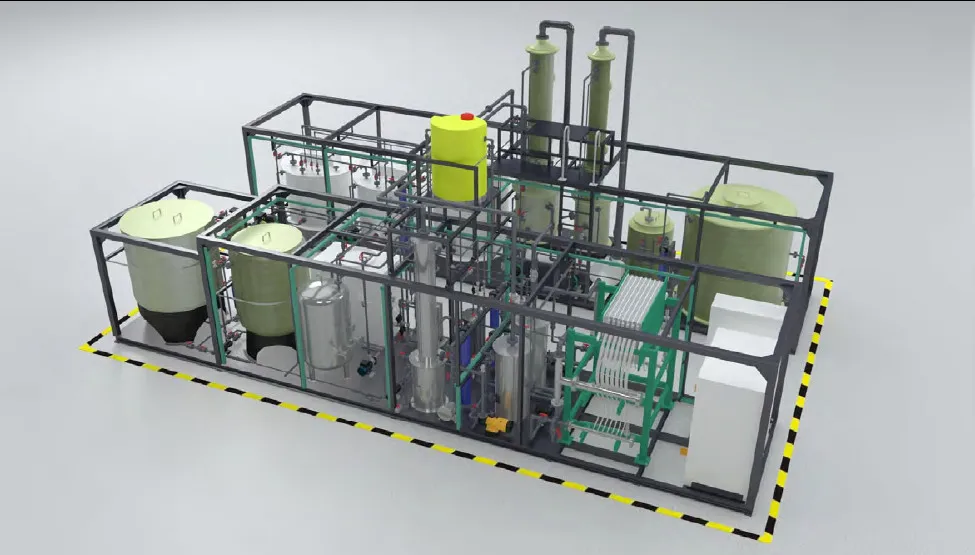
Membrane-based Nitrate Removal: Pretreatment + nanofiltration membrane salt separation technology.
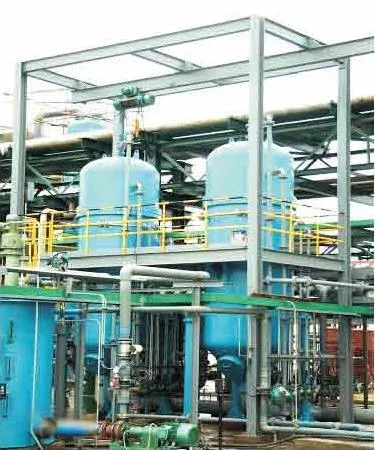
Process Flow
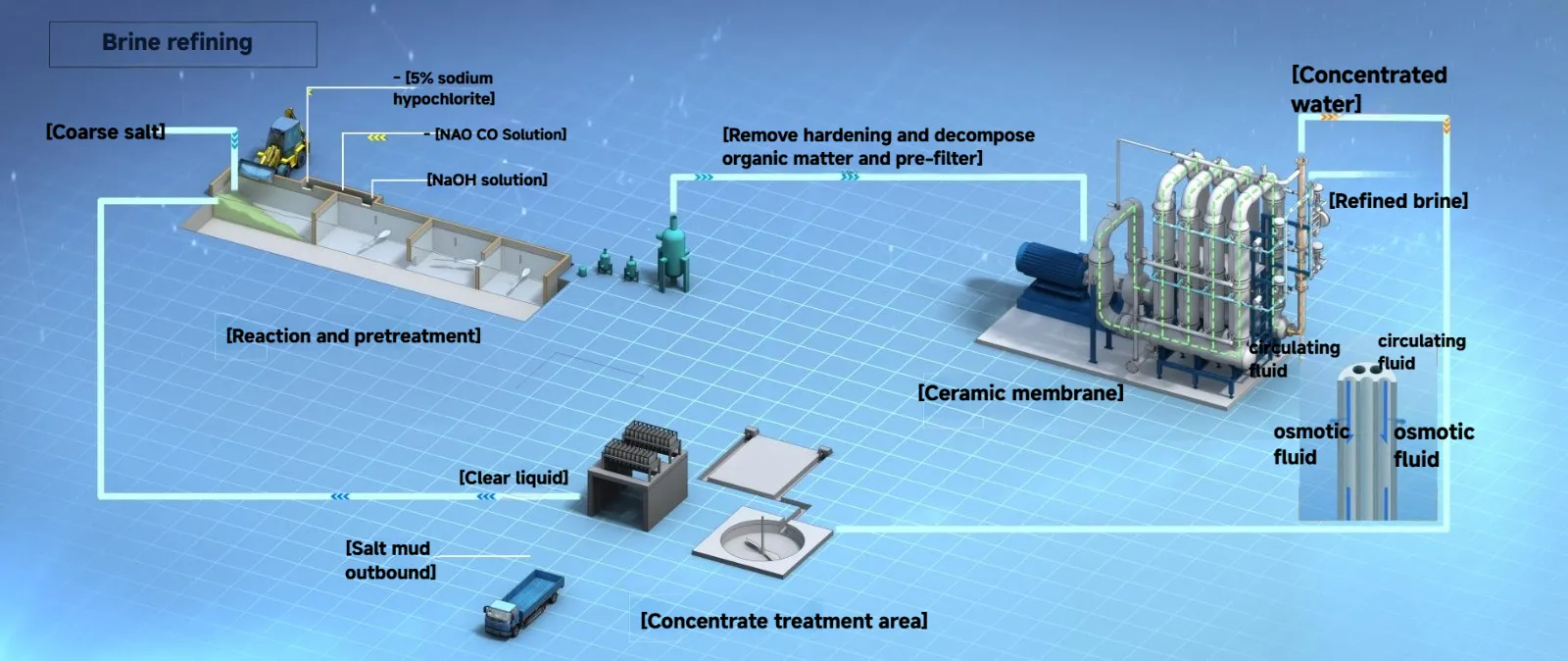
- Raw Brine Feed: Crude brine is delivered from the primary brine tank. Flocculant and coagulant aid are dosed and fully mixed to form colloidal flocs.
- Pre-Sedimentation: Mixed brine flows into the pre-sedimentation tank for preliminary settling of large flocs to reduce loading and protect ceramic membrane elements.
- Circulation Feed: Supernatant from pre-sedimentation enters the CBS ceramic membrane circulation tank to maintain high crossflow velocity.
-
Core Ceramic Membrane Crossflow Filtration
- Permeate (clean filtrate) → Primary brine tank, then fed to downstream chelating resin tower for secondary refining
- Concentrate (containing flocs and suspended solids) → Recirculate back to the circulation tank for solids enrichment
- Automatic Online Backwash: Periodic backwash of the membrane surface with filtrate or dilute chemicals to mitigate membrane fouling.
- CIP Chemical Cleaning: When transmembrane pressure reaches the threshold, online chemical cleaning (alkaline cleaning + acid cleaning) is activated to restore membrane flux.
- Sludge Discharge: Enriched concentrated slurry is periodically transferred to the sludge tank, dewatered by filter press, and the dried sludge is transported out for disposal.
- Permeate Delivery: Qualified CBS permeate is sent to the secondary brine chelating resin process.
Key Auto-Control Points (DCS/PLC Compatible)
- Online monitoring of crossflow circulation flow and transmembrane pressure (TMP)
- Sequence control for automatic backwash and CIP chemical cleaning
- High/low liquid level interlock, overpressure protection and membrane element fault alarm
- Compatible with SUPCON WebField DCS and capable of interlocking with downstream resin towers
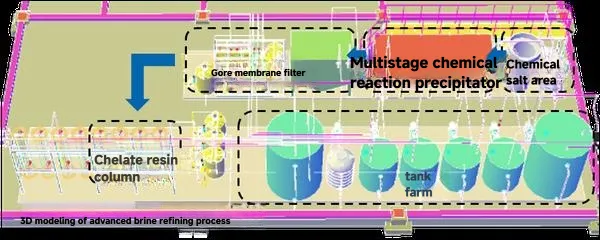
Process Advantages
-
Compact Process Flow
No complex pretreatment system, ideal for organic membrane retrofitting projects
-
Easy Operation & Maintenance
Stable membrane material and fixed filtration precision, high mechanical strength, heat-resistant and pressure-resistant
-
High Fouling Resistance
Tolerates raw salt with high magnesium content and has low requirements for raw salt quality
-
Excellent Regenerability
Strong regeneration performance and high flux recovery rate
-
Long Service Life
Inorganic membrane material with a service life of more than 5 years under high pressure
-
Full Titanium Construction
Titanium equipment with a service life exceeding 20 years. It avoids unexpected shutdowns caused by liner peeling in traditional rubber-lined or plastic-lined equipment.
-
High Degree of Automation
Highly automated with one-click start/stop and unattended operation
-
Fully Enclosed Operation
The inorganic membrane system runs in a fully enclosed structure to prevent salt mist volatilization and corrosion on site, supporting 6S on-site management.
-
High Permeate Flux & Extended Acid Cleaning Interval
Inorganic membranes feature high porosity to maintain stable flux during brine filtration. The high-efficiency crossflow filtration prevents cake layer formation on the membrane, securing stable flux and extending the acid cleaning cycle.
Boasting 25 years of professional industry experience in production and supply, Chlory factory delivers premium,cost-effective chemical products with reliable quality. Worldwide exported to more than 50 countries, including Italy, USA, Saudi, Africa and other countries and some foreign companies are our agents locally. Equipped with fully automatic production systems and scientific modular production line design, we achieve stable output, high efficiency and low energy consumption while strictly complying with industrial standards. Different from ordinary manufacturers, Chlory provides flexible customized services tailored to diverse customer needs on product specifications, packaging and solutions. With direct factory pricing and optimized production processes, we help clients cut procurement costs and obtain high-quality, stable chemical supplies with comprehensive professional support.