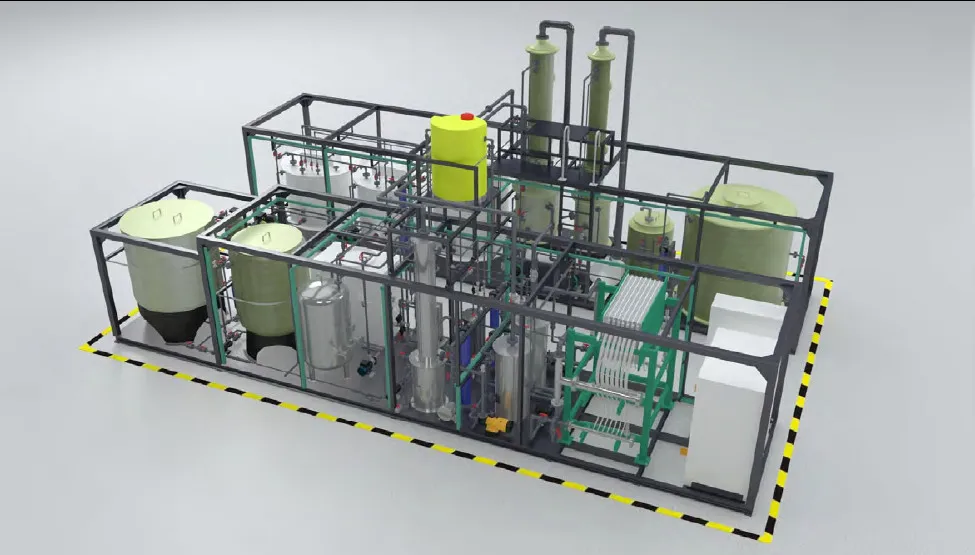
Circulating cooling water is the core auxiliary water system of thermal power plants, nuclear power plants and other power generation facilities. Long-term cyclic operation leads to massive reproduction of bacteria, algae, microorganisms and biofouling in water bodies, which easily causes pipeline blockage, heat exchanger scaling, corrosion of equipment and degradation of heat exchange efficiency. These problems not only increase operating energy consumption and maintenance costs, but also bring potential safety hazards to the stable operation of power units. Traditional sterilization methods such as liquid chlorine dosing and ordinary sodium hypochlorite disinfection have prominent defects including low sterilization efficiency, unstable chemical concentration, high safety risks and serious secondary pollution. The membrane-type hypochlorite system, as an advanced on-site electrolytic disinfection technology, has become the optimal solution for high-efficiency and low-consumption sterilization of power plant circulating water.
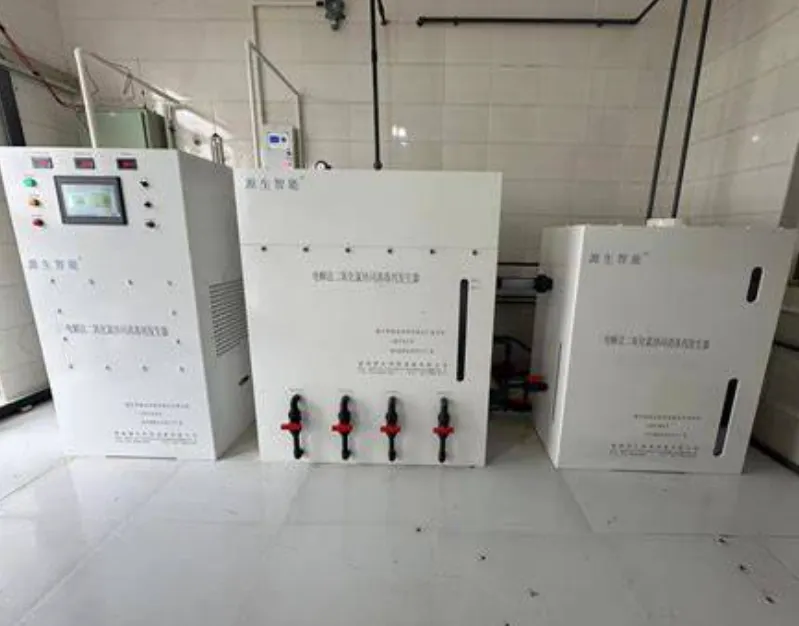
1. Core Working Principle of Membrane-Type Hypochlorite Sterilization System
The membrane-type hypochlorite system relies on selective ion exchange membrane electrolysis technology to realize on-site, continuous and stable preparation of high-concentration sodium hypochlorite disinfectant, fundamentally different from traditional blended sodium hypochlorite solution. The core equipment adopts a sealed electrolytic cell divided by professional ion exchange membranes, which accurately separates the anode and cathode reaction zones and realizes directional migration and screening of ions in the brine solution.
During operation, saturated dilute brine is transported to the electrolytic cell. Under the action of DC electric field, chloride ions in the solution undergo electrochemical reaction at the anode to generate chlorine gas, which immediately reacts with water to form hypochlorous acid with strong oxidizing and bactericidal properties. Meanwhile, the ion exchange membrane effectively isolates impurity ions and avoids the mixing of anode and cathode electrolytes, ensuring the high purity and stable concentration of the generated sodium hypochlorite solution. The high-concentration hypochlorite solution produced on-site is directly dosed into the power plant circulating water system. Hypochlorous acid released in water can destroy the cell walls, enzyme systems and genetic structures of microorganisms such as bacteria and algae, realizing efficient sterilization, algae removal and biofouling prevention.
2. Key Advantages Over Traditional Circulating Water Sterilization Technologies
Compared with conventional disinfection methods widely used in power plants, the membrane-type hypochlorite system has obvious technical, safety and economic advantages, solving multiple pain points of traditional water treatment sterilization.
Stable High-Concentration Disinfection Effect. Traditional commercially available sodium hypochlorite solution is prone to decomposition and concentration attenuation during storage and transportation, resulting in insufficient effective chlorine content and unstable sterilization effect. The membrane-type system supports on-site real-time electrolysis and dosing, with controllable and stable hypochlorite concentration. The high-purity disinfectant ensures lasting and efficient bactericidal activity, thoroughly inhibits the growth of Legionella, heterotrophic bacteria and algae in circulating water, and maintains long-term clean water quality.
High Operational Safety and Low Environmental Risk. Liquid chlorine disinfection involves dangerous chemical storage and pipeline transportation, with huge risks of leakage, explosion and toxic gas overflow. Conventional non-membrane electrolysis equipment is prone to impurity mixing and by-product generation. The membrane-type hypochlorite system only uses raw water and industrial salt as raw materials, without storage of large quantities of hazardous chemicals. The closed membrane electrolysis structure avoids the escape of chlorine gas and the generation of harmful by-products, achieving green and safe disinfection and meeting the environmental protection emission standards of power industry.
Excellent Economic and Operational Stability. The system adopts modular and integrated design, with low energy consumption and simple operation and maintenance. It supports automatic intelligent dosing according to circulating water flow and microbial content, avoiding excessive dosing and chemical waste. In addition, the selective membrane structure reduces electrode corrosion and equipment aging, greatly extending the service life of core equipment and reducing the long-term operation and maintenance costs of power plant water systems.
3. Practical Application Value in Power Plant Circulating Water Treatment
Power plant circulating water has the characteristics of large water volume, high cycle frequency and complex water quality environment, which puts forward high requirements for the continuity, stability and efficiency of sterilization treatment. The membrane-type hypochlorite system is specially optimized for the operating characteristics of power plant water systems, and has been widely applied in thermal power, nuclear power and new energy power generation projects.
In actual operation, the system can effectively eliminate biofouling on the surface of cooling towers, condensers and heat exchange pipelines, reduce pipeline corrosion and scaling rate, and significantly improve the heat exchange efficiency of circulating water systems. Stable water quality sterilization ensures the long-term efficient and stable operation of power generation equipment, reduces unit energy consumption and equipment failure rate, and extends the service life of circulating water system facilities. At the same time, the green and low-carbon disinfection mode helps power plants reduce environmental management pressure, meet industrial water treatment specifications and green production assessment standards, and enhance the overall operational compliance and sustainability of enterprises.
4. Future Development Trend of Membrane-Type Hypochlorite Sterilization Technology
With the continuous upgrading of power industry environmental protection standards and the accelerating transformation of energy-saving and low-carbon production, intelligent, efficient and green water treatment technology has become the mainstream development direction. The membrane-type hypochlorite system is constantly optimized in terms of membrane material performance, intelligent control system and energy-saving electrolysis technology. The new-generation high-precision ion exchange membrane further improves the purity and yield of hypochlorite solution, and the fully automatic PLC intelligent control system realizes unattended operation and remote monitoring.
As a mature and innovative circulating water sterilization solution, membrane-type hypochlorite disinfection technology will replace traditional backward disinfection processes in more power plant projects, providing reliable technical support for the safe, efficient and green operation of power plant water systems.