
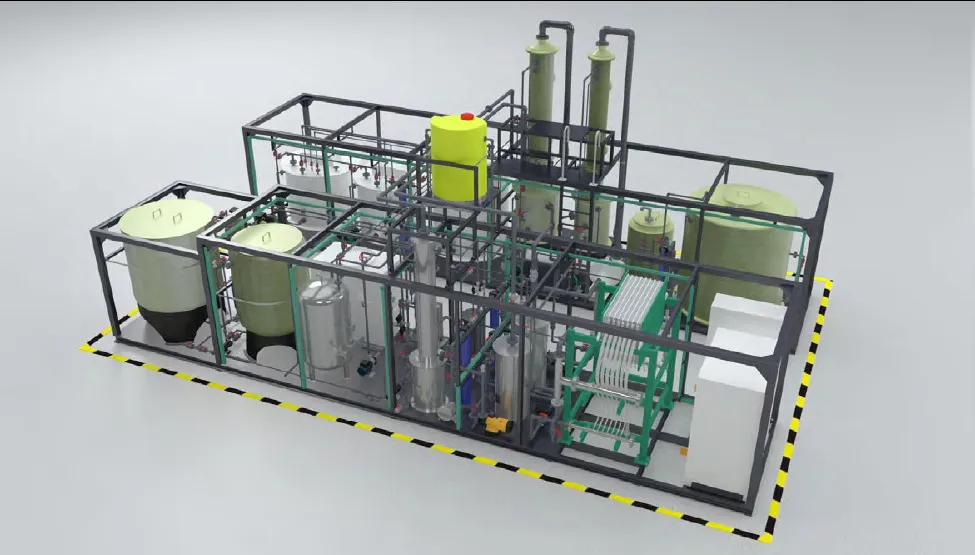
Oil and gas operations generate large volumes of process water, including produced water, injection water, and cooling water. These streams carry high salinity, organic loading, hydrogen sulfide, and sulfate‑reducing bacteria (SRB). Uncontrolled microbial growth triggers microbiologically influenced corrosion (MIC), reservoir souring, biofouling, and costly downtime. Many operators are switching from low‑strength delivered bleach or biocide blends to high‑concentration sodium hypochlorite (NaOCl) systems for reliable oxidation and disinfection. This article shares real field cases and practical lessons for upstream and midstream oilfield water treatment.
Unique Disinfection Challenges for Oil & Gas Process Water
Oilfield process water is far more complex than standard municipal wastewater. High total dissolved solids (TDS), fluctuating pH, oil residues, and H₂S create a high chlorine demand. Low‑concentration bleach requires massive storage volume, frequent deliveries, and suffers rapid active chlorine degradation under high field temperatures. Under‑dosing allows SRB and biofilms to persist; over‑dosing creates excess chlorine residual, halogenated by‑product risks, and corrosion concerns for pipelines and wellbore equipment. Traditional biocides also face microbial resistance after repeated cycles. High‑strength NaOCl balances strong oxidizing power with compact dosing when paired with automated monitoring and controlled injection.
Field Case 1 – Onshore Produced Water Reinjection Project
A land‑based oilfield in a hot arid region operated a produced water reinjection system. The original biocide program used bulk 12.5% bleach delivered by tanker. Long transport routes and storage in high heat caused steady chlorine decay, inconsistent SRB control, and rising MIC reports on injection manifolds.
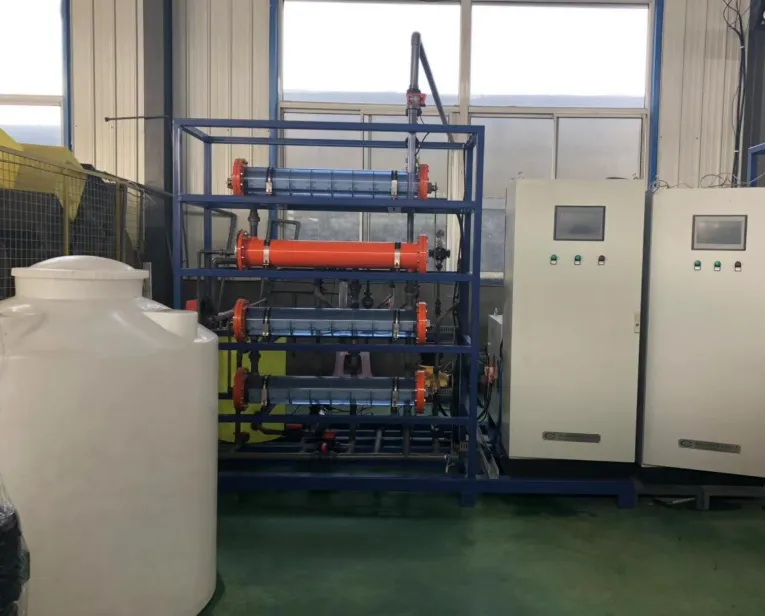
Our team deployed a high‑concentration on‑site NaOCl generation skid with continuous free chlorine and ORP monitoring. The system delivered stable high‑strength hypochlorite tailored to variable chlorine demand. After 90 days of operation:
- SRB counts remained consistently below action thresholds
- H₂S levels in reinjection water dropped significantly
- Chemical delivery trips reduced by 75%
- Pipeline cleaning frequency and maintenance cost decreased
Operators eliminated guesswork from degraded delivered bleach and maintained stable disinfection across shifting produced water quality.
Field Case 2 – Offshore Platform Cooling & Seawater Intake Disinfection
An offshore production platform needed biofouling control for seawater intake lines and closed cooling circuits. Space and weight were tightly limited, and frequent chemical resupply by supply boat was expensive and weather‑dependent. Low‑strength bleach tanks occupied valuable deck space.
We installed a compact high‑concentration hypochlorite unit sized for intermittent shock dosing and low continuous feed. The system used local brine feedstock and produced high‑strength NaOCl on demand. Outcomes:
- Algae and mussel fouling on heat exchangers declined sharply
- Residual chlorine was tightly controlled to avoid impact on overboard discharge
- Storage footprint cut by more than 60% compared with bulk bleach tanks
- Less reliance on marine supply logistics during storm seasons
This case proves high‑concentration NaOCl works well for space‑constrained offshore assets when paired with corrosion control and residual monitoring.
Field Case 3 – Midstream Pipeline Gathering System Biofilm Remediation
A crude gathering network suffered persistent biofilm buildup even after quarterly biocide slug treatments. Biofilms trapped organic solids, promoted under‑deposit corrosion, and reduced flow efficiency. Standard low‑strength bleach slugs failed to penetrate mature EPS biofilm layers.
The solution combined targeted high‑concentration NaOCl shock treatment with controlled contact time and post‑treatment residual quenching. The concentrated oxidant penetrated biofilm matrices, oxidized organic deposits, and inactivated embedded bacteria. After the remediation cycle:
- Differential pressure across problematic pipeline segments returned to baseline
- Follow‑up routine low‑dose NaOCl maintenance prevented rapid biofilm regrowth
- No uncontrolled high residual reached downstream separation facilities
This highlights an important best practice: high‑strength NaOCl is powerful for remediation, but dosing sequence, contact time, and residual management are critical to safe performance.
Key Lessons From Oilfield High‑Concentration NaOCl Deployments
These three field projects confirm several core principles for oil and gas water disinfection. First, high‑concentration NaOCl is excellent for both routine biocontrol and shock remediation, but it is not “set‑and‑forget.” ORP, free chlorine, pH, and chlorine demand must be tracked continuously, especially where oil and H₂S load swing daily. Second, material selection matters: high‑strength hypochlorite is corrosive, so wetted parts must use CPVC, titanium, or compatible alloys. Third, on‑site generation beats bulk delivery for remote, offshore, or hot locations by avoiding chemical strength loss and logistics risk.
When engineered correctly, high‑concentration sodium hypochlorite addresses the root pain points of oilfield water: souring, MIC, biofouling, and unreliable biocide supply. It supports both reinjection compliance and regulated discharge limits for upstream operators.