
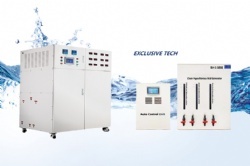
Seafood processing facilities face unique sanitation challenges. Raw fish, shrimp and shellfish carry high loads of spoilage bacteria, and protein decomposition generates persistent fishy odors that linger on floors, drains, cutting tables and conveyors. Traditional sanitizers often struggle with two issues at once: reliable pathogen control and lasting odor removal. Many chemical disinfectants leave residues, alter seafood flavor, corrode equipment or create strong secondary fumes that affect operators. Our on-site hypochlorous acid (HOCl) generator delivers an integrated solution for simultaneous sterilization and deodorization, helping seafood processors stabilize food safety, improve workshop air quality and meet strict hygiene compliance.

Core Application Scenarios for HOCl in Seafood Processing
HOCl solution produced by the generator can be deployed across the whole processing workflow with adjustable concentration, suitable for direct food contact and environmental treatment.
- Raw seafood rinsing and soaking: Gentle spray or dip treatment for fish, shellfish and cephalopods to reduce surface bacteria without damaging texture, color or natural taste.
- Processing tool and contact surface sanitization: Sanitize cutting boards, knives, trays, conveyor belts and sorting lines. HOCl penetrates biofilms that hide bacteria and odor sources.
- Floor, drain and waste area deodorization & disinfection: Drains and waste collection zones are major odor hotspots. Regular HOCl spraying suppresses odor-causing microbes at the source instead of merely masking smells.
- Cold room and sanitized ice preparation: Mix HOCl into process water to make sanitized ice for seafood storage, slowing spoilage during temporary holding.
- Fogging sanitation for enclosed workshop spaces: Atomized HOCl treats air and hard-to-reach corners, lowering airborne bacteria and reducing pervasive fishy odor.
Key Advantages of On-Site HOCl Generation for Seafood Plants
Unlike purchased sanitizer chemicals, our HOCl system produces disinfectant on demand using only water, salt and electricity. First, it offers broad-spectrum bactericidal performance against spoilage bacteria and common foodborne pathogens, while breaking down odor-causing volatile compounds. It works for both sterilization and deodorization in one step. Second, food-safe and low-residue. Properly dosed HOCl requires no post-rinse for most food-contact surfaces and seafood washing processes. It degrades naturally into water and salt after use, eliminating worries about harmful chemical residues on finished products. Third, mild formula with low corrosion. Compared with high-concentration bleach, it is gentler on stainless steel processing equipment and reduces wear on production assets. Fourth, lower operational cost and simpler management. On-site generation removes repeated ordering, transportation and storage of bulk hazardous chemicals, and supports continuous supply to match production schedules.
Practical Tips for Stable Operation
Consistent results rely on standardized operation and regular system maintenance.
- Calibrate concentration according to usage zone: Use lower ppm for direct seafood washing, and higher targeted dosing for drains, waste areas and heavy soiling surfaces.
- Monitor pH and ORP parameters daily to guarantee HOCl activity; avoid over-dosing which may affect sensory quality.
- Combine HOCl sanitation with physical pre-cleaning. Remove organic sludge and seafood scraps first, as heavy organic loads will weaken disinfection and deodorization effects.
- Schedule fogging and environmental spraying during production gaps, and establish log records for sanitation frequency, concentration and inspection results for audit readiness.
- Carry out routine maintenance of the electrolytic cell, water pretreatment and dosing pipeline to keep the generator stable for long-term continuous running.
For seafood processors aiming to upgrade hygiene management, the hypochlorous acid generator is a practical, sustainable sanitation solution that addresses both microbial risks and troublesome workshop odors.