
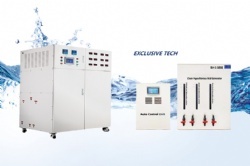
Dairy manufacturing faces strict hygiene challenges every day. Raw milk, fermented products, yogurt and cheese lines are highly susceptible to contamination by Listeria, Salmonella, E. coli and biofilms hidden inside pipelines, storage tanks and filling equipment. Traditional sanitizers such as bleach, iodine and quaternary ammonium salts often leave residues, alter dairy flavour, corrode stainless steel equipment and bring heavy chemical storage and handling risks. An on-site hypochlorous acid (HOCl) generator delivers a reliable, food-safe sanitation solution tailored for dairy workshops, supporting consistent food safety compliance and stable product quality.
Why Dairy Production Needs Specialised HOCl Sanitation
Dairy processing environments are unique. Milk fat and protein residues easily form sticky biofilms on tank walls, valves, heat exchangers and CIP circulation loops. These biofilms shield pathogens and become a recurring source of cross-contamination. Sanitizers used on food-contact surfaces must meet food-grade standards, leave no harmful residues, and cannot negatively affect the taste, aroma or shelf life of milk and dairy products.
Hypochlorous acid is a broad-spectrum, fast-acting sanitizer. Generated on demand from water, salt and electricity via electrolysis, it works efficiently at low concentrations. It eliminates bacteria, mould and viruses rapidly, breaks down biofilm structures, and decomposes into water and salt after use without persistent chemical residues. It is gentle on stainless steel pipelines, seals and filling machinery, greatly reducing equipment corrosion compared with sodium hypochlorite.
Key Application Scenarios in Dairy Workshops
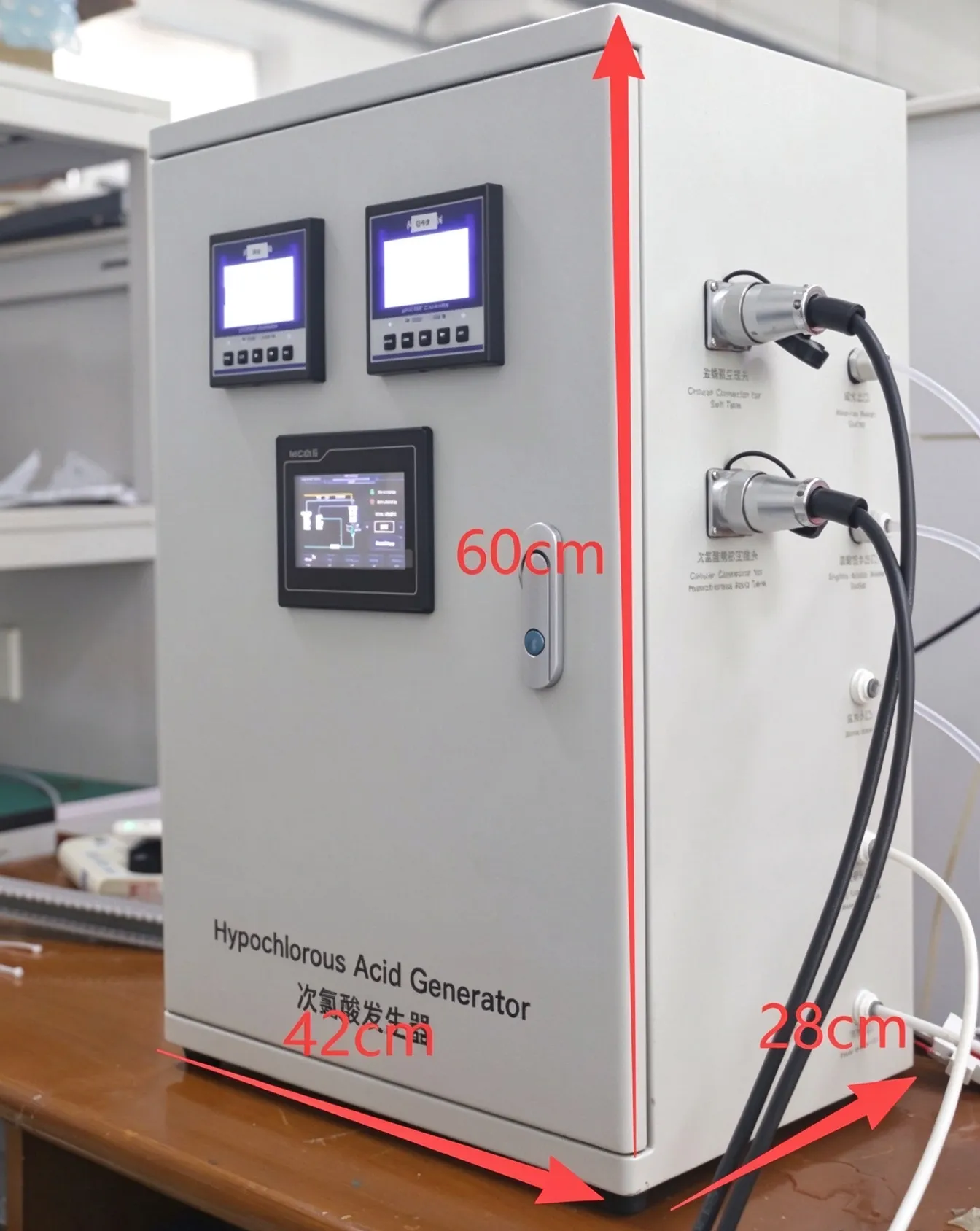
Our integrated hypochlorous acid generator system connects seamlessly with existing dairy sanitation workflows.
- CIP (Clean-in-Place) Circulation Disinfection: Circulate stabilised HOCl solution through milk storage tanks, pipelines, homogenisers, sterilisation units and filling machines to remove residual organic matter and sanitise inner surfaces.
- Surface Sanitisation: Spray or soak worktables, tools, conveyor belts, packaging containers and bottle preforms for food-contact surface disinfection.
- Workshop Air & Environmental Sanitisation: Atomised HOCl mist controls airborne microbes and mould in packaging rooms, cooling zones and clean areas to lower cross-contamination risks.
- Personnel Access Sanitation: Foot baths and hand sanitising stations supplied by the HOCl system maintain hygiene at entry points of the clean workshop.
Core Advantages of Our HOCl Generator Solution for Dairy Plants
- On-site, On-demand Production: No bulk chemical purchasing, transportation or storage. The system produces HOCl water whenever required, cutting procurement and logistics costs and eliminating risks of chemical leakage.
- Consistent Sanitiser Quality: Automatic concentration and pH control delivers stable HOCl output, supporting standardised sanitation records for food safety audits and certification.
- Food Safety & Taste Protection: Residue-free after application, it will not change the natural flavour of milk, yogurt or fermented dairy goods.
- Lower Long-term Operating Cost: Reduce expenses for purchased sanitizers, wastewater treatment and equipment maintenance caused by corrosive chemicals.
- Easy Integration & Automation: The unit can link with CIP controllers and sensor modules for unattended operation, data logging and alarm reminders.
Practical Implementation Notes
Before formal deployment, we conduct on-site assessment of your dairy layout, production capacity and sanitation frequency to configure the proper generator flow rate and matching delivery system. We set target concentrations for different zones separately: lower concentrations for air misting, and calibrated levels for CIP cycles and direct food-contact surfaces. Our team provides operator training, routine maintenance guidance and regular sanitation effect verification to help your plant maintain stable hygiene standards and meet local food regulatory requirements.
For dairy manufacturers pursuing safer, greener and more traceable sanitation processes, on-site hypochlorous acid generation has become a proven upgrade path from traditional disinfection methods.