
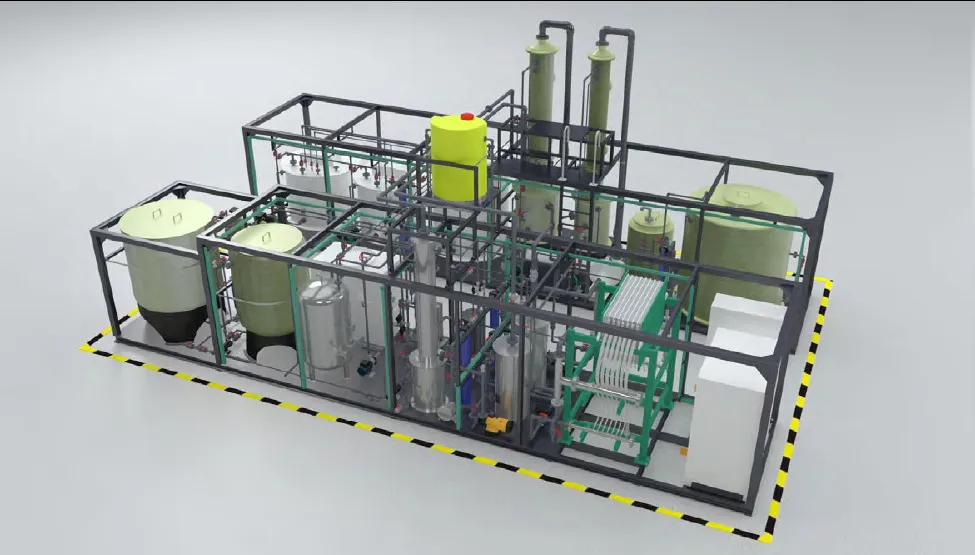
Electrolyzer is the core component of seawater electrochlorination equipment. Stable operation of the electrolytic cell directly determines the output of available chlorine, power consumption and the overall service life of the electrochlorination system. Many unplanned shutdowns of on-site electrochlorination projects are caused by untimely fault judgment and irregular daily operation. Mastering standardized electrolyzer troubleshooting methods and practical maintenance skills helps engineering and operation teams quickly locate problems, reduce production losses and lower long-term operating costs.
Common Fault Manifestations of Electrochlorination Electrolyzers
Electrolyzer faults usually show obvious changes in operating parameters, which can be captured through the PLC control system and on-site inspection. The most frequent abnormal signs include rising cell voltage under constant current, sharp drop of available chlorine concentration at the outlet, obvious temperature overrun of the electrolyzer shell, abnormal vibration and noise inside the cell, leakage of electrolyte and frequent system alarm triggering.
It is worth noting that many operators confuse external pipeline problems with electrolyzer body faults. Before disassembling the electrolyzer for inspection, it is necessary to distinguish whether the abnormality comes from the pretreatment unit, power supply rectifier, flow meter or the electrolytic cell itself, to avoid unnecessary disassembly and secondary damage to the electrode coating.
Step-by-Step Troubleshooting for Typical Electrolyzer Faults
High Cell Voltage and Increased Energy Consumption
Excessive operating voltage is one of the most common failures. The primary cause is scaling on the cathode surface. Calcium and magnesium ions in seawater will precipitate and attach to the electrode surface during electrolysis, increasing the resistance of the electrolyzer. Check the seawater inlet water quality first, then verify whether the automatic descaling cycle and reverse polarity function run normally. If reverse polarity cannot relieve scaling, offline pickling cleaning is required in strict accordance with the process parameters. In addition, loose wiring terminals of the rectifier and aging electrode coating will also lead to voltage drift, which needs to be checked one by one.
Low Available Chlorine Output
When the flow rate, current and seawater salinity remain stable but the FAC value drops significantly, focus on two directions: electrode coating degradation and insufficient reaction residence time. If the anode coating is passivated or partially peeled off, the electrolysis efficiency will decrease permanently. Besides electrode failure, unstable seawater flow, air accumulation inside the electrolyzer and excessive turbidity of incoming water will also inhibit chlorine generation. Discharge the gas in the cell chamber first, check the filter condition of the seawater pretreatment system, and sample test the outlet chlorine concentration after the parameters are restored.
Electrolyzer Liquid Leakage
Leakage mostly occurs at the sealing gasket and flange position. Long-term erosion by high-chlorine seawater, aging of rubber gaskets, uneven bolt tightening force and excessive system backpressure are the main inducements. Once leakage is found, shut down the equipment and cut off the power supply first. After pressure relief and purging, check the flatness of the sealing surface and the integrity of the gasket. Replace the aging gasket and fasten the flanges in diagonal sequence. Do not operate the leaking electrolyzer continuously, otherwise corrosive medium will damage adjacent cables and sensors.
Over-temperature Alarm of Electrolyzer
The electrolyzer is equipped with temperature protection interlock. Continuous overheating will accelerate coating aging and gasket failure. Check whether the seawater feed flow is lower than the design value, and confirm that the heat dissipation channel of the electrolyzer is not blocked. If the flow is normal but the temperature keeps rising, judge whether there is local short circuit inside the electrolytic cell and stop operation for inspection immediately.
Practical Daily O&M Skills to Prevent Electrolyzer Failures
Regular routine inspection is more effective than emergency troubleshooting. Form a fixed inspection checklist focusing on operating current, voltage, inlet water conductivity, outlet FAC, inlet pressure and cell temperature, and record data every shift to track the performance trend of the electrolyzer.
Strictly follow the seawater pretreatment requirements. Poor filtration effect will bring sediment, marine organisms and suspended solids into the electrolyzer, accelerating scaling and electrode abrasion. Keep the self-cleaning filter running normally and clean the filter element regularly.
Standardize the start-stop sequence of the electrolyzer. Do not energize the cell when there is no seawater flowing through the chamber. Before long-term shutdown, use clean seawater to flush the electrolyzer to drain the residual chlorine-containing liquid and reduce corrosion to the electrodes and seals.
Arrange periodic performance testing. Compare the actual electrolysis efficiency with the factory benchmark data. When the efficiency drops to the preset threshold, arrange maintenance or electrode replacement in advance, instead of waiting for serious faults and forced shutdown.
Safety Notes During Electrolyzer Inspection and Maintenance
Electrolyzer maintenance involves strong oxidizing medium and high-current equipment, and safety specifications cannot be ignored. All troubleshooting and disassembly work must be carried out after power cut, locking and purging. Wear anti-corrosion protective equipment to avoid contact with residual chlorine solution. Do not arbitrarily modify the interlock protection parameters of the control system. After maintenance, carry out water pressure test and no-load test before formal putting into operation.
Conclusion
The stable service life of the seawater electrochlorination electrolyzer depends on the combination of real-time fault diagnosis and standardized daily maintenance. By identifying abnormal parameter signals in time, adopting scientific troubleshooting steps and implementing preventive operation management, operators can effectively avoid unexpected shutdowns, stabilize chlorine production capacity and maximize the return on investment of the electrochlorination system.
Would you like me to adjust the length or change the angle for another version?