
Introduction: The Hidden Challenges of Village Well Water Supply
Safe drinking water is a fundamental public health foundation for rural development worldwide. Unlike urban centralized water supply systems, most remote villages rely on decentralized groundwater sources, primarily village wells, to meet daily domestic and drinking water needs. These well water sources are easily affected by surface runoff, livestock breeding waste, and microbial contamination, leading to excessive bacteria, pathogens, and organic impurities in raw water.
Traditional rural water disinfection methods face prominent drawbacks. Manual dosing of packaged disinfectants suffers from unstable concentration, short efficacy duration, and hidden dangers in chemical storage and transportation. Large-scale water treatment equipment is bulky, high in energy consumption, and unsuitable for scattered small-capacity rural water supply scenarios. These pain points have long restricted the improvement of rural drinking water quality and become a key bottleneck in upgrading rural water infrastructure. Against this backdrop, small high-strength hypochlorite generators have emerged as a targeted, efficient, and economical solution tailored for village well water disinfection.
Working Principle of Small High-Strength Hypochlorite Generators for Well Water Treatment
The small high-strength hypochlorite generator adopts mature and reliable electrolytic saline water technology, with a simple and safe working logic that fully adapts to rural on-site operation conditions. The equipment only requires three basic raw materials: common industrial salt, local well water, and conventional electricity, eliminating the need for purchasing, transporting, and storing hazardous concentrated disinfectants or chlorine gas.
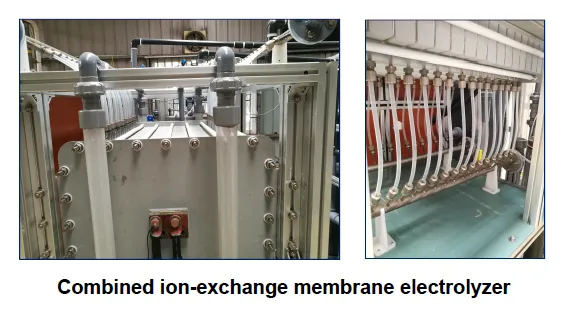
Through the internal electrolytic cell unit, the device electrolyzes dilute salt water to produce high-purity, high-strength sodium hypochlorite solution on-site. During the electrolysis process, chloride ions undergo electrochemical reactions to generate effective chlorine, which forms a stable and high-oxidizing disinfectant solution. Compared with ordinary low-concentration hypochlorite equipment, the high-strength model features more concentrated effective chlorine, more stable solution activity, and fewer disinfection by-products. The prepared disinfectant is automatically dosed into village well water through a precision dosing system, which quickly oxidizes and kills E. coli, bacteria, viruses, and other harmful microorganisms in the water, realizing efficient purification and disinfection of groundwater.
Core Advantages for Rural Decentralized Water Supply Scenarios
Tailored to the scattered water points, small water volume, and limited operation and maintenance conditions of rural village wells, the small high-strength hypochlorite generator boasts unique scenario-adaptive advantages that traditional equipment cannot match.
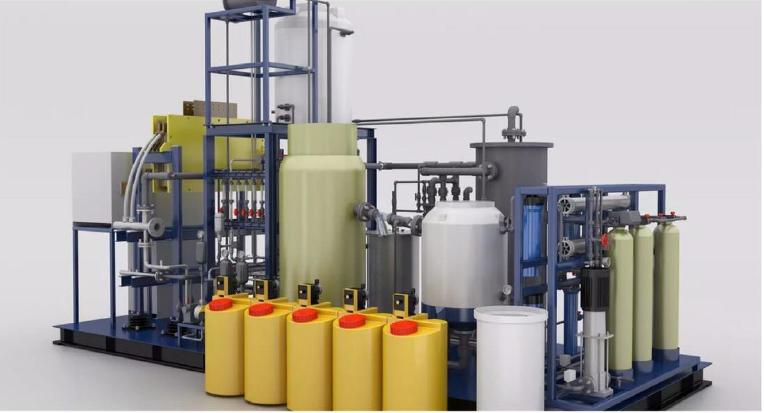
First, it features compact integration and easy on-site deployment. The skid-mounted integrated design minimizes floor space, requiring no complex civil engineering or professional installation environment. It can be quickly put into use beside village wells, perfectly fitting the decentralized and distributed characteristics of rural water supply points.
Second, it delivers high-efficiency and stable disinfection performance. The on-site generated high-strength hypochlorite solution has accurate effective chlorine concentration and strong oxidation sterilization capacity, which can thoroughly eliminate microbial pollution in well water. Meanwhile, the equipment runs stably with constant dosing precision, avoiding the water quality fluctuation problems caused by manual irregular dosing in traditional processes, ensuring long-term compliance of rural drinking water quality.
Third, it achieves low operation cost and simple maintenance. The equipment only consumes salt and electricity during operation, with extremely low daily operating costs, avoiding the repeated high expenditure of purchasing packaged disinfectants. In addition, the fully automated operation mode requires no professional technicians for real-time monitoring. Rural operators can master the operation and daily maintenance in a short time, greatly reducing labor and maintenance costs.
Fourth, it ensures ultra-high operational safety. Different from dangerous chlorine dioxide generators and bottled liquid chlorine disinfection methods with leakage risks, this equipment realizes on-demand production and on-site use, with no storage of large quantities of hazardous chemicals. The closed electrolytic system effectively avoids safety accidents such as gas leakage and chemical corrosion, creating a safe water treatment environment for rural communities.
Practical Value for Rural Water Safety Upgrade
Rural decentralized water supply has always been a weak link in the water treatment industry, with the core demand of "safe, simple, and affordable" water disinfection. The small high-strength hypochlorite generator precisely targets rural water supply pain points, solving the problems of incomplete disinfection, unstable water quality, high cost, and difficult operation of traditional village well water treatment methods.
For village collective water supply projects, township scattered water renovation, and remote rural drinking water safety improvement projects, this equipment provides a standardized, modular, and scalable disinfection solution. It effectively guarantees the drinking water health of rural residents, reduces water-borne disease risks, and supports the standardized construction and long-term stable operation of rural water supply systems. With the continuous advancement of rural revitalization and water environment improvement, small high-strength hypochlorite generators will become the mainstream preferred equipment for rural decentralized well water disinfection.