Mitigate Shellfish and Algae Biofouling: Electrolytic Seawater Systems for Coastal Thermal & Nuclear Power Circulating Water Treatment
Coastal thermal and nuclear power plants heavily rely on seawater for circulating cooling systems to dissipate operational heat and guarantee stable power generation. However, native marine organisms including barnacles, mussels, diatoms and macroalgae easily adhere to cooling pipelines, condensers and heat exchangers. Long-term biofouling triggers pipeline blockage, declines heat transfer efficiency, accelerates equipment biocorrosion, and even causes unplanned shutdowns, bringing huge economic losses and operational safety risks to power enterprises. As a sustainable and high-reliability water treatment solution, on-site electrolytic seawater devices have become the mainstream technology to eliminate marine organism adhesion for coastal power circulating water systems.
The Hidden Risks of Marine Biofouling for Coastal Power Facilities
Seawater is rich in chloride ions, plankton and marine organism larvae, creating ideal breeding conditions for shellfish and algae. Once these organisms attach to the inner wall of circulating water pipelines, they will rapidly reproduce and form dense biological slime within weeks. For thermal power and nuclear power plants with strict operational safety standards, biofouling brings three irreversible core hazards:
-
Degraded cooling efficiency: Biological deposits increase pipeline surface roughness and thermal resistance. Relevant industry data shows that merely 1mm-thick algae fouling can reduce condenser heat exchange efficiency by 8% to 12%, raising unit energy consumption sharply.
-
Equipment corrosion and service life attenuation: Metabolic secretions of shellfish and algae form acidic microenvironments, inducing pitting corrosion on duplex stainless steel and carbon steel cooling equipment. Severe corrosion leads to pipeline leakage and condenser failure.
-
Compliance and safety hazards for nuclear facilities: Nuclear power circulating water systems require ultra-stable water hydraulic pressure and flow
Traditional anti-fouling methods including manual high-pressure cleaning and chemical biocide dosing face obvious drawbacks: manual cleaning requires system shutdown with high labor costs; external chemical biocides bring seawater secondary pollution, residual toxicity risks and complicated hazardous chemical storage management.
Working Mechanism of Electrolytic Seawater Anti-Fouling Technology
Different from chemical dosing solutions, electrolytic seawater devices adopt on-site electrochemical reaction principles, requiring only raw seawater and industrial electricity without additional toxic chemical additives. The whole treatment process is eco-friendly and intrinsically safe for power plant operation.
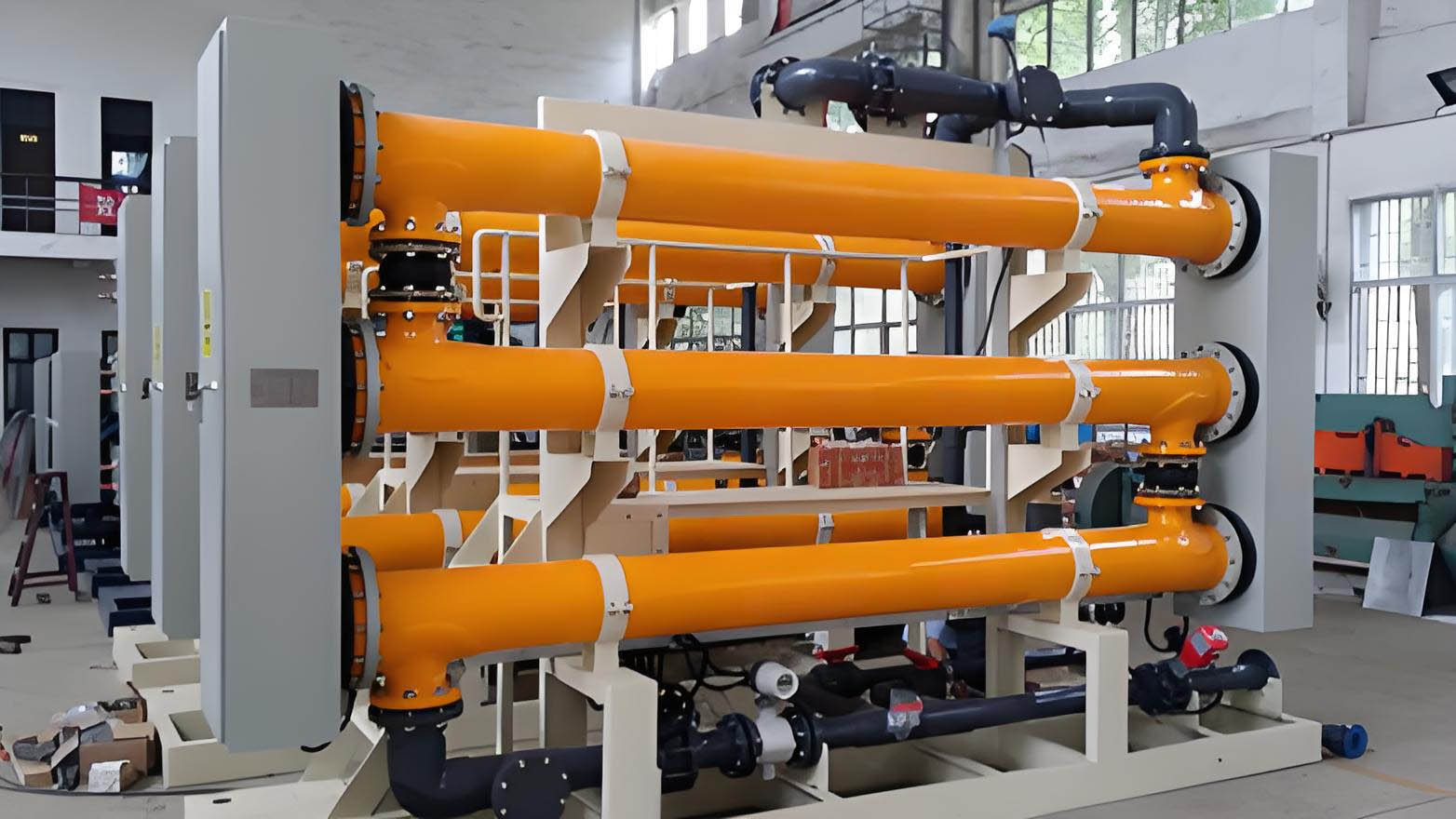
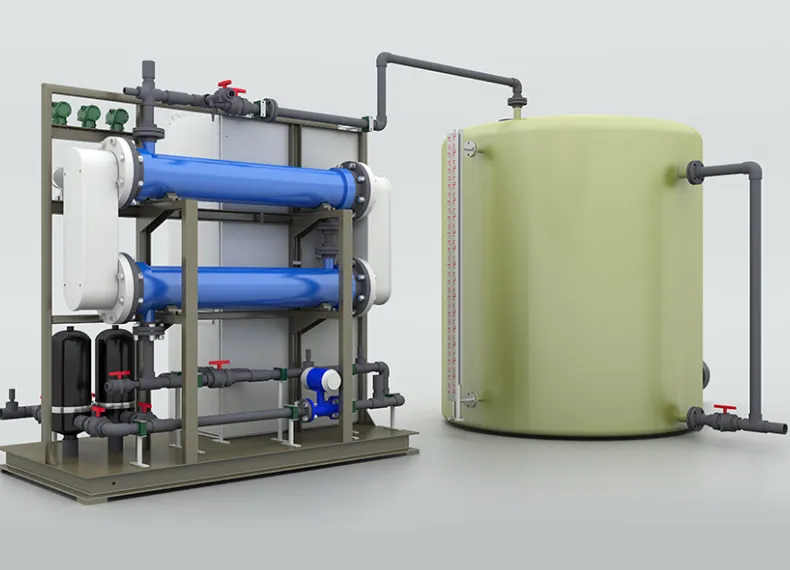
Natural seawater containing chloride ions enters sealed electrolytic cells equipped with customized titanium electrodes. After applying direct current, chloride ions undergo electrolysis to generate low-concentration sodium hypochlorite (NaClO) on-site. The generated sodium hypochlorite solution is automatically injected into circulating water intake pipelines, which can efficiently inactivate shellfish larvae, algal spores and microbial sludge without harming mature equipment materials.
The core advantage of this reaction lies in controllable residual chlorine concentration. Our tailored control system maintains circulating water residual chlorine within 50-100ppm, realizing targeted inhibition of organism adhesion instead of excessive disinfection. After flowing through cooling systems, residual chlorine naturally decomposes in seawater without persistent marine pollution, fully complying with international coastal environmental protection regulations.
Core Benefits for Thermal & Nuclear Power Circulating Water Scenarios
Coastal power plants confront high salinity, storm surge, sediment-laden seawater and humid salt-fog environments. Our electrolytic seawater devices adopt anti-corrosion duplex stainless steel skid-mounted structures, with electrodes optimized for seawater scaling resistance. The devices can operate stably under seawater temperature ranging from 5℃ to 35℃, adapting to seasonal water quality changes of offshore waters and avoiding frequent equipment faults.
1. Adaptable to Extreme Coastal Working Conditions
2. Lower Lifecycle Operational Costs
Eliminating repeated procurement, transportation and storage of liquid chlorine and biocides cuts hazardous chemical management costs greatly. Integrated automatic monitoring and dosing modules reduce on-site manpower intervention. Practical operation cases of coastal power plants verify that electrolytic seawater solutions can cut overall circulating water treatment O&M costs by 25% annually, and extend cooling pipeline service life by over 30%.
3. Meet Strict Nuclear Safety Operational Standards
For nuclear power circulating water systems, our electrolytic devices support intermittent intelligent operation linkage with unit load signals. The system automatically adjusts electrolysis output according to real-time seawater biological activity, ensuring stable water flow and hydraulic pressure. It produces no radioactive by-products and will not interfere with nuclear reactor auxiliary systems, satisfying IAEA cooling water safety requirements.
Optimized System Operation & Daily Maintenance Guide
To maximize anti-fouling efficiency and stabilize long-term operation, we summarize targeted operational suggestions for coastal power clients: First, install automatic self-cleaning filters at water inlets to intercept suspended sediment and prevent electrolytic cell scaling; second, execute regular electrode pickling maintenance every 45 days to eliminate surface oxide deposits and guarantee electrolysis efficiency; third, link residual chlorine online sensors with the control cabinet to realize closed-loop automatic adjustment, avoiding insufficient disinfection or excessive chlorine residue.
Compared with periodic offline cleaning, continuous electrolytic anti-fouling realizes 24/7 online protection for circulating water systems, eliminating production shutdown losses caused by seasonal marine organism outbreaks every spring and summer.
Conclusion
Marine shellfish and algae biofouling is a long-standing pain point restricting safe and economical operation of coastal thermal and nuclear power plants. Electrolytic seawater anti-fouling technology balances operational safety, cost control and marine environmental protection perfectly, solving traditional treatment defects such as chemical pollution and frequent shutdown maintenance. As global power industries accelerate low-carbon and safe transformation, customized electrolytic seawater circulating water solutions will become essential infrastructure for coastal power water treatment.
Backed by decades of industrial water treatment experience, our team provides one-stop services including scheme simulation, customized equipment manufacturing, on-site commissioning and full-cycle after-sales maintenance for power clients. We deliver stable, compliant and cost-effective circulating water protection solutions for global coastal energy facilities.