
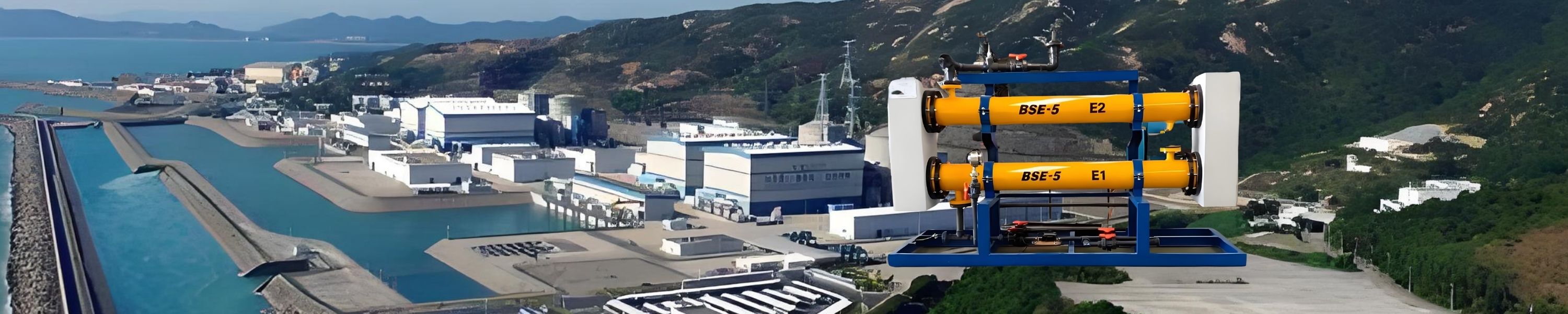
Introduction: Seawater Electrochlorination – A Core Technology for Modern Green Port Construction
With the explosive growth of the global shipping industry, port infrastructure is facing unprecedented operational challenges: marine biological attachment causes severe equipment corrosion and pipeline blockage, while ballast water discharge leads to cross-regional transmission of harmful aquatic organisms and pathogens, threatening marine ecological balance.
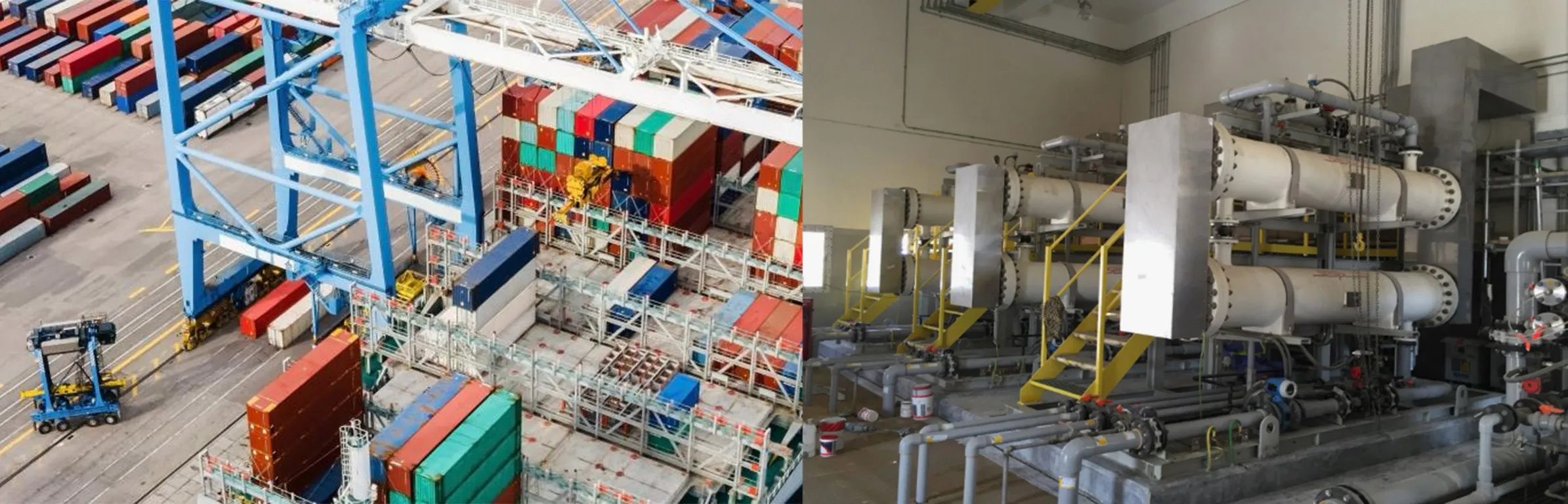
Chlory seawater electrochlorination system has emerged as a pivotal solution for these port pain points, leveraging high-efficiency disinfection performance and eco-friendly characteristics to address marine fouling and water pollution. This article comprehensively elaborates on the system’s working principle, composition, core advantages, and targeted port application scenarios, and provides professional, actionable system design solutions, operation management norms, and cost-benefit analysis—laying a solid technical foundation for building a green, safe, and efficient modern port operation system.
Learn More About Chlory's Seawater Electrochlorination System
Overview of Seawater Electrochlorination System
(I) Core Working Principle
The seawater electrochlorination system generates high-oxidation disinfectants sodium hypochlorite (NaClO) or chlorine gas (Cl₂) through the electrolysis of natural seawater, utilizing the abundant sodium chloride (NaCl) in seawater as the raw material for an electrochemical reaction under an electric field.
Taking sodium hypochlorite production as the key process, the reaction steps are as follows:
1. Anode oxidation reaction: 2Cl- - 2e- = Cl2↑
2. Chlorine gas hydration reaction: Cl2 + H2O ⇌ HCl + HClO
3. Sodium hypochlorite synthesis: HClO + NaOH = NaClO + H2O
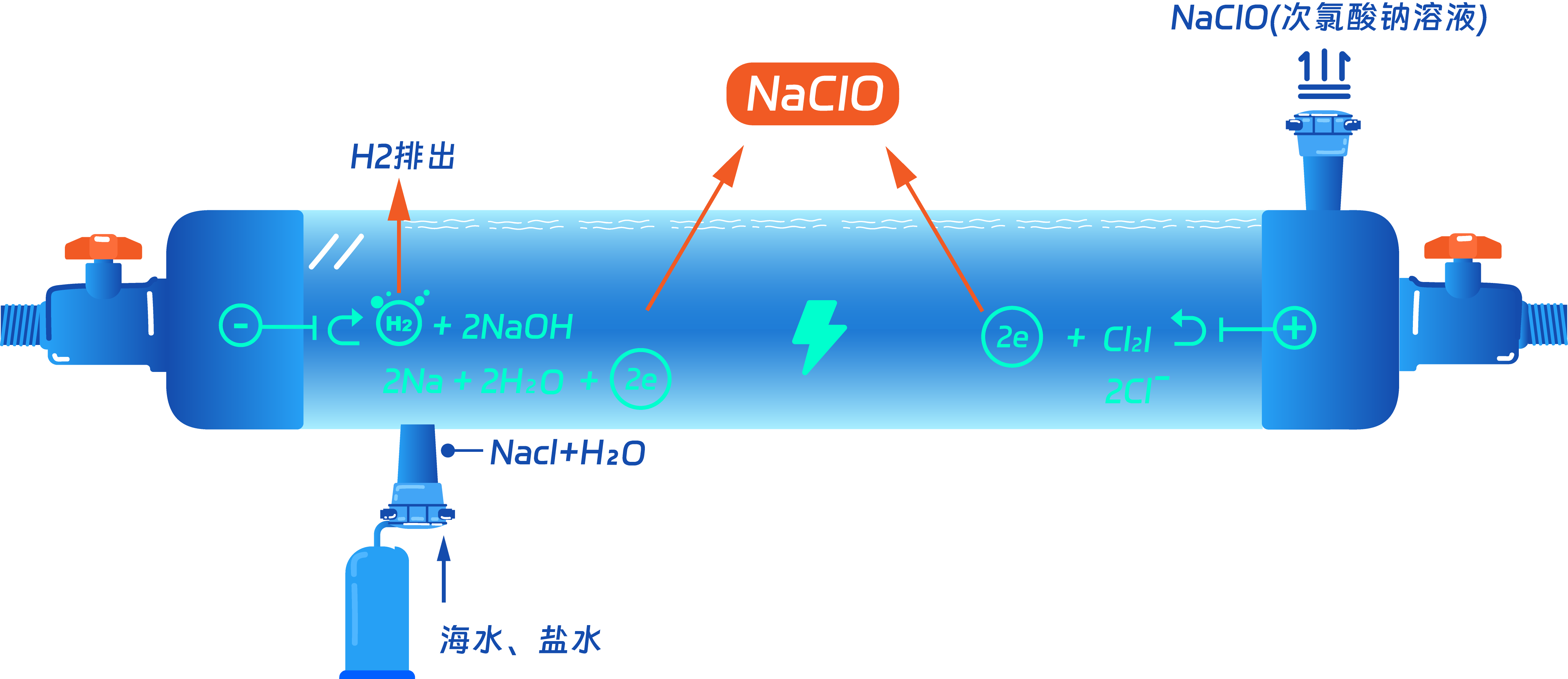
The generated NaClO and Cl₂ have strong oxidizing properties, which can quickly destroy the cell structure of marine microorganisms, effectively killing bacteria, viruses, algae and other harmful marine organisms in seawater—achieving dual effects of disinfection and anti-fouling.
(II) Complete System Composition
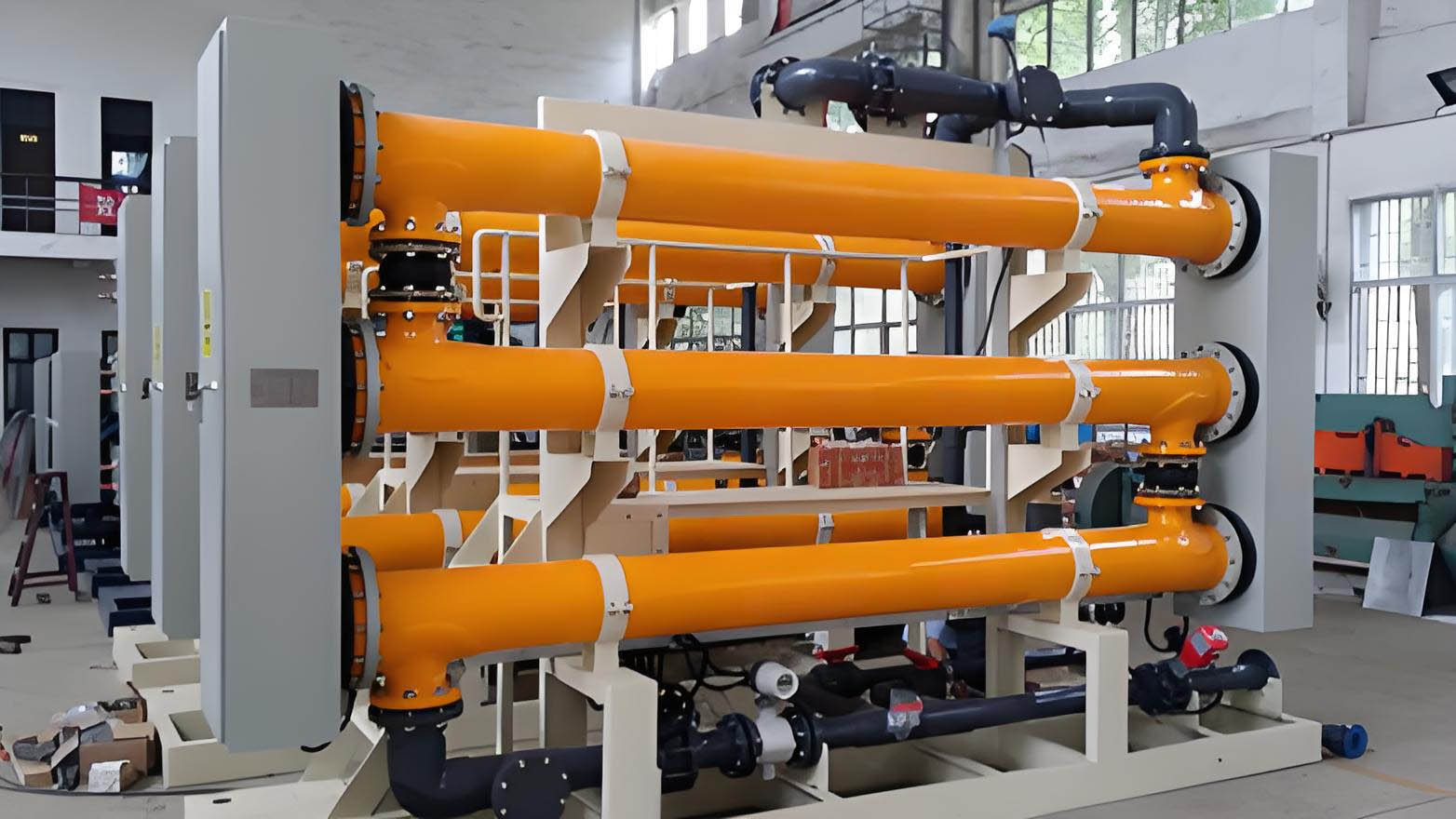
The seawater electrochlorination system is a highly integrated equipment set, with four core components cooperating to ensure stable, efficient, and precise operation, tailored to the complex water quality and operational needs of ports:
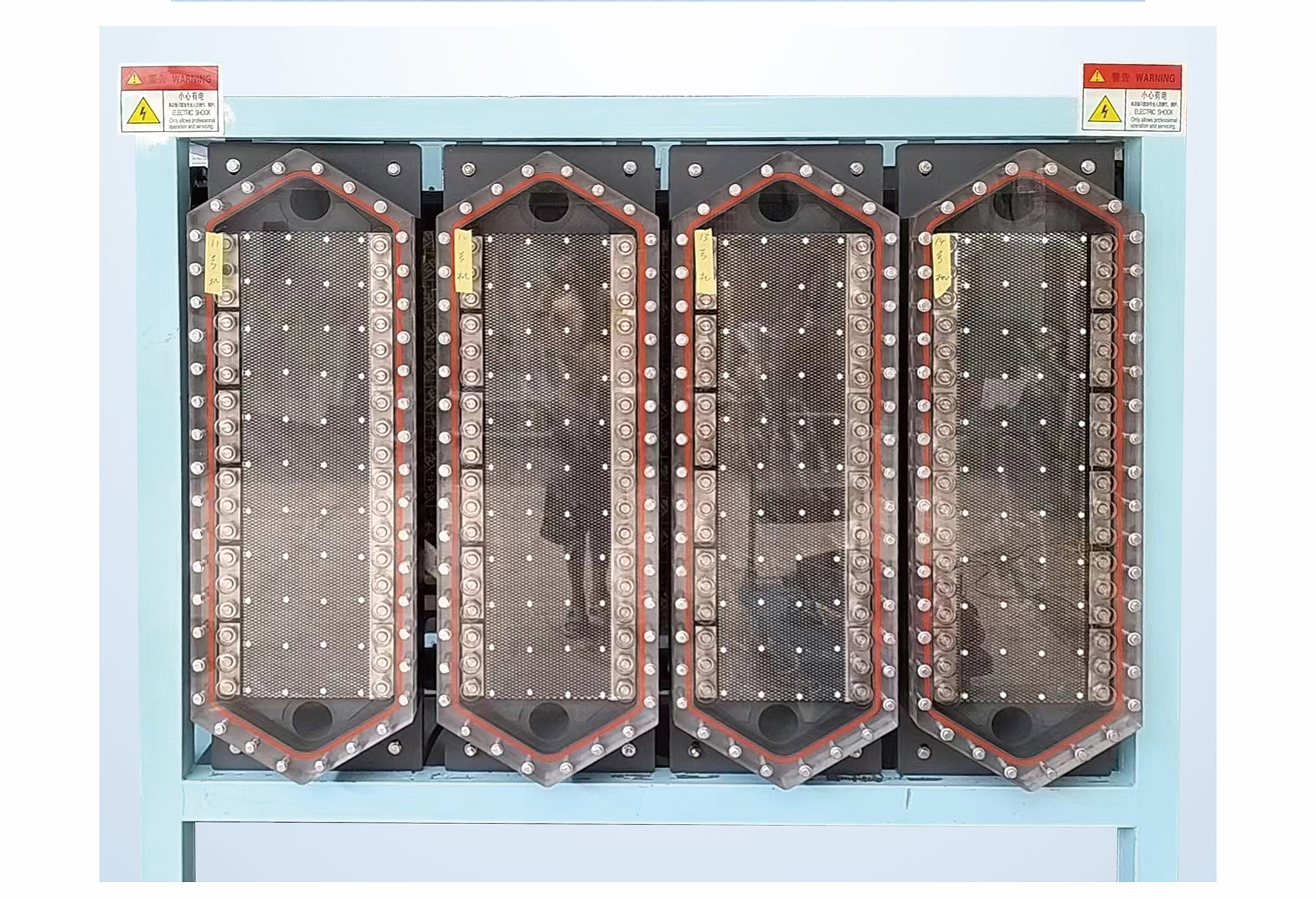
1. Electrolysis device (core component)
Composed of anode, cathode and electrolytic cell; the anode adopts dimensionally stable anode (DSA) (ruthenium (Ru) and iridium (Ir) based composite metal oxides) with excellent corrosion resistance and chlorine evolution performance, and the cathode is made of stainless steel. The electrolytic cell is designed for uniform seawater flow between electrodes to maximize electrolysis efficiency.
2. Intelligent control system
Real-time monitors and adjusts key electrolysis parameters (current, voltage, electrolysis time, etc.), and realizes automatic operation according to port seawater quality, treatment volume and other actual needs to accurately control disinfectant output.
3. Precision dosing device
Adds electrolytically generated NaClO/Cl₂ to the to-be-treated seawater according to the set dosage, with precise metering and flow adjustment functions to adapt to disinfection needs of different port scenarios (ballast water, cooling water, port waters).
4. Real-time monitoring equipment
Tracks core water quality parameters (residual chlorine content, pH value, temperature) in real time: residual chlorine reflects disinfection effect directly, while pH and temperature affect electrolysis efficiency and disinfectant stability. Parameters are adjusted in time to keep the system in optimal operating state.
(III) Unmatched Core Advantages for Port Scenarios
Compared with traditional chemical disinfection methods (e.g., manual addition of chlorine-containing disinfectants), Chlory’s seawater electrochlorination system has five irreplaceable advantages, perfectly matching the operational characteristics and environmental requirements of ports:
1. On-site chlorine production, high safety
Takes port seawater as raw material to generate disinfectants on site, eliminating the need for large-scale storage and transportation of chemical disinfectants—greatly reducing transportation and storage safety risks, and lowering logistics and management costs.
2. Efficient sterilization and anti-fouling, strong pertinence
Strong oxidizing disinfectants quickly kill various marine organisms, effectively preventing their attachment and reproduction on port equipment and pipelines, ensuring the normal operation of port infrastructure and reducing maintenance frequency.
3. Eco-friendly and sustainable, low marine impact
Disinfectants decompose naturally after use, no harmful substance accumulation in the marine environment; reducing chemical disinfectant transportation also cuts carbon emissions, fully complying with the green port construction concept.
4. High cost-effectiveness, long-term economic benefits
Although the initial equipment investment is relatively large, there is no need for frequent purchase of chemical raw materials, and the equipment maintenance is simple—saving a lot of operating costs in the long run; at the same time, it reduces equipment replacement costs caused by marine biological corrosion, further improving economic benefits.
5. Intelligent operation, easy management
The whole system is automatically controlled, with real-time parameter monitoring and fault early warning, reducing the demand for manual operation and improving the efficiency of port water treatment management.
Port Targeted Application Scenario Analysis
Chlory’s seawater electrochlorination system is highly adaptable to port operation scenarios, and its disinfection and anti-fouling functions are accurately applied to three core port water treatment links, solving the most prominent operational and environmental problems of ports:
(I) Ship Ballast Water Treatment – Prevent Biological Invasion
Ship ballast water discharge/injection is a necessary operation for navigation safety, but it often carries a large number of marine organisms and pathogens—random discharge will cause severe biological invasion, destroying the local marine ecological balance.
The seawater electrochlorination system is integrated into the port’s dedicated ballast water treatment facility: when the ship berths, the ballast water is introduced into the treatment system, disinfected by electrolytically generated disinfectants to kill harmful organisms, and then discharged to the designated area. This technical solution effectively blocks the cross-regional transmission path of marine organisms, and is the core technical measure for ports to comply with international ballast water treatment standards.
(II) Anti-fouling of Port Cooling System – Improve Equipment Efficiency
Port power equipment, mechanical equipment and other core facilities all rely on seawater for cooling; marine microorganisms and algae are easy to attach to the inner wall of cooling pipelines to form biofouling, which reduces cooling efficiency, increases energy consumption, and even causes equipment failure and production interruption.
The system is installed at the water inlet of the port cooling system to pre-treat the incoming seawater: continuous addition of an appropriate amount of NaClO/Cl₂ inhibits the growth and reproduction of microorganisms and algae, fundamentally preventing the formation of biofouling—ensuring the efficient and stable operation of the cooling system, extending the service life of equipment, and reducing maintenance and replacement costs.
(III) Port Waters Disinfection – Ensure Sanitary Safety
Port waters have intensive ship activities and frequent personnel access, and are easily contaminated by various pathogens, which poses a potential risk of infectious disease transmission for port staff and tourists.
The seawater electrochlorination system realizes regular and targeted disinfection of port waters: reasonable arrangement of dosing points in high-density areas (passenger terminals, yacht terminals), waterways and anchorages; uniform addition of disinfectants to kill bacteria, viruses and other pathogens in the water body, improve the sanitary environment of port waters, and fully guarantee the health and safety of personnel in the port area.
Professional Application Solution Design for Ports
To ensure the seawater electrochlorination system achieves the best operation effect in port scenarios, Chlory provides a customized, step-by-step complete solution from system selection to layout installation, combined with port actual demand and water quality characteristics:
(I) Scientific System Selection and Scale Determination
Based on full port investigation and water quality analysis, the system model and scale are determined to avoid mismatches between treatment capacity and actual demand:
1. Port demand assessment
Conduct detailed statistics on key data: the number/type of incoming and outgoing ships, ballast water discharge volume, cooling system water consumption, port water disinfection area and frequency. For example, count the average daily tonnage of ships to estimate ballast water treatment capacity, and clarify the cooling water demand of each equipment to determine the anti-fouling treatment scale.
2. Comprehensive seawater quality analysis
Collect seawater samples from different port areas to test key indicators (salinity, pH value, turbidity, microbial content). Salinity affects electrolysis efficiency, while excessive turbidity will shorten the service life of electrodes—providing an important basis for system parameter adjustment and accessory selection.
3. Reasonable scale determination & expansion reserve
Select the system model and processing capacity according to demand and water quality; for large ports with high treatment volume, adopt a parallel connection of multiple electrolysis devices; for small and medium-sized ports, select a compact small system to reduce investment. Reserve a certain expansion space to adapt to the future growth of port business and treatment demand.
(II) Rational System Layout and Standard Installation
Combined with the port’s overall planning and equipment distribution, the system is installed in a targeted manner to ensure convenient operation, efficient treatment and safe operation:
1. Ship ballast water treatment facility layout
Set up a dedicated treatment area near the ship berthing terminal (facilitating pipeline connection); centrally install the system’s core equipment in an independent workshop with complete ventilation, drainage and fire protection facilities; set up a ballast water storage tank to ensure the continuity and stability of the treatment process.
2. Port cooling system installation requirements
Install the system near the cooling system’s water inlet pipeline; place the electrolysis device close to the cooling water pump to utilize water pump pressure for uniform seawater electrolysis; set multiple dosing points in the cooling pipeline to ensure full mixing of disinfectant and cooling water, covering the entire system. Strictly ensure pipeline connection and sealing to prevent seawater leakage.
3. Port water disinfection dosing point arrangement
Arrange dosing points according to port water topography, water flow direction and personnel activity density: increase dosing points in dense personnel areas and slow water flow areas (easy for microbial reproduction); reduce dosing points in open and fast water flow areas. Adopt fixed + mobile dosing mode: fixed points are connected to the system via pipelines, and mobile points are equipped with dosing equipment on ships for flexible disinfection. Real-time monitor residual chlorine in each water area to adjust dosage and frequency dynamically.
(III) Standardized Operation Management and Professional Maintenance
Perfect operation and maintenance norms are the key to ensuring the long-term stable operation of the seawater electrochlorination system and extending equipment service life:
1. Establish a complete operation management system
Formulate detailed operation procedures (startup, shutdown, parameter adjustment, daily inspection); establish a real-time operation record system to track key data (current, voltage, residual chlorine, water volume) for timely problem detection; formulate an emergency plan for equipment failure, power outage, abnormal water quality and other situations to ensure the normal operation of port business.
2. Implement regular and targeted equipment maintenance
Classify and maintain core equipment: regularly check the corrosion degree of electrolysis electrodes (consumable parts) and clean/replace them in time; calibrate control system instruments and sensors to ensure measurement accuracy; check dosing device pipelines/valves for blockage/leakage and repair them in time. Establish equipment maintenance files to record maintenance conditions and provide a basis for subsequent management and update.
3. Carry out professional personnel training
Provide systematic training for system operators and maintenance personnel, including theoretical knowledge (working principle, parameter setting) and practical operation (fault diagnosis, troubleshooting, safe operation). Organize regular technical exchanges and assessment to improve the professional quality of personnel, ensuring that the system is operated and maintained in a standardized and effective manner.
Comprehensive Cost-Benefit Analysis of Port Application
(I) Detailed Cost Composition
The cost of applying the seawater electrochlorination system in ports is mainly divided into one-time investment cost and long-term operating cost, with clear accounting and controllable expenditure:
1. Equipment procurement and installation costs
Including electrolysis devices, control systems, dosing equipment, monitoring equipment and related accessories; installation costs cover transportation, commissioning and civil engineering. For large ports, the one-time investment is relatively high, and the cost can be effectively controlled through scientific bidding and project management.
2. Daily operating costs
The main components are electricity costs (the system is energy-consuming, and electrolysis accounts for the largest proportion of operating costs), equipment maintenance costs (electrode replacement, consumable purchase, fault repair) and professional personnel wages.
3. Other incidental costs
Including system upgrade and transformation costs (adapting to port business development and technical progress) and water quality monitoring costs (regular testing of seawater and treated water quality to meet relevant standards).
(II) Multi-dimensional Benefit Realization
The application of the seawater electrochlorination system in ports brings environmental, economic and social benefits at the same time, and the long-term comprehensive benefits far exceed the input costs:
1. Significant environmental benefits
Effectively prevent biological invasion caused by ballast water discharge, protect the local marine ecological balance, and reduce economic losses caused by ecological damage; reduce the use and discharge of chemical disinfectants, and minimize marine environmental pollution, complying with global green port development trends.
2. Long-term economic benefits
Reduce equipment maintenance and replacement costs caused by marine biological corrosion and fouling, improve equipment operation efficiency and extend service life; reduce energy consumption of the cooling system; avoid legal disputes and economic compensation caused by environmental problems. A good green port image also attracts more ships to berth, promoting port business development and increasing revenue.
3. Positive social benefits
Improve the sanitary environment of port waters, reduce the risk of infectious disease transmission, and ensure the health and safety of port staff and tourists; enhance the port’s comprehensive competitiveness and brand image, and contribute to the local marine economic development and social stability.
Conclusion: Seawater Electrochlorination System – The Core Technical Support for Sustainable Port Development
The seawater electrochlorination system has unique advantages and broad application prospects in port scenarios, and can fundamentally solve the core problems faced by modern ports: marine biological attachment and corrosion, ballast water biological invasion, and port water pollution.
Through scientific system selection, rational layout installation, standardized operation management and professional maintenance, combined with a comprehensive cost-benefit analysis, the system can achieve efficient, stable and safe operation in ports, and provide strong technical support for the construction of green, safe and efficient ports.
As a professional R&D and production enterprise of seawater electrochlorination systems, Chlory has rich experience in port project application. In the future port construction and operation, it is necessary to actively promote and apply seawater electrochlorination technology, continuously optimize system performance and application solutions, and further improve the comprehensive management level and environmental quality of ports, helping the global shipping and port industry achieve sustainable development.