
Cooling water systems are the backbone of thermal power plant operations, directly impacting heat transfer efficiency, condenser integrity, and overall plant reliability. Microbial growth—including bacteria, algae, and biofilm—causes severe fouling, reduces energy efficiency, and increases maintenance costs.
A sodium hypochlorite (NaOCl) dosing systemprovides a cost-effective, industrial-grade solution for continuous cooling water disinfection. It controls microbiological contamination, maintains stable residual chlorine levels, and complies with global environmental and operational standards.
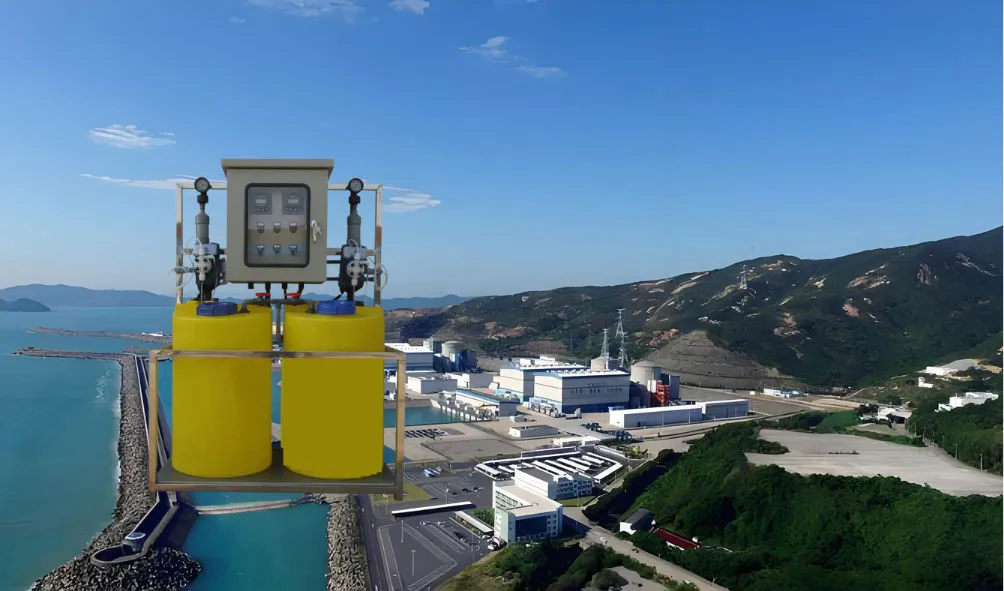
This article covers working principles, system components, design, operation, maintenance, optimization, and compliance for NaOCl dosing systems in power plant cooling water applications.
How Sodium Hypochlorite Disinfection Works in Cooling Water
Sodium hypochlorite dissolves in water to form hypochlorous acid (HOCl), the active biocidal agent that destroys cell structures, enzymes, and DNA of microorganisms.
Key factors that determine disinfection performance:
- pH value:Best efficiency at pH 7.0–7.5
- Contact time:Minimum 30 minutes required
- Residual chlorine:Maintain 0.2–1.0 mg/L free available chlorine (FAC)
- Chlorine demand:Organic matter, ammonia, and suspended solids consume chlorine
Effective NaOCl dosing prevents biofilm formation, protects condenser tubes, and reduces scale and corrosion risks.
Core Components of a Power Plant NaOCl Dosing System
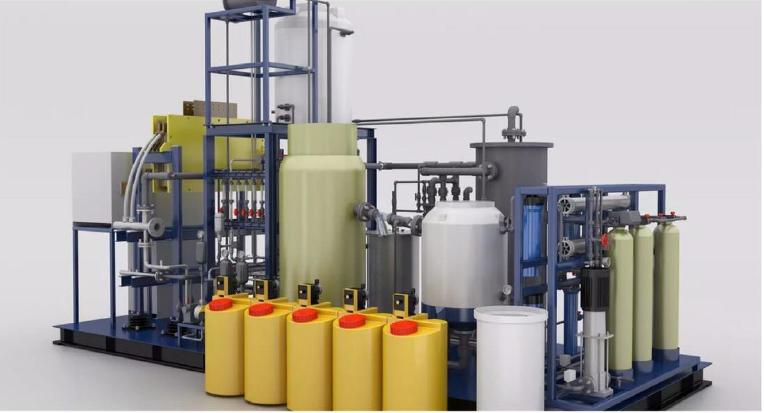
A complete industrial cooling water disinfection system includes these critical modules:
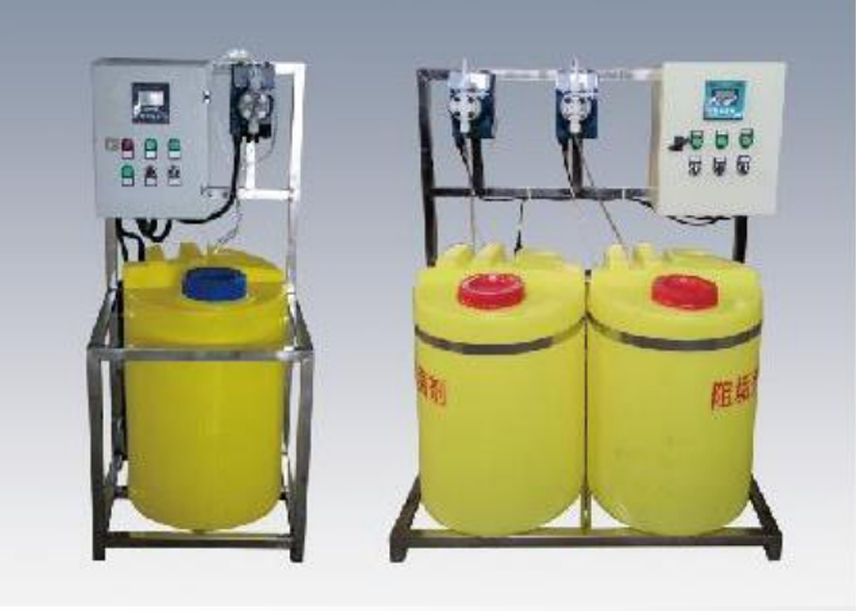
1. Chemical Storage Tank
- Material: HDPE or FRP (corrosion-resistant)
- Features: level sensor, overflow protection, ventilation, leak containment
- Prevents NaOCl degradation from light and heat
2. Dosing Pump
- Type: diaphragm pump or peristaltic pump
- Precise metering for stable chlorine residual
- Supports VFD and automatic flow adjustment
3. Control & Monitoring Panel
- PLC or SCADA control
- Real-time detection: pH, ORP, flow rate, free chlorine
- Automatic dosing adjustment based on water quality
4. Injection & Mixing Unit
- Multi-point injection nozzle
- Static mixer for uniform distribution
- Ensures full mixing with cooling water
5. Safety & Protection System
- Emergency stop (ESD)
- Spill collection basin
- Gas detection (for on-site generation systems)
Design Criteria for Power Plant Cooling Water Disinfection
Proper system design ensures long-term stable operation.
Key Design Parameters
- Cooling water flow rate
- Target free chlorine residual (0.2–1.0 mg/L)
- Chlorine demand of raw water
- Operating temperature and pH range
- Discharge environmental standards
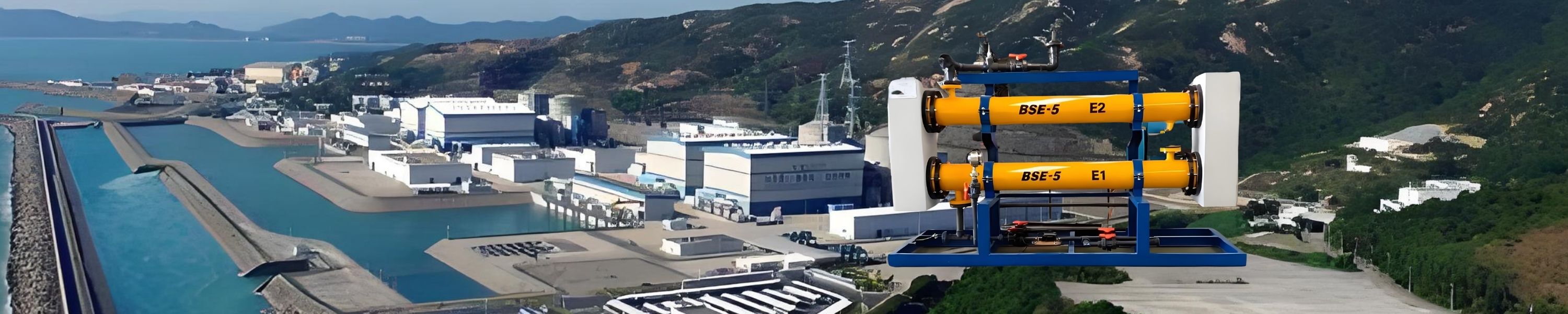
On-Site Electrochlorination System
- For large-capacity power plants, on-site sodium hypochlorite generation (brine electrolysis) is recommended. It:
- Eliminates chemical transportation risks
- Reduces operating cost by 40–60%
- Produces fresh, low-concentration NaOCl on demand
Operation & Best Practices
Daily Operation
- Monitor free chlorine residual
- Check dosing pump flow and pressure
- Verify tank level and sensor signals
- Adjust dosage automatically via ORP / chlorine feedback
Shock Dosing
- Perform shock treatment at 5–10 mg/L FAC for 1–3 hours to remove mature biofilm during:
- Unit startup
- Severe fouling
- Seasonal algae outbreaks
Maintenance Schedule for NaOCl Dosing Systems
Regular maintenance extends equipment life and ensures disinfection stability.
|
Frequency
|
Maintenance Task
|
|---|---|
|
Daily
|
Check pump, pipelines, and sensors
|
|
Weekly
|
Calibrate chlorine, pH, and ORP probes
|
|
Monthly
|
Clean injection nozzles and mixers
|
|
Quarterly
|
Test NaOCl concentration and tank condition
|
|
Yearly
|
Full system inspection and performance audit
|
Common Troubleshooting
Low Chlorine Residual
Causes: high chlorine demand, clogged nozzle, pump failure
Solution: clean injectors, increase dosage, perform shock dosing
Biofilm Fouling
Causes: insufficient mixing, short contact time
Solution: install multi-point injection, extend retention time
Pump Cavitation
Causes:air in suction line, insufficient pressure
Solution:prime pump, check pipeline seals
Benefits of NaOCl Dosing Systems in Power Plants
- Improves heat transfer efficiency by 8–15%
- Reduces condenser fouling and downtime
- Low operational cost compared to other biocides
- Easy automatic control
- Complies with environmental discharge regulations
Conclusion
Thesodium hypochlorite dosing systemis the most widely used, reliable, and economical disinfection method for power plant cooling water systems. Proper design, automatic control, and routine maintenance ensure stable microbial control, improve energy efficiency, and extend equipment service life.
For large power plants,on-site electrochlorinationprovides a safer and more cost-efficient long-term solution.