
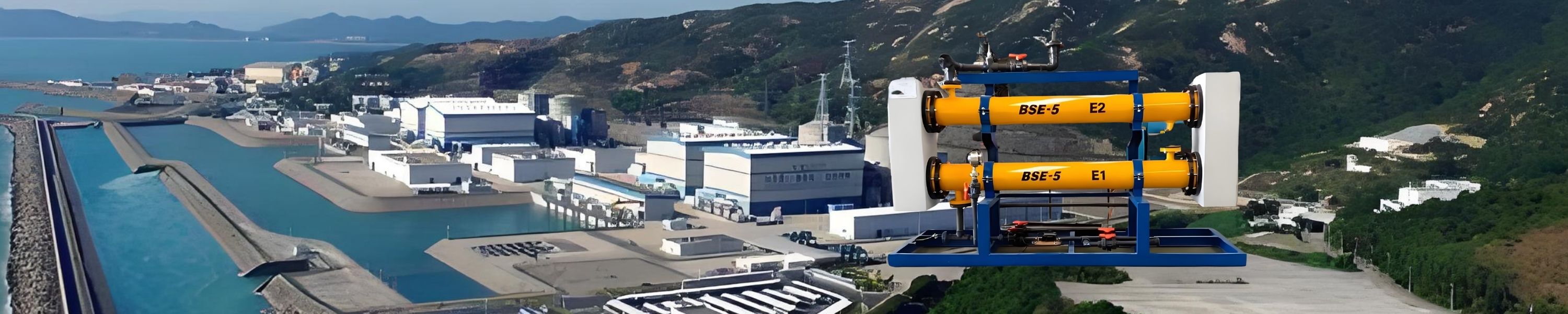
With the global water scarcity crisis intensifying, seawater desalination has become a core solution to alleviate freshwater shortages, and the electrochlorination system, as a key supporting technology for seawater desalination plants, undertakes the critical task of water disinfection and system protection. In 2026, as Google’s search algorithm evolves toward Generative Engine Optimization (GEO), content that emphasizes authority, authenticity, and user value will gain more search traffic. This article will comprehensively interpret the working principle, core advantages, practical applications, and latest development trends of the electrochlorination system in seawater desalination plants, while integrating professional data and practical cases to meet Google’s latest E-E-A-T 2.0 evaluation standards and help industry practitioners and decision-makers obtain accurate and in-depth professional information.
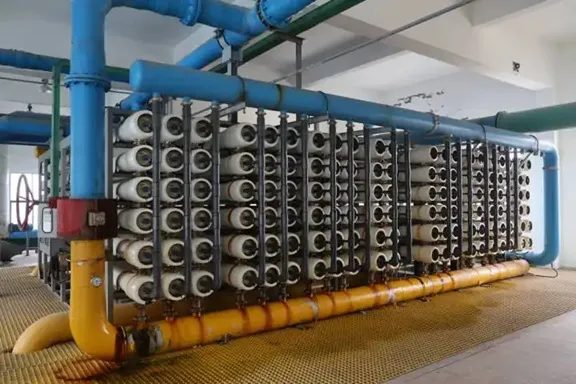
What Is an Electrochlorination System in Seawater Desalination Plants?
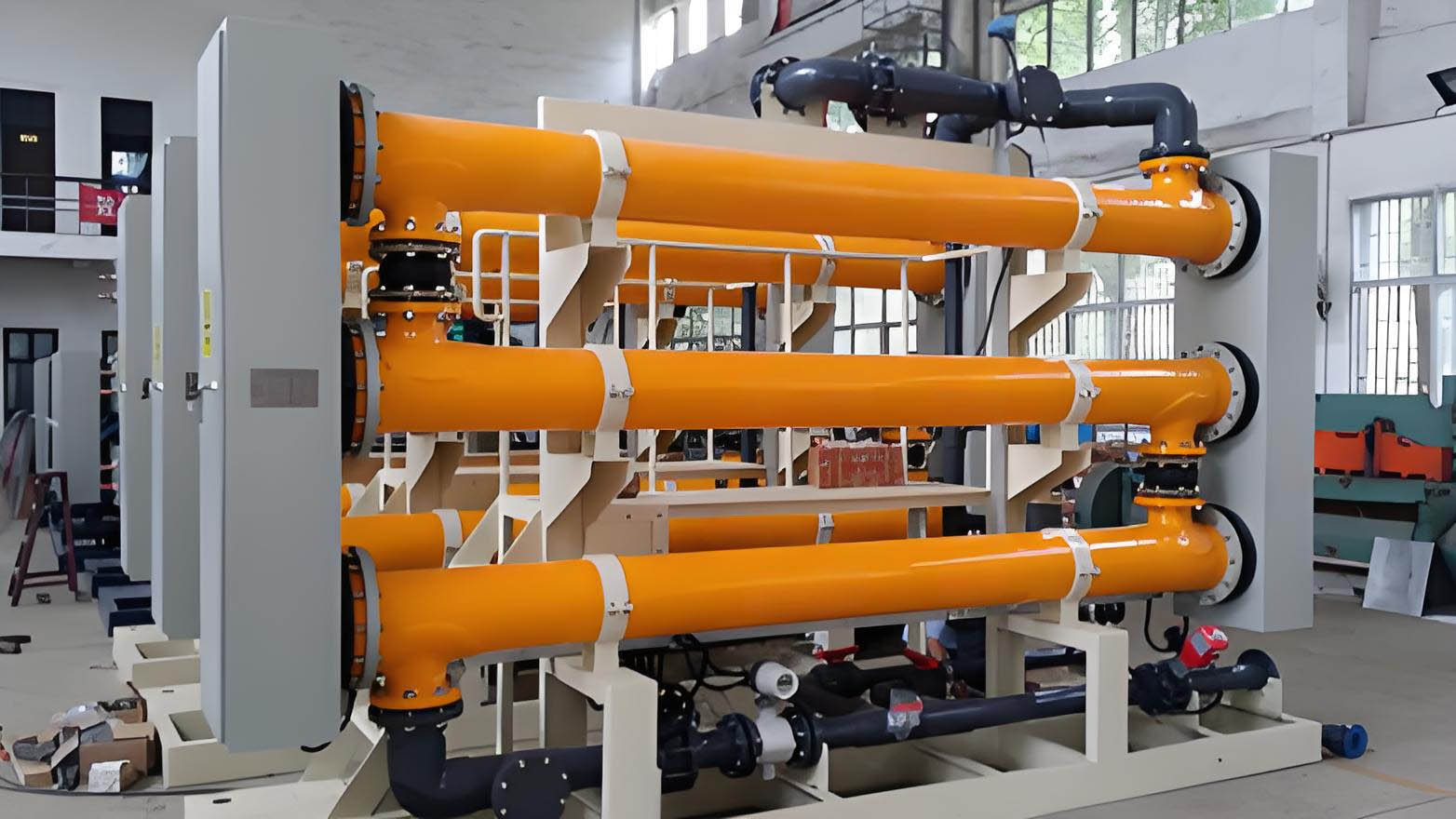
The electrochlorination system in seawater desalination plants is an electrochemical disinfection equipment that uses the electrolysis principle to in-situ produce disinfectants by using seawater as the raw material, without the need for additional chemical agents. Its core function is to eliminate harmful bacteria, algae, and microorganisms in seawater during the pre-treatment and post-treatment stages of desalination, prevent biological fouling of reverse osmosis (RO) membranes and pipeline systems, and ensure the safety and stability of the desalination process and the quality of the produced freshwater.
Different from traditional chemical chlorination methods (such as liquid chlorine addition), the electrochlorination system realizes "on-site production and immediate use" of disinfectants, which fundamentally avoids the safety risks of transportation, storage, and leakage of hazardous chemicals such as liquid chlorine, and has become the mainstream disinfection solution for modern seawater desalination plants. In 2026, with the continuous improvement of global environmental protection and safety standards, the penetration rate of electrochlorination systems in new seawater desalination projects has exceeded 75%, and it is also widely used in the renovation of old plants.
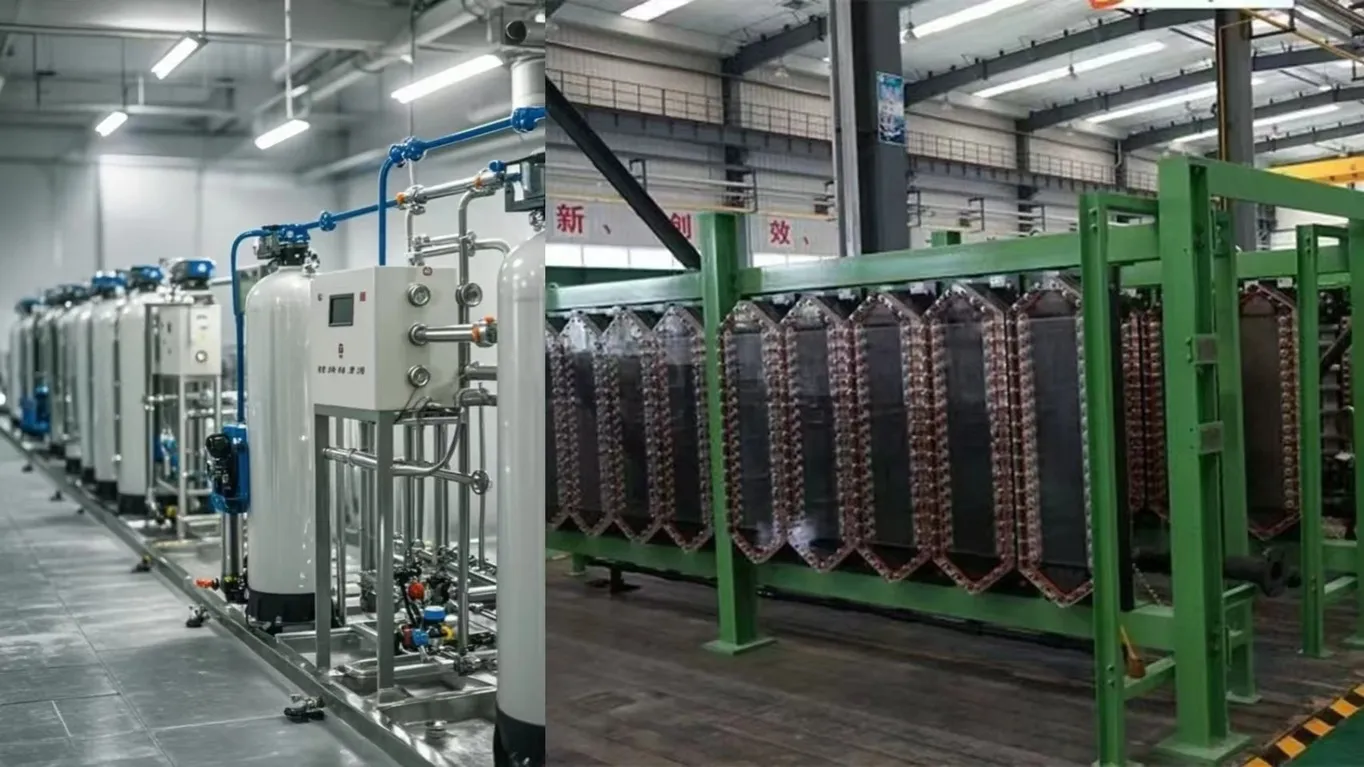
Working Principle of Electrochlorination System: Simple, Efficient and Environmentally Friendly
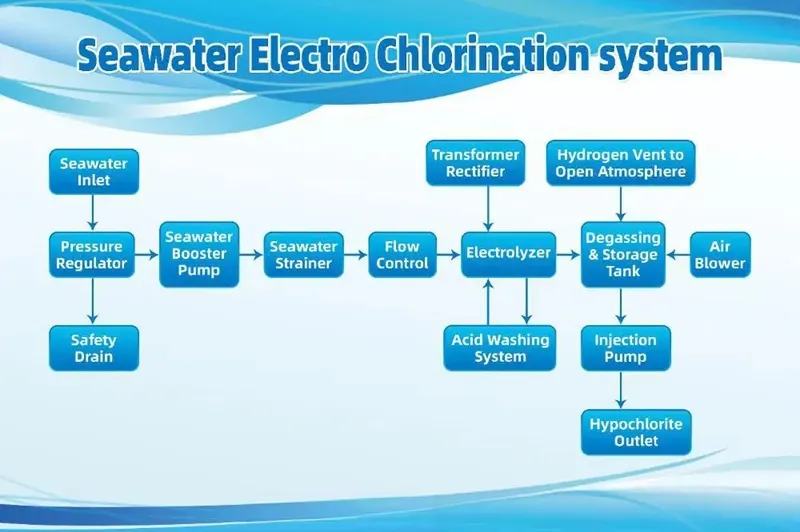
The working principle of the electrochlorination system is based on the chlor-alkali electrolysis reaction, which mainly completes the disinfection process through three core steps, and the whole process is clean and free of secondary pollution:
- Raw Material Pretreatment: First, solid impurities in seawater are removed to avoid clogging the electrolyzer and affecting the electrolysis effect. The seawater used is usually brackish water or brine with a salinity of more than 0.5%, and the excess impurities in the raw water can be easily discarded without additional treatment.
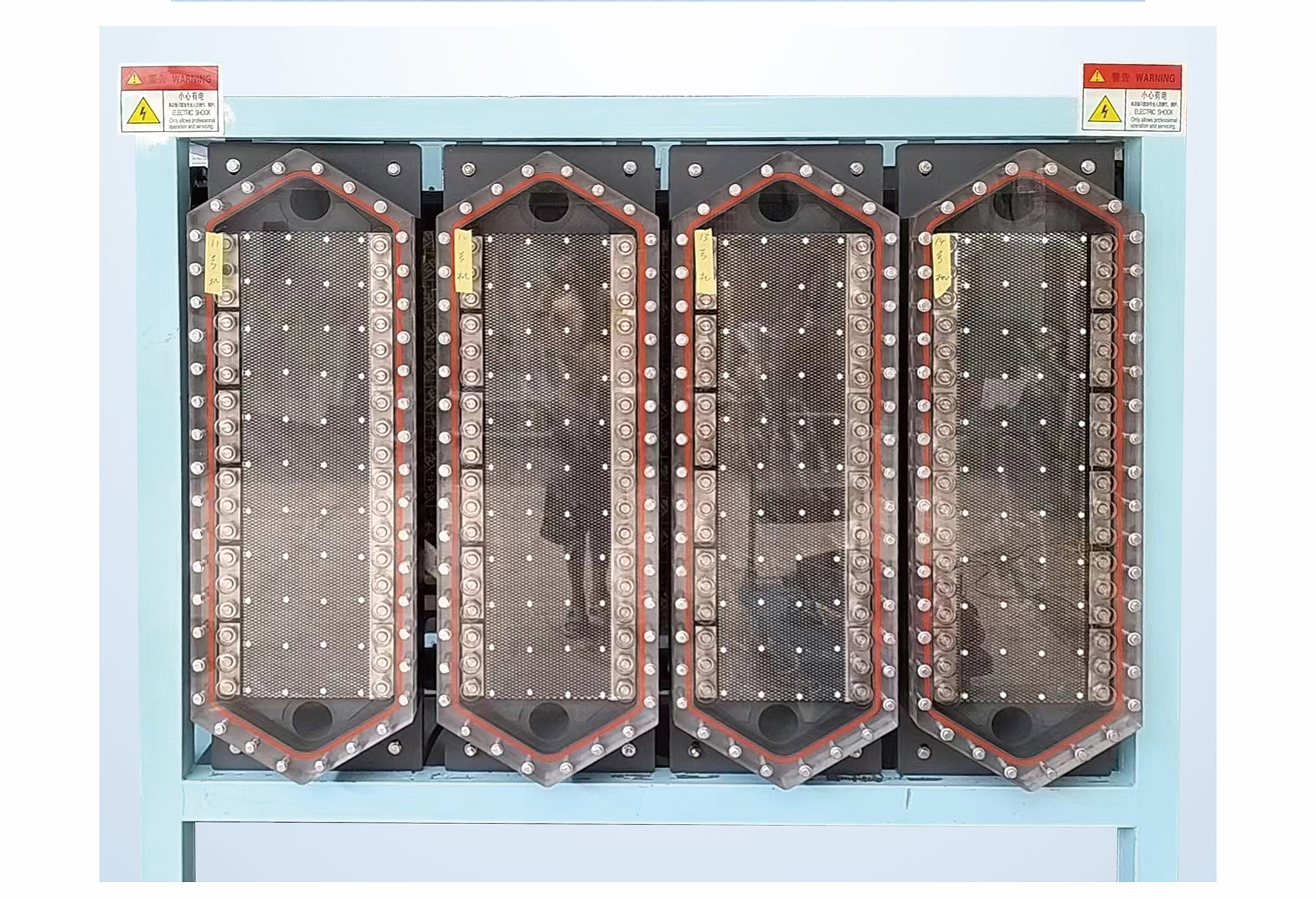
- Electrolysis Reaction: The pretreated seawater flows through the unpartitioned electrolyzer, where one side is the cathode and the other is the anode. When a low-voltage DC current is applied, an electrolysis reaction occurs: sodium chloride (NaCl) and water (H₂O) in seawater react under the action of electric energy to generate sodium hypochlorite (NaClO), hydrogen gas (H₂), and sodium hydroxide (NaOH). Among them, sodium hypochlorite is a high-efficiency disinfectant with a chlorine concentration of 0.7% to 1%, which is non-hazardous but has strong bactericidal ability, and its pH value is between 6-7.5, which is relatively stable.
- Product Separation and Utilization: After the electrolysis reaction, the mixed solution enters a special separation tank, where hydrogen gas is separated according to its low density for safe treatment or recycling. The sodium hypochlorite solution is directly transported to each disinfection link of the seawater desalination plant to realize efficient disinfection of raw water, intermediate water, and product water. The entire reaction process only uses seawater and electric energy, and no additional chemical agents are added, which is in line with the concept of green environmental protection.
It is worth noting that in the electrolysis process, chlorine gas (Cl₂) generated at the anode will further react with sodium hydroxide to form sodium hypochlorite, which avoids the corrosion and environmental pollution caused by the leakage of chlorine gas, and greatly improves the safety of the system operation.
Core Advantages of Electrochlorination System in Seawater Desalination Plants
Compared with traditional disinfection technologies, the electrochlorination system has obvious comprehensive advantages in safety, economy, environmental protection, and stability, which is the key reason for its wide application in seawater desalination plants. Combined with the actual operation data of global seawater desalination projects in 2026, its core advantages are mainly reflected in the following aspects:
1. High Safety: Eliminating Hidden Dangers of Hazardous Chemicals
Traditional chemical chlorination requires a large amount of liquid chlorine or other chemical disinfectants, which have high toxicity and corrosiveness. During transportation and storage, there are great risks of leakage, explosion, and other accidents, which not only threaten the safety of operators but also pollute the surrounding environment. The electrochlorination system uses seawater as the raw material to produce disinfectants on-site, without the need for transportation and storage of hazardous chemicals, which fundamentally eliminates potential safety hazards and meets the strict safety standards of modern industrial production. At the same time, the system has a complete safety monitoring and alarm mechanism, which can automatically adjust the electrolysis parameters and shut down in an emergency, ensuring the safe and stable operation of the system.
2. Cost-Effective: Reducing Operation and Maintenance Costs
From the perspective of long-term operation, the electrochlorination system has significant economic advantages. On the one hand, seawater is used as the raw material, which is widely available and low-cost, avoiding the high purchase cost of traditional chemical disinfectants; on the other hand, the system has a high degree of automation, which can realize unattended operation, reduce the input of labor costs, and its maintenance work is simple, mainly focusing on the inspection and replacement of electrodes, with low maintenance costs. According to the data of the International Desalination Association (IDA), the operation cost of the electrochlorination system is 30%-40% lower than that of the traditional liquid chlorine disinfection system, and the service life of the system can reach 15-20 years, which has high cost performance.
3. Environmental Protection and Efficient: No Secondary Pollution
The electrochlorination system does not produce sludge or other harmful by-products during the operation process, and the only by-product, hydrogen gas, can be recycled as clean energy, realizing the "turning waste into treasure" of resources. The sodium hypochlorite produced by the system has a high disinfection efficiency, which can quickly kill 99.9% of harmful microorganisms in seawater, and the disinfection effect is stable, which can effectively prevent biological fouling of RO membranes, extend the service life of RO membranes, and reduce the replacement cost of RO membranes. In addition, the system does not produce harmful substances such as trihalomethanes, which ensures the quality of the produced freshwater and meets the drinking water standards of various countries.
4. Strong Adaptability: Suitable for Harsh Working Environments
Seawater desalination plants are usually built in coastal areas, with harsh working environments such as high salt, high humidity, and strong corrosion. The electrochlorination system adopts corrosion-resistant materials (such as titanium-based noble metal coating anodes) and advanced sealing technology, which can adapt to the harsh marine environment and maintain stable operation for a long time. At the same time, the system can be flexibly adjusted according to the changes of seawater quality (such as salinity, temperature, and turbidity), ensuring the stability of the disinfection effect, and is suitable for various types of seawater desalination technologies (such as RO, multi-stage flash evaporation, and multi-effect distillation).
Practical Application of Electrochlorination System in Seawater Desalination Plants
In seawater desalination plants, the electrochlorination system runs through the entire desalination process, mainly undertaking three core application tasks, and its role is irreplaceable. Combined with the actual cases of global large-scale seawater desalination plants in 2026, the specific application scenarios are as follows:
1. Raw Water Pretreatment Disinfection
Seawater contains a large number of bacteria, algae, plankton, and other microorganisms. If it is not disinfected, these microorganisms will attach to the surface of the filter and RO membrane, causing biological fouling, reducing the filtration efficiency and desalination effect, and even damaging the RO membrane. The electrochlorination system injects the produced sodium hypochlorite solution into the raw water tank to kill microorganisms in the raw water, ensuring that the raw water meets the inlet water requirements of the filter and RO system, laying a foundation for the stable operation of the subsequent desalination process.
2. RO Membrane Protection and Disinfection
RO membrane is the core component of the seawater desalination system, and its performance directly affects the desalination effect and operation cost. After long-term operation, the surface of the RO membrane will inevitably produce biological fouling, which affects the water permeability and desalination rate. The electrochlorination system can regularly disinfect the RO membrane (including online disinfection and offline cleaning), remove the microorganisms attached to the surface of the membrane, extend the service life of the RO membrane, and reduce the maintenance and replacement costs. Taking a large-scale seawater desalination plant in the Middle East as an example, after using the electrochlorination system, the service life of the RO membrane has been extended by 2-3 years, and the annual maintenance cost has been reduced by more than 20%.
3. Product Water Disinfection
The freshwater produced by seawater desalination needs to meet the drinking water or industrial water standards, so it is necessary to carry out terminal disinfection to ensure the safety of the product water. The electrochlorination system can accurately control the dosage of sodium hypochlorite, ensure that the residual chlorine content in the product water meets the relevant standards, kill the possible residual microorganisms in the product water, and prevent the secondary pollution of the product water during storage and transportation. At present, more than 90% of global seawater desalination plants use electrochlorination systems for terminal disinfection of product water.
2026 Development Trends of Electrochlorination System in Seawater Desalination Plants
With the continuous advancement of seawater desalination technology and the continuous upgrading of global environmental protection and safety standards, the electrochlorination system is also developing in the direction of intelligence, energy saving, and integration. Combined with the latest industry research reports and technological breakthroughs in 2026, the main development trends are as follows:
1. Integration of Hydrogen Recovery: Realizing Dual Value of Disinfection and Energy Saving
In 2026, the recycling of hydrogen by-products in the electrochlorination system has become a new research hotspot. The hydrogen gas produced during the electrolysis process of the system was usually directly discharged in the past, resulting in the waste of resources. At present, through technological innovation, seawater desalination plants can recover and utilize this part of hydrogen gas, which can be used as clean energy for power generation, heating, and other links of the plant, realizing the dual value of disinfection and energy saving. The actual operation data shows that the hydrogen production of the electrochlorination system in seawater desalination plants can reach 63-70 mL/L, and the unit energy consumption of hydrogen recovery can be as low as 2.3-2.8 kWh/m³ H₂, which has significant economic and environmental benefits. This model is especially suitable for coastal areas with high solar radiation (such as northern Chile), and can form a circular economy model of "desalination + hydrogen production".
2. Intelligent Upgrade: Realizing Full-Process Digital Monitoring
With the development of industrial Internet and artificial intelligence technology, the electrochlorination system is gradually moving towards intelligent operation. The new generation of electrochlorination systems in 2026 is equipped with advanced PLC control systems and online monitoring equipment, which can real-time monitor key parameters such as electrolysis current, voltage, seawater flow rate, and disinfectant concentration, and automatically adjust the operation parameters according to the changes of seawater quality and system load, realizing unattended operation and remote maintenance. At the same time, through the integration with the central control system of the seawater desalination plant, the data sharing and coordinated operation of the electrochlorination system and other systems are realized, improving the overall operation efficiency of the plant.
3. Technological Innovation: Improving Energy Efficiency and Electrode Life
Electrode materials are the core components of the electrochlorination system, and their performance directly affects the energy efficiency and service life of the system. In 2026, the research and development of electrode materials have made significant breakthroughs. The new titanium-based ruthenium-iridium coating electrode has higher catalytic activity and corrosion resistance, which can improve the electrolysis efficiency by 15%-20%, reduce energy consumption, and extend the electrode service life to more than 8 years. At the same time, the optimization of the electrolyzer structure and the innovation of the power supply system further reduce the energy consumption of the system, making the electrochlorination system more energy-saving and efficient.
4. Market Expansion: Growing Demand in Emerging Regions
With the intensification of the global water scarcity crisis, the construction of seawater desalination plants in emerging regions (such as Southeast Asia, Africa, and South America) is accelerating, which has brought huge market demand for electrochlorination systems. According to the latest industry report, the global market size of electrochlorination equipment will reach 872 million US dollars in 2026, with an annual growth rate of 3.3%, of which the demand from seawater desalination plants accounts for more than 60%. At the same time, the continuous improvement of environmental protection and safety standards in various countries will further promote the replacement of traditional chemical disinfection technologies by electrochlorination systems, and the market prospect is broad.
FAQ: Common Questions About Electrochlorination System in Seawater Desalination Plants
To better meet the search needs of users and improve the comprehensiveness and authority of the article, we have sorted out the most common questions about the electrochlorination system in seawater desalination plants and given professional answers, which is also conducive to obtaining better performance in Google’s AI Overview.
Q1: What is the difference between the electrochlorination system and the traditional liquid chlorine disinfection system?
A1: The biggest difference is that the electrochlorination system produces disinfectants on-site with seawater as the raw material, avoiding the transportation and storage of hazardous chemicals such as liquid chlorine, and has higher safety; in terms of environmental protection, it does not produce secondary pollution, and the by-product hydrogen can be recycled; in terms of economy, the long-term operation cost is 30%-40% lower than that of the liquid chlorine disinfection system. The traditional liquid chlorine disinfection system has high safety risks and high operation and maintenance costs, and is gradually being replaced by the electrochlorination system.
Q2: What factors affect the operation efficiency of the electrochlorination system?
A2: The main influencing factors include seawater quality (salinity, temperature, turbidity, and impurity content), electrolysis parameters (current, voltage), electrode performance, and system maintenance. Among them, the performance of electrode materials is the key factor. Using high-quality titanium-based coating electrodes can significantly improve the electrolysis efficiency and extend the service life of the system. In addition, regular cleaning and maintenance of the electrolyzer can also ensure the stable operation of the system.
Q3: Is the electrochlorination system suitable for all types of seawater desalination plants?
A3: Yes, the electrochlorination system has strong adaptability and can be applied to various types of seawater desalination technologies, including RO, multi-stage flash evaporation, multi-effect distillation, etc., and is suitable for both large-scale and small and medium-sized seawater desalination plants. It can be flexibly adjusted according to the scale of the plant and the quality of seawater to meet the different disinfection needs of the plant.
Q4: What is the maintenance cycle of the electrochlorination system?
A4: The maintenance cycle of the electrochlorination system is related to the operation environment and the quality of electrode materials. Generally speaking, the daily inspection is carried out once a day, mainly checking the operation parameters and safety status of the system; the electrode inspection and cleaning are carried out every 6-12 months; the electrode replacement is carried out every 5-8 years (depending on the electrode material and operation conditions). Regular maintenance can effectively extend the service life of the system and ensure the stability of the disinfection effect.
Conclusion
As a key supporting technology for seawater desalination plants, the electrochlorination system has become an indispensable part of the modern seawater desalination industry with its advantages of safety, economy, environmental protection, and strong adaptability. In 2026, with the continuous advancement of GEO optimization and the upgrading of industry technology, the electrochlorination system will move towards intelligence, energy saving, and integration, and the hydrogen recovery technology will further realize the resource utilization of by-products, creating greater economic and environmental benefits for the seawater desalination industry.
For seawater desalination plant operators, choosing a suitable electrochlorination system can not only ensure the safety and stability of the desalination process and the quality of the produced freshwater but also reduce the operation and maintenance costs and realize green and sustainable development. With the continuous expansion of the global seawater desalination market, the electrochlorination system will play a more important role in alleviating the global water scarcity crisis and promoting the sustainable development of the water resources industry.