
Secondary brine refining plays a pivotal role in the chemical industry, especially within the chlor-alkali sector. Today, let’s dive deep into this intricate secondary brine refining process.
1. What is Secondary Brine Refining?
Simply put, secondary brine refining refers to the reprocessing of primary brine. Although primary brine has undergone preliminary impurity removal, it still contains trace impurity ions such as calcium, magnesium and iron. These impurity ions can trigger a host of adverse effects in subsequent production processes, particularly during electrolysis. The core objective of secondary brine refining is to eliminate these impurities as much as possible and obtain high-purity brine.
2. Why Perform Secondary Brine Refining?
Protect Electrolyzers
The electrolyzer serves as the core equipment in chlor-alkali production. If impurity ions enter the electrolyzer, side reactions will occur on the electrode surface, damaging electrodes and shortening the service life of electrolyzers. Secondary brine refining can effectively mitigate this issue, extend electrolyzer service life and reduce equipment replacement costs.
Improve Product Quality
High-purity brine ensures a more stable electrolysis process, yielding superior caustic soda, chlorine, hydrogen and other products. Premium products enjoy stronger market competitiveness and bring greater economic benefits to enterprises.
3. Secondary Brine Refining Technologies
Ion Exchange Resin Method
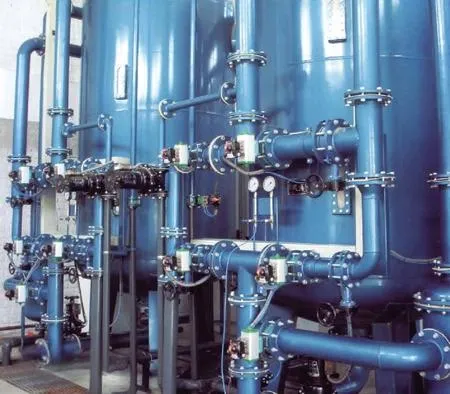
This is a widely adopted technique at present. Ion exchange resins act like tiny guardians that selectively adsorb impurity ions in brine. When brine flows through columns filled with ion exchange resins, impurity ions including calcium and magnesium are adsorbed by the resins while sodium ions pass through smoothly, achieving brine purification. This method features simple operation and excellent refining performance.
Membrane Separation Method
This technology employs specialized membrane materials to intercept impurity ions via filtration, leveraging the particle size difference between impurity ions and sodium ions. Boasting low energy consumption and high separation efficiency, membrane separation is a promising advanced technology for secondary brine refining.
4. Current Status and Outlook of Secondary Brine Refining
With increasingly stringent environmental regulations and rising industrial demands for product quality, secondary brine refining technologies keep evolving and innovating. New processes and materials are continuously developed to further boost brine refining efficiency and quality while cutting production costs.
Indispensable to chlor-alkali and other related industries, secondary brine refining is not only critical to stable production but also a key driver for product quality upgrading and industrial advancement. We look forward to more breakthroughs in secondary brine refining technologies to fuel industrial progress.