


Pseudorabies Virus (PRV) has become a major threat to pig farming worldwide, causing severe economic losses due to its high infectivity and wide transmission routes. Disinfection is the core measure for PRV purification in pig farms, and hypochlorous acid (HClO) disinfectant has emerged as a high-efficiency, safe option for viral inactivation and nucleic acid degradation. This study uses fluorescent PCR detection technology to systematically evaluate the PRV nucleic acid degradation effect and disinfection efficacy of hypochlorous acid under different conditions, providing scientific guidance for PRV prevention and control in animal husbandry.
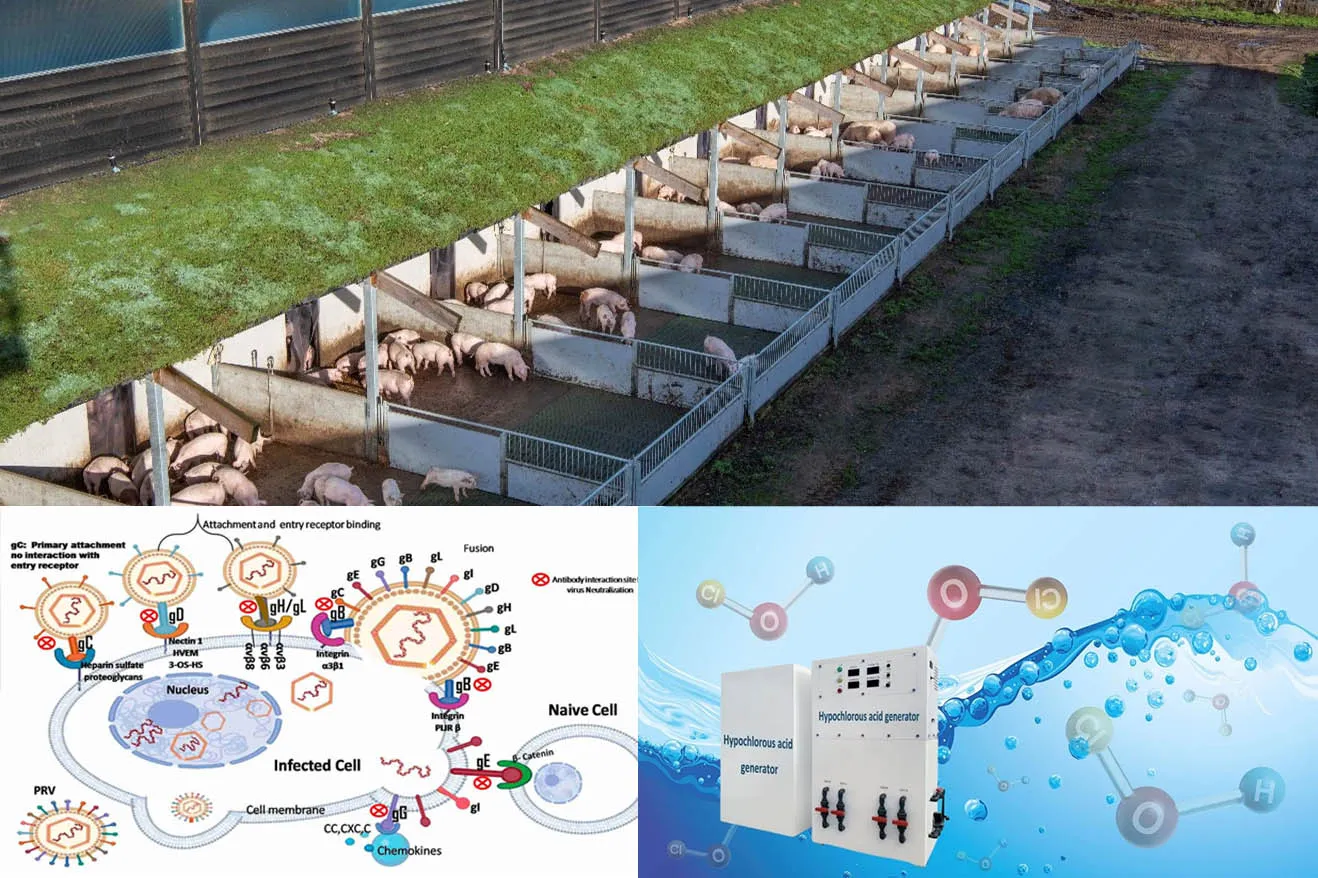
1. The Impact of PRV on Pig Farming & the Significance of Disinfection
Pseudorabies, caused by the herpesvirus family PRV, was first identified and described by Hungarian microbiologists in 1902, and has since spread to pig farms across the globe.
- Pathological symptoms: PRV causes neurological symptoms in piglets, respiratory symptoms in adult pigs, and severe reproductive disorders in sows (including coughing, fever, abortion, mummified fetuses, stillbirths). Boars infected with PRV suffer from testicular swelling and reduced breeding performance.
- Transmission routes: PRV spreads through nasal fluid, saliva, milk, vaginal secretions, blood and solid organs, making cross-infection in pig farms extremely easy.
- Disinfection value: Chemical disinfection is the most widely used method in pig farms due to its easy availability, economic efficiency, fast action and broad bactericidal spectrum. Fluorescent PCR, a convenient, fast and low-cost detection method, is the primary tool for clinical PRV detection and post-disinfection nucleic acid residue evaluation, enabling multi-dimensional and high-throughput efficacy assessment of disinfectants.
2. Chemical Properties & Disinfection Mechanism of Hypochlorous Acid
Hypochlorous acid (HClO) is a small-molecule, non-charged high-efficiency oxidative disinfectant that can easily penetrate the cell membranes of microorganisms and viral capsules. Its disinfection mechanism is multi-faceted and synergistic:
2.1 Oxidative damage to nucleic acids and proteins
HClO undergoes oxidative reactions with viral nucleic acids (DNA/RNA), capsid proteins and enzyme systems, leading to nucleic acid chain breakage and protein denaturation, directly destroying the viral genetic material and functional structure.
2.2 Physical destruction of membrane structure
The high oxidation potential of HClO changes the permeability of the viral envelope, destroys the lipid bilayer structure, and causes the virus to lose its ability to infect host cells.
2.3 Synergistic effect of nascent oxygen
Reactive oxygen species produced by the decomposition of hypochlorous acid further accelerate the inactivation of pathogens, enhancing the overall disinfection effect.
2.4 Hypochlorous Acid vs Traditional Chlorine-Containing Disinfectants
Traditional chlorine-containing disinfectants (e.g., 84 disinfectant) are mainly composed of hypochlorite (ClO⁻), which relies on hydrolysis to generate HClO for disinfection, with slow reaction speed and weak penetration.
Hypochlorous acid disinfectant directly provides free HClO, which acts faster, has stronger penetration, and achieves better disinfection results at lower concentrations.
3. Hypochlorous Acid-Mediated Degradation of PRV Nucleic Acid
3.1 Experimental Data on Nucleic Acid Degradation Efficacy
A large number of in vitro and animal husbandry experiments have confirmed the significant nucleic acid degradation effect of hypochlorous acid on viruses including PRV:
- African Swine Fever Virus (ASFV): 200 ppm hypochlorous acid disinfectant significantly reduces viral nucleic acid load, with the nucleic acid Ct value increasing by 6 units after treatment, indicating a remarkable degradation effect.
- Poliovirus: 250 mg/L hypochlorous acid completely inactivates the virus after 10 minutes of exposure, with simultaneous nucleic acid degradation and protein oxidation.
- PRV: Experiments by Hokkaido University of Agriculture in Japan show that acidic electrolyzed water (containing hypochlorous acid) achieves a PRV inactivation rate of over 99.99%, with effective chlorine concentration and treatment time showing a significant positive correlation.
3.2 Mechanism of PRV Nucleic Acid Degradation
Hypochlorous acid specifically oxidizes the bases (e.g., guanine) and phosphate backbones in the PRV DNA chain, causing chain breaks and cross-linking of the genetic material. The high GC content of the PRV genome increases its sensitivity to oxidative damage, making hypochlorous acid a targeted and efficient PRV nucleic acid degrader.
4. Evaluation of Hypochlorous Acid's Disinfection Efficacy on PRV
4.1 Inactivation Efficiency & Condition Optimization
The PRV disinfection effect of hypochlorous acid is closely related to concentration, action time and environmental factors, with clear optimal application parameters:
- Concentration and action time: 50-200 ppm hypochlorous acid achieves a 99.99% PRV inactivation rate within 10-30 minutes; even when diluted 1:10, it still maintains a significant disinfection effect. For reference, 100-200 ppm hypochlorous acid can completely inactivate SARS-CoV-2 in just 1 minute.
- Environmental interference factors: Organic matter (e.g., serum, tissue fragments) in pig farm environments can consume available chlorine. In such complex environments, it is recommended to increase the hypochlorous acid concentration to above 200 ppm to ensure disinfection efficacy.
4.2 National Standard Evaluation Criteria for Disinfection Efficacy
According to the Technical Specifications for Disinfection, qualified viral disinfection must meet two core criteria, both of which hypochlorous acid fully satisfies:
1. Inactivation rate ≥99.9%: Verified by cell infectivity test or plaque reduction assay.
2. Nucleic acid degradation verification: qPCR or droplet digital PCR detects a ≥3 log10 decrease in viral nucleic acid load.
5. Practical Application Suggestions & Precautions for Pig Farms
5.1 Recommended Application Scenarios & Parameters
Hypochlorous acid disinfectant is suitable for multiple PRV prevention and control scenarios in animal husbandry and laboratory settings, with clear operational guidelines:
- Pig farms and pet environments: Use 50-200 ppm hypochlorous acid solution with an action time of 10-30 minutes for disinfection of pig pens, breeding equipment, and the entire farm environment.
- PRV-contaminated laboratory areas: Adopt spray or immersion disinfection with hypochlorous acid; compound with chlorine dioxide and other cleaning agents to enhance the disinfection effect on heavily contaminated surfaces.
5.2 Safety & Environmental Protection Advantages
Hypochlorous acid disinfectant has unique safety properties that make it suitable for long-term use in pig farms:
- Low irritation to human and animal skin and mucous membranes, with an acute oral toxicity rating of practically non-toxic.
- Decomposition products are only water, oxygen and trace chlorides, no harmful residues, and fully comply with environmental protection requirements for animal husbandry.
- No corrosive effect on breeding equipment, avoiding economic losses caused by equipment damage during disinfection.
6. Summary: Hypochlorous Acid as a Core Disinfectant for PRV Prevention and Control
Hypochlorous acid disinfectant achieves over 99.99% PRV inactivation by oxidatively destroying viral nucleic acid and envelope protein, with significant nucleic acid degradation efficacy that avoids false positives in post-disinfection PRV detection. Its disinfection effect is affected by concentration, action time and environmental organic matter, and adjusting the concentration according to the actual scenario can ensure optimal efficacy.
As a safe, efficient and environmentally friendly disinfectant, hypochlorous acid is an ideal choice for PRV prevention and control in the breeding industry, and is also widely applicable to pet environment disinfection and laboratory biosafety protection, providing a reliable technical solution for the purification of pseudorabies virus in pig farms worldwide.
About Chlory: Global Leader in Hypochlorous Acid Generation Technology
Chlory is a world-leading manufacturer of hypochlorous acid generators, dedicated to providing efficient and environmentally friendly disinfection solutions for medical, animal husbandry, food processing and water treatment industries.
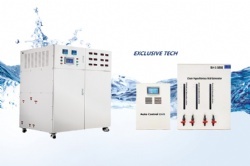
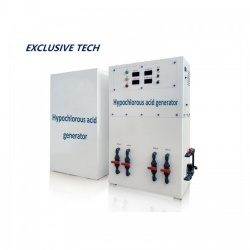
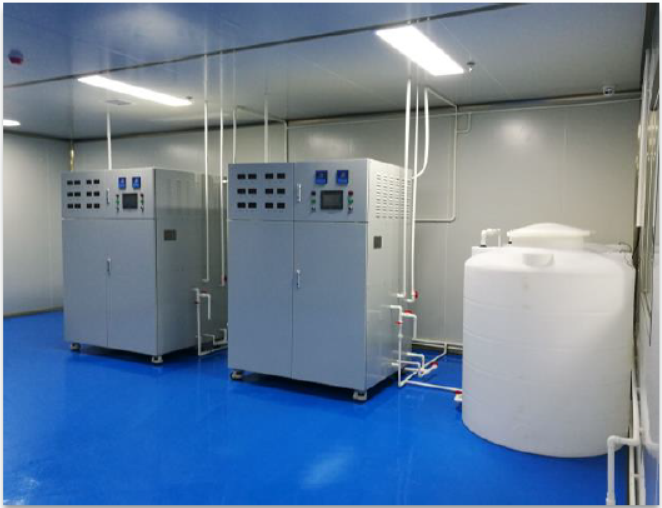
The company's hypochlorous acid generator features advanced technology, stable performance and easy operation, which can efficiently and stably generate high-purity hypochlorous acid solution, ensuring the quality and disinfection efficacy of the disinfectant. Chlory's core technology provides strong hardware support for the application of hypochlorous acid in PRV prevention and control, and creates customized disinfection solutions for pig farms of all scales.