
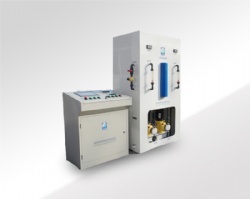
Water disinfection is the core link of municipal water supply, industrial water treatment, and wastewater reuse projects. The selection of disinfectants directly determines water quality safety, operating cost, by-product generation, and system operation stability. Liquid chlorine, chlorine dioxide, and high-concentration sodium hypochlorite (NaClO) are the three most widely used chlorine-based disinfectants in the modern water treatment industry. Each has unique advantages, limitations, and applicable scenarios.
For water treatment enterprises and project operators, clarifying the differences between the three disinfectants is crucial to optimizing disinfection processes, reducing operational risks, and meeting increasingly stringent water quality discharge standards. This article conducts a comprehensive comparison of liquid chlorine, chlorine dioxide, and high-concentration NaClO from multiple dimensions including disinfection mechanism, performance characteristics, safety, cost, and application scope.
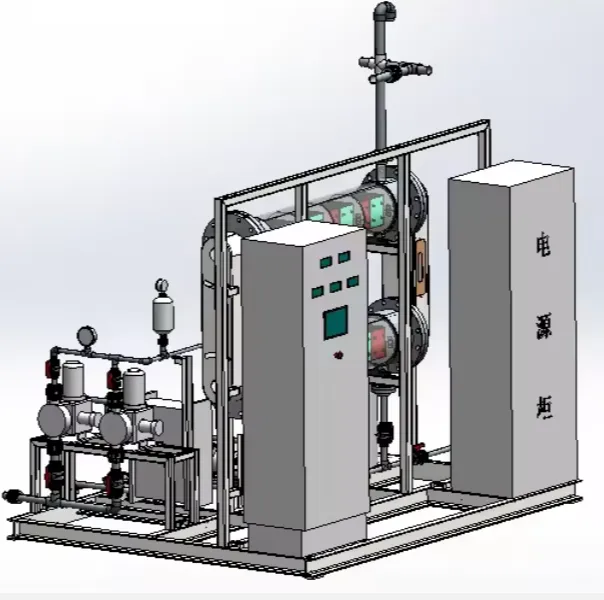
1. Basic Overview & Disinfection Mechanism of Three Disinfectants
All three products belong to oxidative chlorine-based disinfectants, which kill bacteria, viruses, and algae in water by destroying the microbial cell structure and enzyme system. However, their existing forms and reaction mechanisms in water are significantly different.
1.1 Liquid Chlorine
Liquid chlorine is a liquefied form of elemental chlorine under low temperature and high pressure, with an effective chlorine content close to 100%. After being added to water, it hydrolyzes rapidly to generate hypochlorous acid (HClO), which penetrates microbial cell membranes and inactivates microorganisms through strong oxidation. It is a traditional and mature bulk disinfectant for large-scale water treatment projects.
1.2 Chlorine Dioxide (ClO₂)
Chlorine dioxide is a high-efficiency oxidizing disinfectant that exists as a gas under normal temperature and pressure. Unlike liquid chlorine, it does not undergo hydrolysis reaction in water and maintains stable molecular activity in aqueous solution. Its oxidation capacity is 2.5 times that of liquid chlorine, and it can efficiently inactivate bacteria, spores, and viruses with a lower dosage. It is recognized as a high-safety green disinfectant in the industry.
1.3 High-Concentration NaClO
High-concentration sodium hypochlorite is a liquid disinfectant prepared by electrolysis or chemical synthesis, with a conventional effective chlorine concentration of 10%–12%. Similar to liquid chlorine, it hydrolyzes in water to produce hypochlorous acid for disinfection. It avoids the high-risk characteristics of liquid chlorine gas leakage and has the advantages of convenient storage and simple dosing operation.
2. Core Performance Comparison: Disinfection Efficiency & Water Adaptability
Disinfection efficiency, pH adaptability, and residual sterilization ability are key indicators for evaluating disinfectant performance, which directly affect the final water treatment effect.
2.1 Disinfection Efficiency
Chlorine dioxide ranks first in sterilization efficiency. It can quickly kill Escherichia coli, legionella, algae, and various viruses at low doses, with a shorter contact time required and excellent effect on inhibiting microbial regeneration. Liquid chlorine has stable conventional sterilization performance but a weak effect on spores and high-resistance viruses. High-concentration NaClO has balanced daily disinfection capacity, slightly lower instantaneous sterilization efficiency than chlorine dioxide, but far more stable than liquid chlorine in complex water quality environments.
2.2 pH & Water Quality Adaptability
Liquid chlorine is greatly affected by water pH. Its optimal working pH range is 6.0–7.5. When the water body is alkaline, the proportion of hypochlorous acid decreases sharply, and the disinfection effect is significantly weakened. High-concentration NaClO has a slightly wider pH adaptation range than liquid chlorine but still suffers from reduced efficacy in strong alkaline water.
In contrast, chlorine dioxide has outstanding pH tolerance, maintaining stable and efficient disinfection performance in the pH range of 4.0–10.0. It is suitable for various complex water qualities such as high-alkali water, industrial wastewater, and raw water with variable water quality.
2.3 Disinfection By-Products (DBPs)
By-product generation is a key factor affecting drinking water safety. Liquid chlorine is most likely to react with organic matter, ammonia nitrogen and other substances in water to produce harmful by-products such as trihalomethanes and haloacetic acids. High-concentration NaClO also produces a small amount of halogenated by-products during use.
Chlorine dioxide almost does not react with organic substances in water, producing extremely low trace by-products, which fully meets the high-standard drinking water and recycled water treatment requirements.
3. Safety, Storage & Operational Difficulty Comparison
On-site operation safety and storage convenience are important factors for long-term stable operation of water treatment projects, especially for municipal water plants and industrial circulating water systems.
3.1 Liquid Chlorine
Liquid chlorine is a highly hazardous chemical with strong toxicity and corrosivity. It is stored in pressure vessels, and gas leakage may occur in case of improper transportation, storage or operation, causing serious safety accidents. Its use requires professional certified operators, special explosion-proof and leak-proof equipment, and strict safety management systems, with high operational risks and management costs.
3.2 Chlorine Dioxide
Chlorine dioxide is unstable under high concentration and light conditions, and is easy to decompose and explode. It cannot be stored and transported for a long time and must be generated on-site through a dedicated generator. The operational process requires precise proportioning and parameter control, with moderate operational difficulty and high requirements for equipment stability. However, its overall safety is higher than liquid chlorine due to no bulk storage of hazardous substances.
3.3 High-Concentration NaClO
High-concentration sodium hypochlorite is a low-risk liquid chemical with stable properties, safe transportation and sealed storage, no risk of sudden leakage and explosion. The dosing equipment is simple, the operation is automated and easy to control, and no special high-standard safety protection conditions are required. It is the safest and most operable option among the three for conventional water treatment scenarios.
4. Economic Cost Analysis
Comprehensive cost includes raw material cost, equipment investment, operation and maintenance cost, and labor cost, which is the core basis for project scheme selection.
Liquid chlorine has the lowest unit effective chlorine cost and is suitable for super-large water treatment projects with stable water quality. However, its later safety management cost, equipment maintenance cost and risk control cost cannot be ignored.
Chlorine dioxide has high raw material and equipment investment costs. The on-site generator requires regular maintenance and reagent replacement, resulting in the highest comprehensive operating cost. It is mostly used in high-standard water quality scenarios with strict by-product control requirements.
High-concentration NaClO has moderate raw material cost, low equipment investment and almost no additional safety management costs. Its comprehensive cost performance is outstanding in medium and small water treatment projects, industrial wastewater treatment, and circulating water disinfection scenarios.
5. Applicable Scenarios & Selection Suggestions
Combined with the performance, safety and cost characteristics of the three disinfectants, we put forward targeted selection suggestions for different water treatment scenarios:
Choose Liquid Chlorine: Super-large municipal water plants, large-scale industrial raw water treatment projects with stable water quality, sufficient professional operation teams and perfect safety management systems, pursuing ultra-low unit disinfection cost.
Choose Chlorine Dioxide: High-standard drinking water supply projects, water bodies with high organic matter and ammonia nitrogen content, wastewater reuse projects, and scenarios with strict restrictions on disinfection by-products, algae removal and virus inactivation.
Choose High-Concentration NaClO: Medium and small water plants, industrial circulating water disinfection, sewage plant tail water disinfection, community water supply, and scenarios pursuing balanced safety, cost and disinfection effect with low operation and maintenance difficulty.
6. Conclusion
There is no absolute best water treatment disinfectant, only the most suitable one. Liquid chlorine is cost-effective for large-scale stable projects but has prominent safety risks; chlorine dioxide is a high-efficiency and low-by-product disinfectant, suitable for high-standard water quality requirements but with high operating costs; high-concentration NaClO balances safety, operability and cost, covering most conventional water treatment scenarios.
As water quality standards become increasingly stringent and industrial safety management requirements continue to upgrade, high-safety and low-by-product disinfection schemes will become the mainstream trend. Professional water treatment enterprises need to select disinfectants and optimize processes according to actual water quality conditions, project scale and compliance requirements to ensure efficient, safe and economical water treatment operation.