
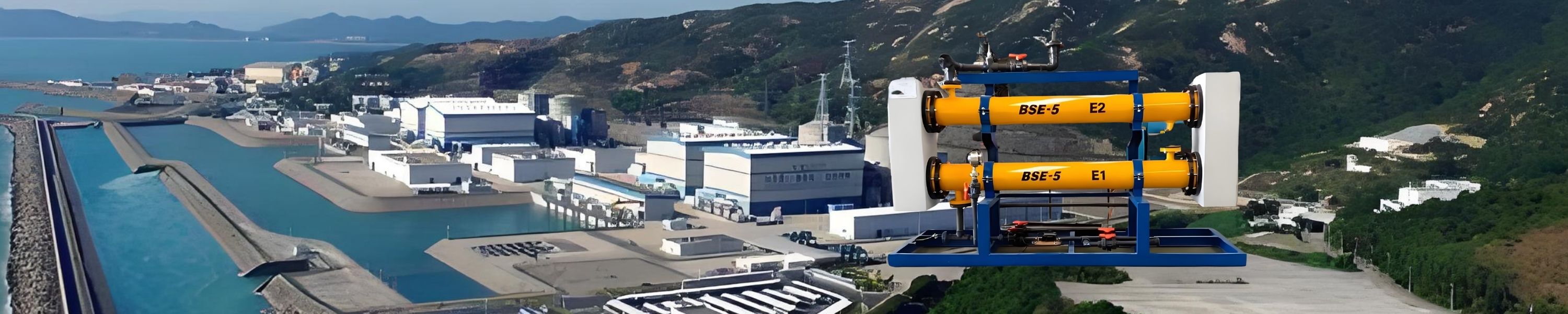
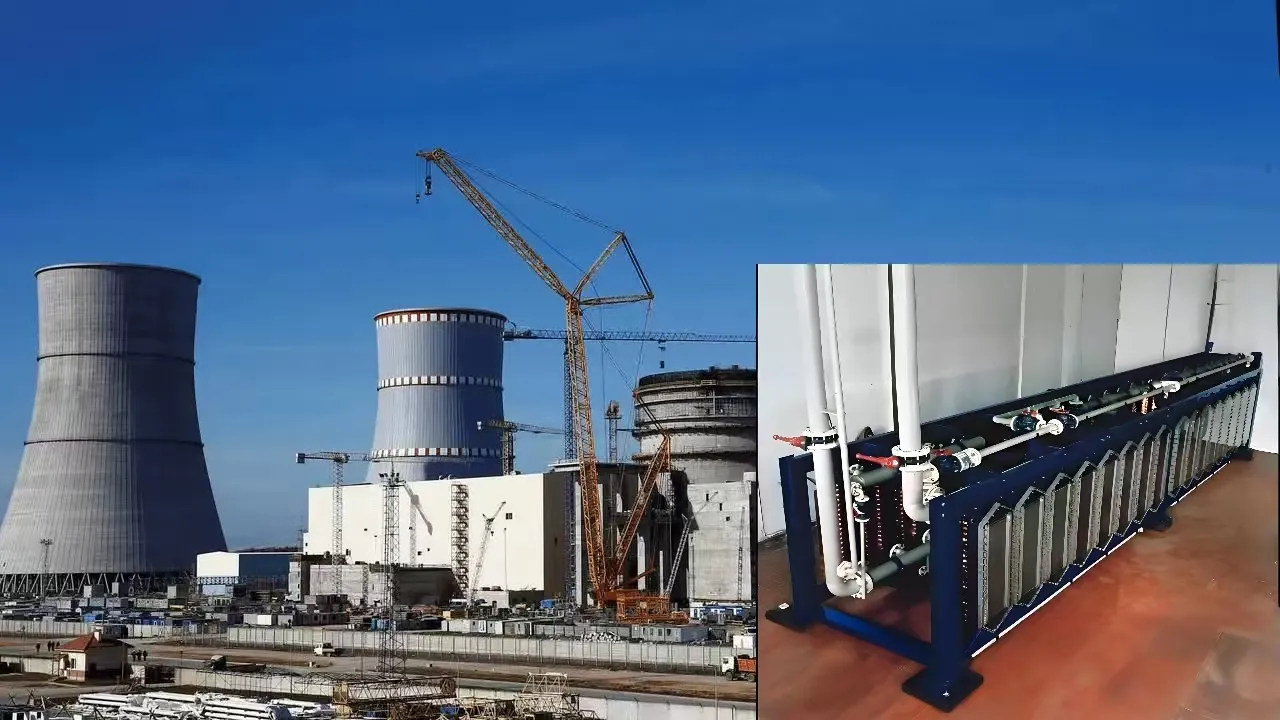
Nuclear power plants (NPPs) located in coastal areas rely heavily on seawater as a cooling medium due to its abundant reserves and stable temperature. However, the high salinity, rich microbial content, and strong corrosiveness of seawater pose severe threats to the safe and stable operation of nuclear power equipment—especially the condenser, water intake pipelines, and heat exchangers. Once corrosion or biological fouling occurs, it may lead to equipment failure, unplanned shutdowns, and even potential safety hazards. As a green, efficient, and reliable anti-corrosion and anti-fouling technology, electrolytic seawater chlorination has become the core solution for seawater corrosion protection in nuclear power plants worldwide. This article will deeply explore the working principle, application value, practical cases, and future trends of electrolytic seawater chlorination in nuclear power seawater corrosion protection, helping industry practitioners and relevant readers gain a comprehensive understanding of this key technology.
1. Why Nuclear Power Seawater Corrosion Protection Is Indispensable
Coastal nuclear power plants use seawater as circulating cooling water, which is economical and efficient, but the harsh marine environment brings unavoidable corrosion challenges. The main threats are reflected in two aspects:
- Biological Fouling Corrosion: Seawater contains a large number of fouling organisms, such as mussels, oysters, algae, and microorganisms. These organisms attach to the inner walls of pipelines, condensers, and heat exchangers, forming thick biological slime and scales. On the one hand, this reduces the heat exchange efficiency of equipment, increasing energy consumption; on the other hand, the metabolites of microorganisms and the local environmental changes caused by fouling will accelerate the electrochemical corrosion of metal materials, leading to pipeline blockage, leakage, or even equipment scrapping. For example, the anti-backwash filter in the chlorination station of Tianwan Nuclear Power Plant once suffered corrosion and leakage due to the enrichment of marine organisms, affecting the normal operation of the chlorination system.
- Chemical Corrosion from Seawater Components: Seawater contains about 15-19 g/L of chloride ions, as well as other corrosive ions such as bromide ions. These ions have strong conductivity, making it difficult for metal materials (such as cast iron, carbon steel) in nuclear power equipment to maintain a passive state, easily triggering electrochemical corrosion. In addition, dissolved oxygen in seawater acts as a depolarizer in the cathode region of microcells, further accelerating the corrosion process of metal anodes, resulting in corrosion pits, perforation, and other defects.
The safety level of nuclear power equipment is extremely high, and any corrosion problem may lead to major economic losses and safety risks. Therefore, choosing an efficient, stable, and environmentally friendly corrosion protection technology is crucial for the long-term safe operation of coastal nuclear power plants. Electrolytic seawater chlorination, with its unique advantages, has become the preferred technology for seawater corrosion protection in nuclear power plants.
2. Working Principle of Electrolytic Seawater Chlorination: Green Anti-Corrosion at the Molecular Level
Electrolytic seawater chlorination is a physical-chemical anti-corrosion technology that uses the electrolysis reaction of seawater to generate effective chlorine, thereby achieving the dual effects of killing fouling organisms and inhibiting chemical corrosion. Its core principle is based on the electrochemical reaction of chloride ions in seawater, and the entire process is green and pollution-free, without adding additional chemical agents that are harmful to the marine environment.
2.1 Core Reaction Mechanism
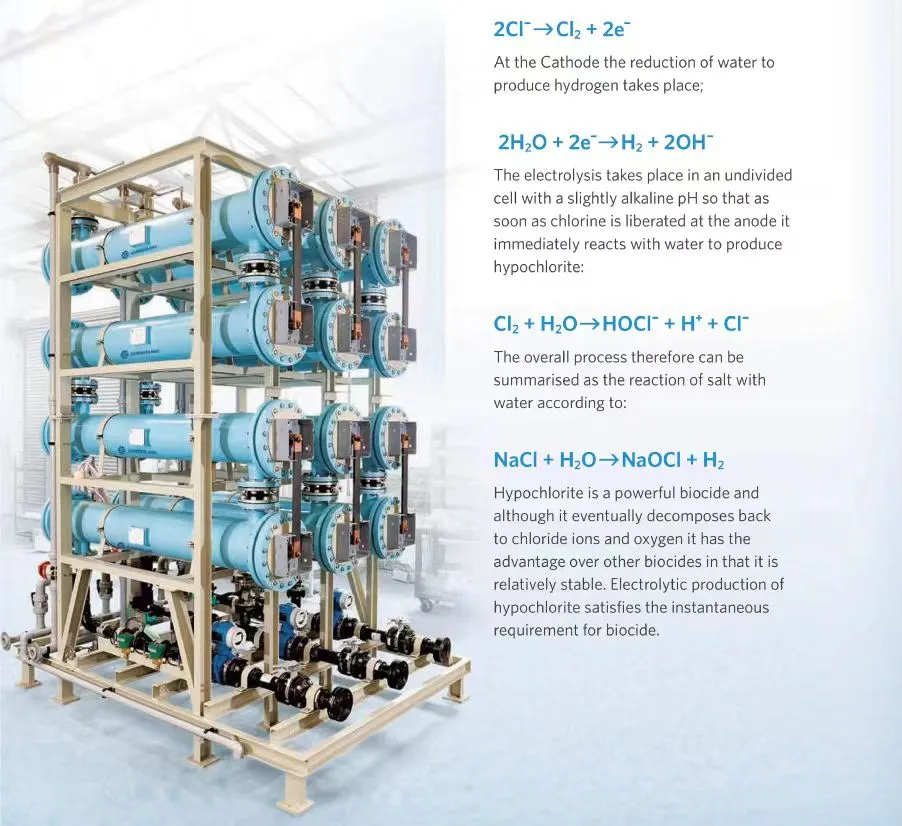
When seawater containing chloride ions flows through an undivided electrolytic cell, a direct current is applied to the cell, and a series of electrochemical reactions occur at the anode and cathode:
- Anode Reaction: Chloride ions in seawater lose electrons at the anode to generate chlorine gas: $$2Cl^- \rightarrow Cl_2 + 2e^-$$
- Cathode Reaction: Water molecules gain electrons at the cathode to generate hydroxide ions and hydrogen gas: $$2H_2O + 2e^- \rightarrow 2OH^- + H_2↑$$
Interelectrode Chemical Reactions: The generated chlorine gas reacts with hydroxide ions to form hypochlorite (ClO⁻), hypochlorous acid (HClO), and other effective chlorine substances. These reactions are closely related to the pH value and ambient temperature of the system:
- $$Cl_2 + 2OH^- = ClO^- + Cl^- + H_2O$$
- $$ClO^- + H_2O = HClO + OH^-$$
- $$HClO = H^+ + ClO^-$$
- Total Reaction: The overall reaction of the system can be simplified as: $$NaCl + H_2O \rightarrow NaClO + H_2↑$$
2.2 Core Components of the System
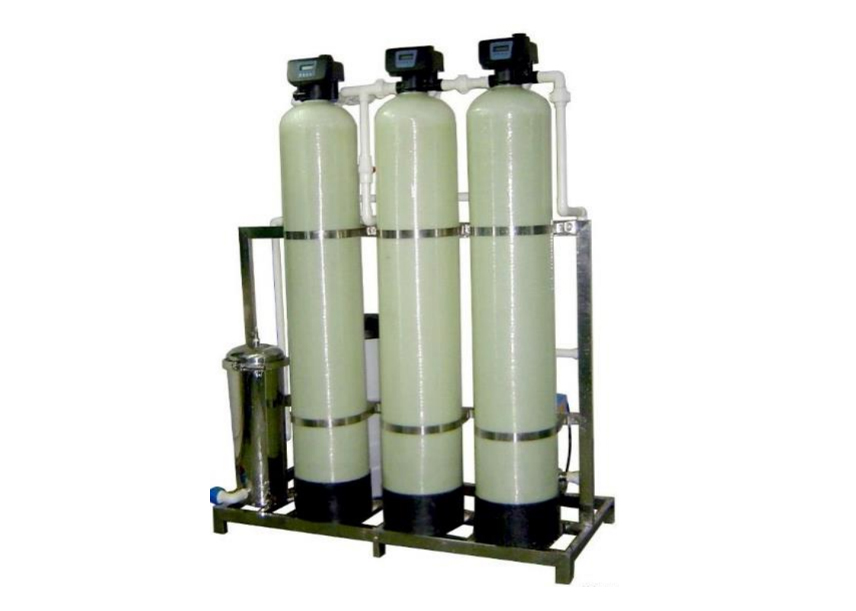
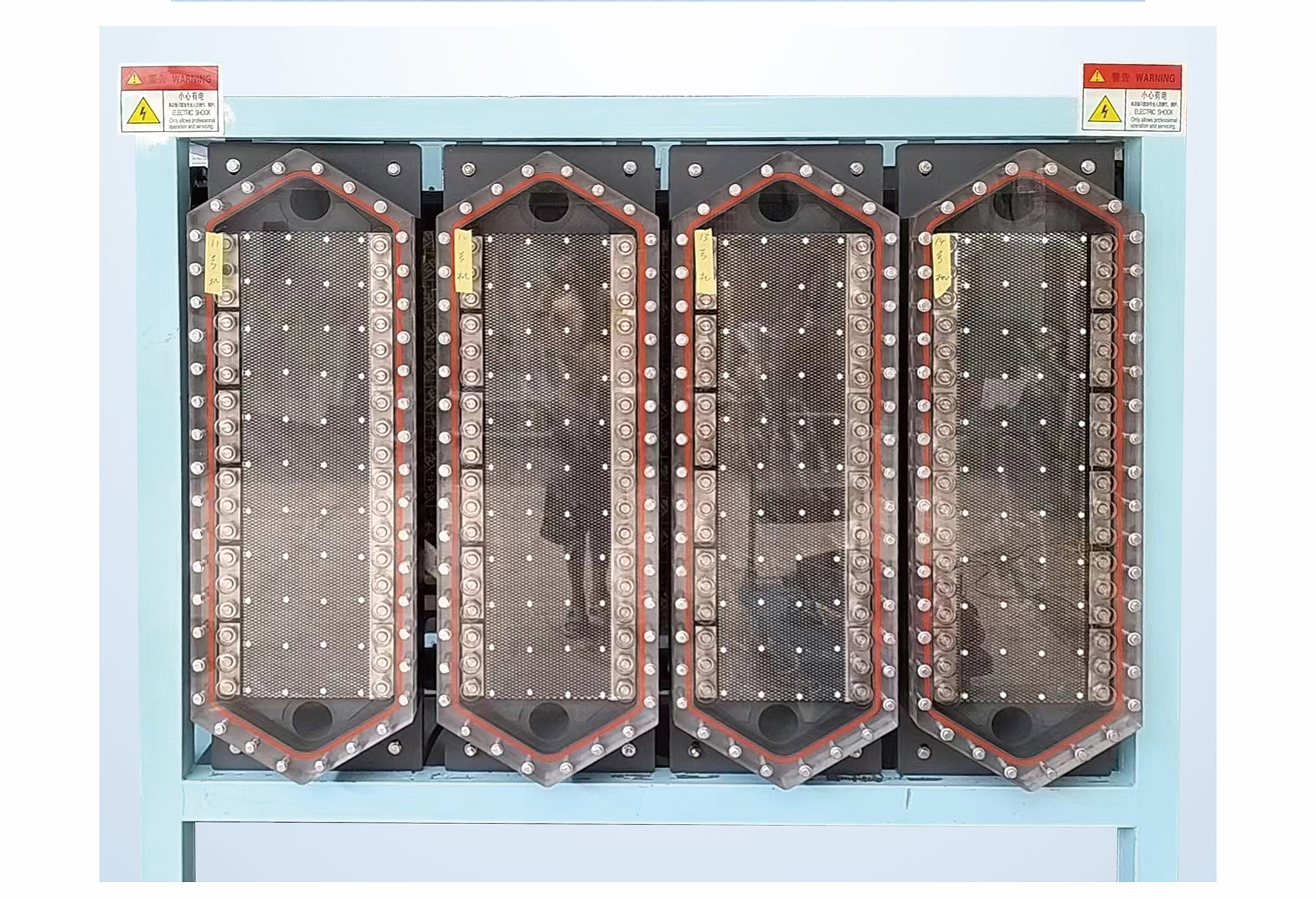
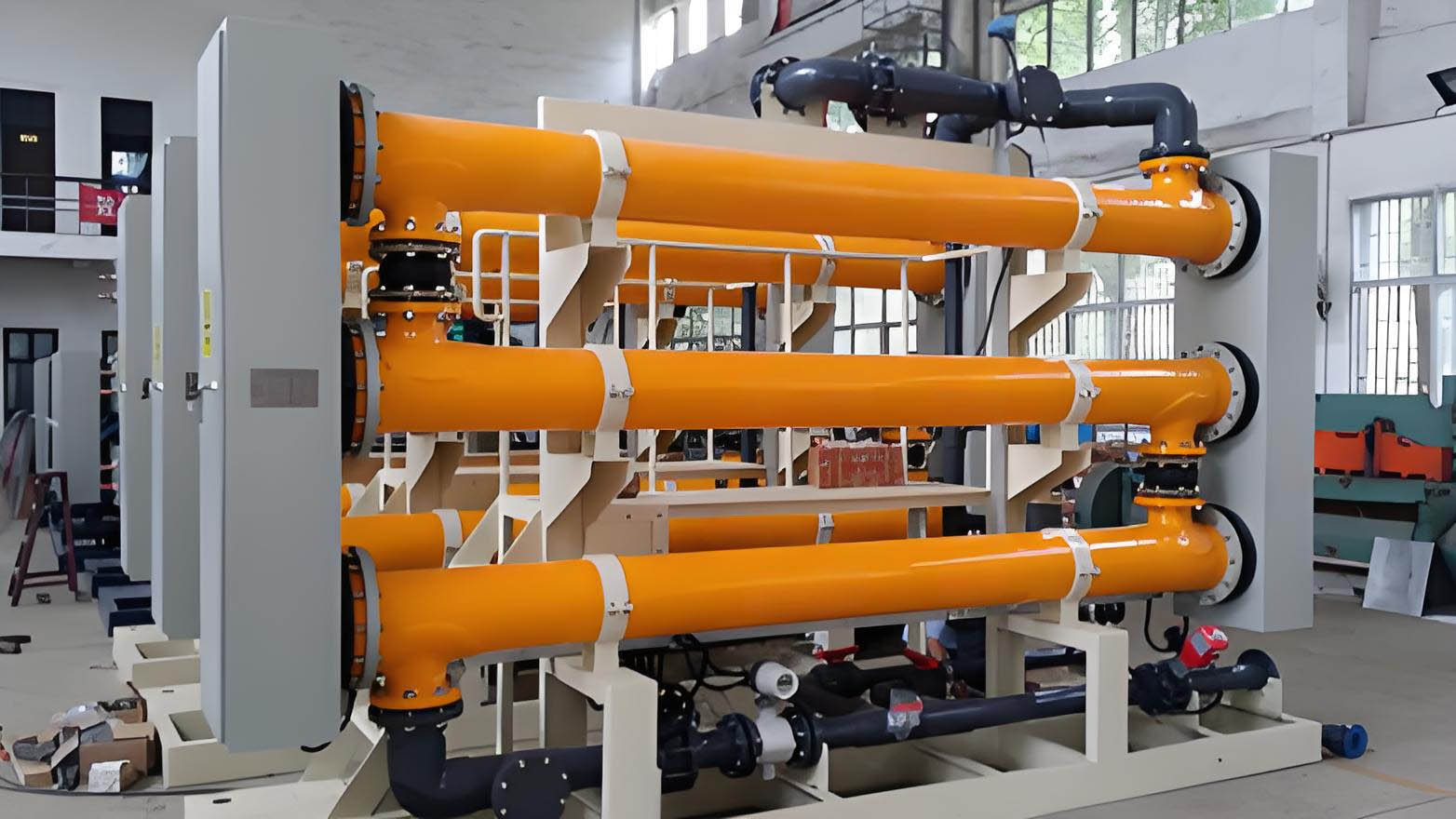
The electrolytic seawater chlorination system for nuclear power plants is mainly composed of three parts: electrolytic cell group, power distribution equipment, and seawater transportation system, among which the electrolytic cell group is the core component determining the performance of the system. The anode material in the electrolytic cell is the key factor restricting the development of the technology—it needs to have low chlorine evolution potential, high oxygen evolution potential, long service life, and high electrolysis efficiency. At present, titanium anodes with ruthenium-iridium coating have become the mainstream choice due to their excellent corrosion resistance, mechanical strength, and electrochemical stability. The cathode is usually made of Hastelloy alloy to avoid hydrogen embrittlement and achieve energy-saving effects.
3. Application of Electrolytic Seawater Chlorination in Nuclear Power Seawater Corrosion Protection
3.1 Key Application Scenarios
3.1.1 Condenser Corrosion and Fouling Prevention
3.1.2 Protection of Water Intake and Drainage Pipelines
The water intake and drainage pipelines of nuclear power plants are long and directly exposed to the marine environment. The inner walls are easily corroded by seawater and fouled by marine organisms, leading to pipeline narrowing, increased resistance, and even leakage. The electrolytic seawater chlorination system installs electrolytic modules at the water intake, so that seawater is pre-sterilized and anti-corroded before entering the pipeline. This not only prevents the attachment and growth of marine organisms in the pipeline but also reduces the corrosion of the pipeline inner wall by chloride ions, ensuring the smooth flow of seawater and the safe operation of the entire cooling system.
3.1.3 Protection of Anti-Backwash Filters
The anti-backwash filter is a pre-protection equipment for the electrolytic cell of the chlorination system, responsible for removing large particles such as shellfish and mechanical impurities in seawater. Its shell is often corroded due to long-term immersion in seawater and microbial enrichment. By matching the electrolytic seawater chlorination system, the effective chlorine can kill the microorganisms in the seawater entering the filter, reduce the enrichment of biological communities on the inner wall of the filter, avoid the shedding of the inner coating caused by microbial metabolism, and thus protect the filter shell from corrosion leakage.
The application of electrolytic seawater chlorination in nuclear power plants has been fully verified in many domestic and foreign key projects, and its stability and reliability have been widely recognized.
- Fuqing Nuclear Power Plant (Hualong One Global First Reactor): In 2015, Sunrui Marine Environment Engineering Co., Ltd. (a subsidiary of CSSC 725 Institute) signed a supporting contract to provide an electrolytic seawater chlorination system for Units 5 and 6 of Fuqing Nuclear Power Plant. In August 2018, the system successfully completed the power-on commissioning at one time. The project team adopted an innovative temporary water intake scheme, overcame adverse effects such as extreme heat and typhoons, and successfully achieved chlorination production after more than 50 days of hard work, providing an important guarantee for the safe and stable operation of the Hualong One reactor.
- Tianwan Nuclear Power Plant: The chlorination station of Tianwan Nuclear Power Plant uses electrolytic seawater to generate sodium hypochlorite, which enters the cooling water system to kill marine organisms and ensure the smooth operation of pipelines and equipment. After the anti-backwash filter in the station suffered corrosion and leakage, the problem was effectively solved by combining the electrolytic chlorination system with polymer material repair technology. The repaired equipment has been in stable operation for more than two years without re-corrosion leakage.
4. Advantages of Electrolytic Seawater Chlorination Compared with Traditional Anti-Corrosion Technologies
Compared with traditional anti-corrosion technologies such as chemical dosing and cathode protection, electrolytic seawater chlorination has obvious advantages in adaptability, environmental protection, and economic efficiency, which is more in line with the development needs of nuclear power plants for high safety and green operation.
|
Anti-Corrosion Technology |
Core Advantages |
Existing Disadvantages |
Applicability in Nuclear Power Plants |
|
Electrolytic Seawater Chlorination |
Green and pollution-free, uses seawater as raw material; dual effects of anti-fouling and anti-corrosion; stable operation, easy automatic control; low long-term operation cost |
High initial investment in equipment; high requirements for anode material performance |
Highly applicable, suitable for all coastal nuclear power plants, especially suitable for large-scale circulating cooling water systems |
|
Chemical Dosing Anti-Corrosion |
Low initial investment; simple operation |
Easy to cause marine environmental pollution; high chemical agent consumption; easy to form secondary scaling |
Low applicability, not in line with the green development concept of nuclear power plants |
|
Cathode Protection |
Good anti-corrosion effect on metal structures; long service life |
High investment cost; complex system maintenance; unable to solve biological fouling problems |
Auxiliary application, needs to be combined with other anti-fouling technologies |
5. Future Trends: Intelligent Upgrading and Technological Innovation
With the continuous development of nuclear power technology and the continuous upgrading of environmental protection requirements, electrolytic seawater chlorination technology is also moving towards intelligence, high efficiency, and low energy consumption. The future development trends are mainly reflected in the following aspects:
- Intelligent Control Optimization: Integrate IoT, big data, and AI technologies to realize real-time monitoring of key parameters (such as chlorine production, seawater flow rate, and pH value) of the electrolytic chlorination system. Through intelligent adjustment of current, voltage, and other parameters, the system can adapt to changes in seawater quality and load in real time, ensuring stable and efficient operation, and reducing manual operation intensity.
- Anode Material Innovation: Focus on optimizing the preparation process of titanium anodes, such as introducing intermediate layer modification technology and multi-layer gradient coating design, to enhance the bonding strength between the titanium substrate and the active coating, reduce interface resistance, and improve electrolysis efficiency and anode service life. At the same time, develop more cost-effective anode materials to reduce the long-term operation cost of the system.
- Integration of Multi-Technologies: Combine electrolytic seawater chlorination with polymer material repair, corrosion intelligent monitoring, and other technologies to form a full-cycle corrosion protection system. For example, use intelligent monitoring technology to detect equipment corrosion in real time, and combine electrolytic chlorination and material repair to achieve precise anti-corrosion and extend the service life of equipment.
- Energy Conservation and Emission Reduction Upgrading: Optimize the structure of the electrolytic cell, adopt efficient and energy-saving power supply equipment, and reduce the energy consumption of the electrolysis process. At the same time, explore the resource utilization of by-products (such as hydrogen) generated during the electrolysis process. For example, the domestic first seawater electrolysis chlorination-hydrogen integration demonstration project has been built in Tianjin Nangan Industrial Zone, which can produce high-purity hydrogen for fuel cell vehicle refueling, realizing the dual value of anti-corrosion and energy utilization.
6. FAQ: Common Questions About Electrolytic Seawater Chlorination in Nuclear Power Corrosion Protection
Q: Will the effective chlorine generated by electrolytic seawater chlorination cause pollution to the marine environment?
- A: No. The effective chlorine generated by electrolytic seawater chlorination is controlled within a reasonable concentration range (usually 0.1-0.5 mg/L). After completing the anti-corrosion and anti-fouling tasks, it will be diluted by a large amount of seawater and decomposed into harmless substances such as chloride ions, which will not cause pollution to the marine ecosystem. Compared with traditional chemical dosing technology, it is more environmentally friendly.
Q: What is the service life of the electrolytic seawater chlorination system in nuclear power plants?
- A: The service life of the system is closely related to the anode material and operation and maintenance level. Under normal operation and regular maintenance, the service life of the electrolytic cell group (with titanium anodes) can reach 8-12 years, and the overall service life of the system can reach 15-20 years, which is consistent with the service life cycle of nuclear power equipment.
Q: Can electrolytic seawater chlorination completely solve the corrosion problem of nuclear power seawater equipment?
- A: Electrolytic seawater chlorination mainly solves the problems of biological fouling and chemical corrosion caused by chloride ions. For local severe corrosion (such as corrosion pits and perforation), it needs to be combined with other technologies (such as polymer material repair) to achieve comprehensive protection. The combination of multiple technologies can maximize the anti-corrosion effect and ensure the safe operation of equipment.
Q: What are the key factors affecting the operation effect of the electrolytic seawater chlorination system?
- A: The key factors include seawater quality (chloride ion concentration, pH value, temperature), electrolytic cell performance (anode material, structure), current and voltage control, and regular maintenance. Among them, the performance of the anode material is the core factor determining the electrolysis efficiency and system stability.
Conclusion
As a green, efficient, and reliable anti-corrosion and anti-fouling technology, electrolytic seawater chlorination has become an indispensable part of the safe operation of coastal nuclear power plants. It not only solves the problem of seawater corrosion and biological fouling that plagues nuclear power equipment but also conforms to the global development trend of green energy and environmental protection. With the continuous innovation of anode material technology, the intelligent upgrading of the system, and the integration of multi-technologies, electrolytic seawater chlorination will play a more important role in the field of nuclear power seawater corrosion protection, providing a solid guarantee for the long-term, safe, and stable operation of coastal nuclear power plants.
For nuclear power enterprises, choosing a mature and reliable electrolytic seawater chlorination system and establishing a scientific operation and maintenance mechanism is the key to reducing equipment corrosion risks and improving operational efficiency. In the future, with the continuous advancement of technology, electrolytic seawater chlorination will move towards a more intelligent, efficient, and energy-saving direction, making greater contributions to the sustainable development of the nuclear power industry.