


Bean sprouts are widely consumed for their rich nutrition, crisp texture, and short growing cycle. However, they are highly susceptible to microbial infection, rot, and quality degradation during germination and storage. Traditional disinfection methods often rely on chemical agents with potential residue risks.
This article explores the application effect of hypochlorous acid electrolytic water on the growth quality of bean sprouts, providing a safe, efficient, and residue-free solution for sprout production.
1. Challenges in Bean Sprout Cultivation & Preservation
Bean sprouts have high water content and tender tissues, making them vulnerable to:
- Bacterial and fungal infection leading to rot
- Rapid quality decline and short shelf life
- Risk of chemical residues from improper disinfection
- High post-harvest loss in transportation and sales
The agricultural and food industry urgently needs a safe, green, low-cost disinfection method to improve yield and quality while ensuring food safety.
2. What Is Hypochlorous Acid Electrolytic Water?
Hypochlorous acid electrolytic water is generated by electrolyzing dilute salt or hydrochloric acid solution. It mainly contains hypochlorous acid (HClO), with mild pH and strong bactericidal ability.
- pH value: 5.0–6.5 (slightly acidic)
- Available chlorine: 10–40 ppm
- Bactericidal principle: destroys cell walls, proteins, and nucleic acids of pathogens
- Decomposition product: water and trace salt, no harmful residues
3. Effects of HClO Electrolytic Water on Bean Sprout Growth Quality
3.1 Reduces Rot Rate & Improves Survival Rate
Experimental results show that proper hypochlorous acid water treatment can:
- Reduce mung bean sprout rot rate by up to 11.54%
- Reduce soybean sprout rot rate by up to 36.05%
- Maintain neat appearance and high commercial value
3.2 Inhibits Microorganisms Effectively
- Total bacterial count decreased significantly
- Enterobacteriaceae and spoilage bacteria greatly inhibited
- Reduces pollution from soil, water, and equipment
3.3 Enhances Nutritional Quality
Treatment with hypochlorous acid electrolytic water helps increase:
- Vitamin C content by up to 49.85%
- Total phenol content by up to 23.14%
- Better taste, crispness, and nutritional value
3.4 Extends Shelf Life
By slowing respiration, inhibiting pathogens, and reducing decay, the shelf life of bean sprouts can be extended 2–3 times under refrigerated conditions.
4. Advantages in Agricultural Application
- Residue-free, meets food safety standards
- Low production cost using only salt and water
- Compatible with automatic irrigation and spraying systems
- Environmentally friendly, no secondary pollution
- Suitable for seed soaking, irrigation, and cleaning
5. FAQ About Hypochlorous Acid Water for Bean Sprouts
Q: Is hypochlorous acid electrolytic water safe for bean sprout treatment?
A: Yes. It decomposes into water and trace salt without harmful chemical residues, making it ideal for food-grade sprout disinfection.
Q: What concentration of hypochlorous acid water is best for bean sprouts?
A: The recommended available chlorine concentration is 10–40 ppm with pH 5.0–6.5 for best disinfection and growth promotion.
Q: Can it replace chemical fungicides in sprout farming?
A: Yes. It effectively controls bacteria and fungi, reduces rot rate significantly, and can partially or fully replace traditional chemical fungicides.
Q: How does it improve bean sprout nutrition?
A: It significantly increases vitamin C and total phenol content while reducing microbial contamination, resulting in higher nutritional quality.
Q: Does it extend bean sprout shelf life?
A: Yes. By slowing decay and inhibiting pathogens, it can extend shelf life by 2–3 times under proper low-temperature storage.
Conclusion
Hypochlorous acid electrolytic water is an efficient, safe, eco-friendly solution for improving the growth quality of bean sprouts. It reduces rot, inhibits microorganisms, enhances nutrition, and extends shelf life without chemical residues.
For commercial sprout producers, food processing factories, and agricultural bases, applying hypochlorous acid electrolytic water technology can greatly improve product safety and market competitiveness.
Chlory Technology – Professional Hypochlorous Acid Electrolytic Equipment Provider
Compared with other chemical disinfectants, hypochlorous acid electrolyzed water has the advantages of simple preparation method and low cost. There are also research reports on the application ofHOCL water in the sterilization and preservation of fruits and vegetablesathome and abroad. Rahman et al. studied the bactericidal effects of various bactericides and found that the disinfection effects of 5 mg/L weak acid electrolyzed water and 50 mg/L strong acid electrolyzed water on spinach leaves were similar,both better than the disinfection effect of 100 mg/L NaClO solution; Park et al. found that weak acid electrolyzed water with an effective chlorine concentration of 30 mg/L had a good bactericidal effect on lettuce leaves, chicory leaves, perilla leaves and cabbage leaves, and the action time was shorter than the traditional NaClO solution disinfection.
Hypochlorous acid electrolyzed waterisan acidic aqueous solution generated by electrolyzing sodium chloride (NaCl) aqueous solution or dilute hydrochloric acid (HCl). Its main component is hypochlorous acid (HClO), and its pH value is usually between 5.0 and 6.5, and the effective chlorine concentration is generally 10~40ppm. Hypochlorous acid electrolyzed water has a strong bactericidal ability and can destroy the cell wall and DNA of microorganisms, thereby achieving a disinfection effect.
The main component of hypochlorous acid electrolyzed water is hypochlorous acid (HClO), which is a strong oxidant with high bactericidal effect and is relatively safe to human body and environment.
The study found that after 72 hours of germination treatment, the germination rate of mung beans in the treatment group was lower than that of the control group, while the germination rate of soybeans was significantly increased by 0.48% (P<0.05) compared with the control group. Compared with the control group, the rot rates of mung bean sprouts and soybean sprouts in the treatment group were reduced by 11.54% and 36.05%, respectively, the total colony count was reduced by 10.23% and 18.22%, and the number of Enterobacteriaceae was reduced by 11.39% and 19.41%, respectively. This shows thatHOCL water treatment can effectively reduce the number of colonies, inhibit the growth of microorganisms, and thus reduce the rot rate of bean sprouts. The ascorbic acid content of mung bean sprouts and soybean sprouts treated with hypochlorous acid electrolyzed water increased by 49.85% and 49.21% respectively, and the total phenol content increased by 23.14% and 11.23% respectively, indicating that the bean sprouts treated withHCLO water have higher nutritional value. Therefore, the research results will provide more possibilities for the use of hypochlorous acid electrolyzed water in households and industries to produce mung bean sprouts and soybean sprouts that are not easy to rot, have low microbial content and higher nutritional value, and also provide theoretical support for the use ofanolyte water to extend the shelf life of bean sprouts.
Common application scenarios of hypochlorous acid electrolyzed water in agriculture include the following aspects:
Seed soaking:Hypochlorous acid electrolyzed water can be used for seed soaking to kill pathogens and parasite eggs, reduce the risk of disease, improve seed coat permeability, increase seed water absorption capacity and embryo growth rate, promote plant survival and enhance disease resistance.
Disease prevention and control:Hypochlorous acid electrolyzed water has a strong disinfection ability on the surface of crops and pathogens in the planting environment, and can effectively prevent and control fungal, bacterial and viral diseases such as downy mildew, powdery mildew, rust, etc.
Improve soil:Hypochlorous acid electrolyzed water can irrigate the soil, kill harmful microorganisms, control damping-off and sudden wilt, adjust soil pH, release nutrients, improve soil structure, and solve the problem of continuous cropping.
Water source disinfection:Hypochlorous acid electrolyzed water is used for water source disinfection to ensure that irrigation water is clean and safe, which is crucial to crop growth and food safety.
Fruit and vegetable preservation:Hypochlorous acid electrolyzed water is used to clean and sterilize fruits and vegetables, preventing secondary contamination, extending shelf life, and increasing product market value.
Application in seedling base:In the plug tray seedling technology, hypochlorous acid electrolyzed water can clean and disinfect the plug tray and remove bacteria. At the same time, low concentration use can promote seed germination and seedling growth.
Reduce the use of pesticides:Hypochlorous acid electrolyzed water dilutes pesticides to achieve green prevention and control and reduce the amount of pesticides used. For example, it can replace the dilution of methimazole with clean water in the prevention and control of strawberry gray mold, reducing the amount of pesticides used by 33% to 50%.
Removal of pesticide residues:Hypochlorous acid electrolyzed water shows significant effects in removing organophosphorus pesticide residues in fruits and vegetables, reducing secondary pollution caused by chemical methods.
Greenhouse soil disinfection:Hypochlorous acid electrolyzed water shows significant bactericidal effect in greenhouse soil disinfection, overcoming the limitations of traditional disinfection methods.
Promote plant growth:Watering plants with hypochlorous acid electrolyzed water can promote plant growth, inhibit soil-borne diseases and activate mineral elements in the soil, thereby promoting plant growth, development and metabolism.
In summary, the application of hypochlorous acid electrolyzed water in agriculture is wide and diverse, which not only improves the health and yield of crops, but also promotes the green development of agriculture.
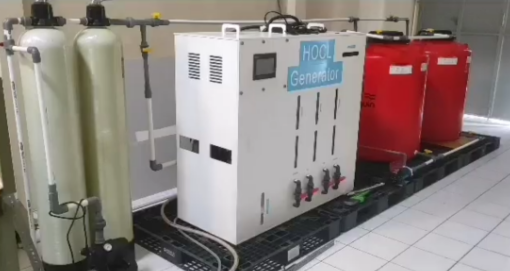
In the traditional bean sprout cultivation process, chemical fungicides are often used to inhibit the growth of harmful microorganisms, but the residues of these chemicals may pose a potential threat to human health. The hypochlorous acid generator developed by Chlory produces low-concentration hypochlorous acid electrolyzed water by electrolyzing dilute brine. It has a significant bactericidal effect and decomposes into water and trace salt after the action, without any harmful residue, truly achieving green and environmental protection.
Chlory is a high-tech enterprise focusing on the research and development and application of hypochlorous acid electrolyzed water technology. Its products are widely used in food processing, medical and health care, agricultural planting and other fields. The company has always been adhering to the concept of "technology-led, green future", and is committed to providing customers with safe, efficient and environmentally friendly solutions.
For more information about Chlory and hypochlorous acid generators, visit www.Chlory.com or contact by WhatsApp+86 152 2277 1011