

For food and beverage manufacturers, sanitation is non-negotiable. It is the foundation of product safety, brand reputation, and regulatory compliance. Yet for decades, the industry has relied on a suite of legacy sanitizers—sodium hypochlorite (bleach), peracetic acid (PAA), chlorine dioxide, and quaternary ammonium compounds (quats)—that come with inherent trade-offs: corrosive damage to equipment, chemical residues that alter taste, lengthy rinse cycles, and significant health risks to workers.
Today, a quiet revolution is reshaping food plant hygiene: on-site, on-demand hypochlorous acid (HOCl) is rapidly becoming the gold standard. This gentle yet powerful sanitizer, produced from just salt, water, and electricity via electrolysis, addresses the core pain points of traditional chemicals while delivering superior microbial control. For forward-thinking plants, it is not just an alternative—it is a complete paradigm shift in how sanitation is designed and delivered.
The Limitations of Traditional Sanitizers: A Costly Cycle of Compromise
Traditional sanitizers were once the only option for meeting strict hygiene standards, but their drawbacks create a cascade of operational and financial burdens:
- Residue Risk & Quality Impact: Residues from bleach, PAA, or quats can linger on food contact surfaces, leading to off-flavors, reduced shelf life, and even product recalls. Full rinse cycles with potable water are mandatory, wasting thousands of gallons daily and slowing production.
- Equipment Degradation: Strongly alkaline bleach and acidic PAA corrode stainless steel, degrade gaskets and seals, and clog nozzles with biofilm. Over time, this leads to higher maintenance costs, unplanned downtime, and shorter equipment lifespans.
- Worker Safety Hazards: Handling concentrated chemicals requires full personal protective equipment (PPE), and fumes from chlorine dioxide or bleach can cause respiratory irritation. Mixing errors with concentrated stock solutions pose acute safety risks.
- Supply Chain Vulnerability: Bulk chemical deliveries rely on fragile supply chains, with price volatility and delivery delays. Storing large quantities of hazardous materials also increases insurance costs and regulatory compliance risks.
- Inconsistent Efficacy: Stored sodium hypochlorite degrades rapidly in heat and sunlight, reducing free chlorine levels and leading to inconsistent sanitization results. This variability often results in failed audits and corrective actions (CAPAs).
What Is On-Site HOCl? The Science Behind the "Gentle Giant"
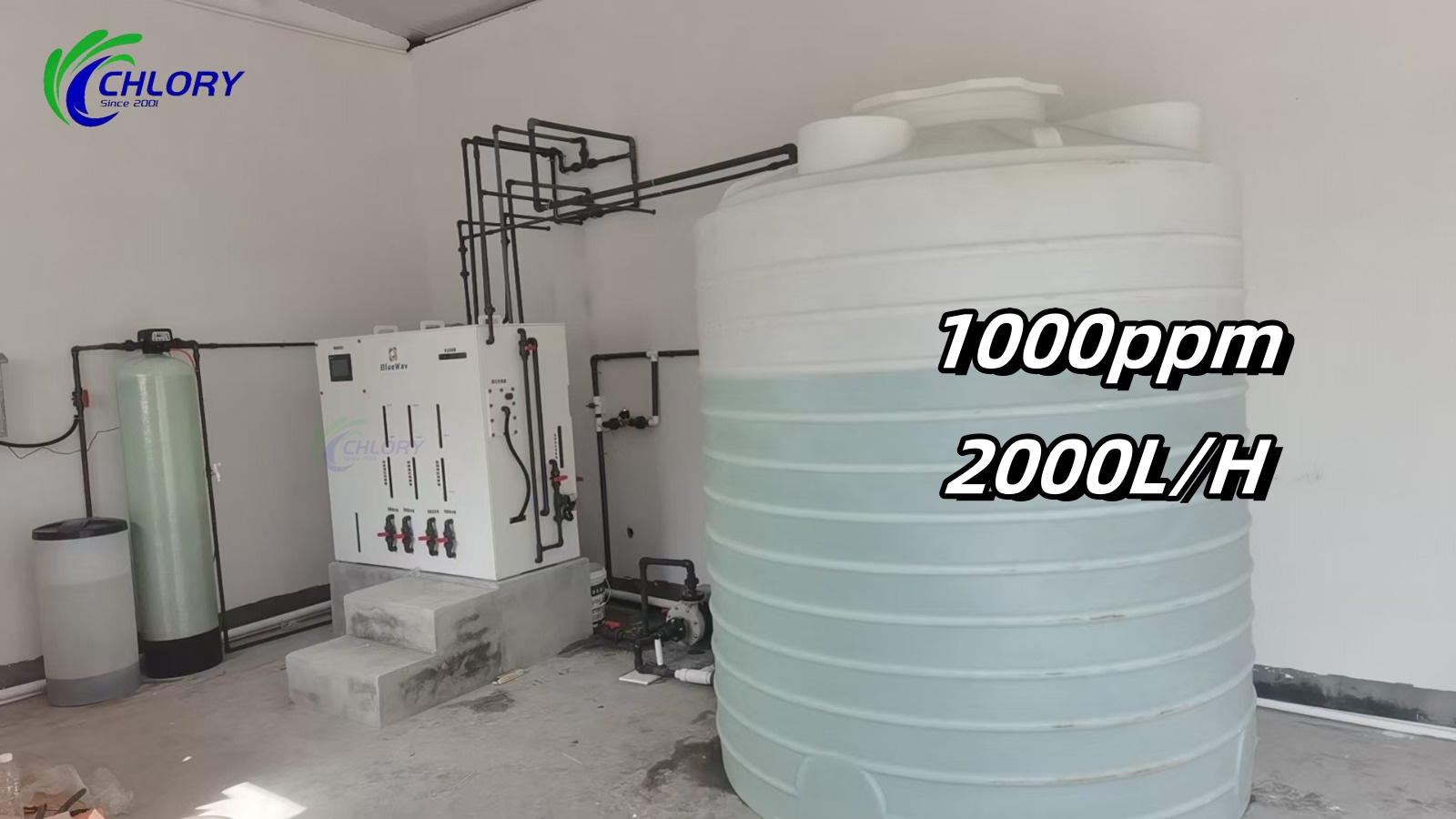
Hypochlorous acid (HOCl) is a naturally occurring molecule produced by the human immune system to fight infection—nature’s own sanitizer. For food plants, it is generated on-site using electrochemical activation (ECA) systems: a simple brine solution (salt + water) is electrolyzed to produce a pure, pH-neutral (5.0–6.5) HOCl solution, ready for immediate use.
The science is straightforward but transformative:
Salt (NaCl) + Water (H₂O) + Electricity → Hypochlorous Acid (HOCl) + Trace Byproducts
On-site generation eliminates the need for storing, transporting, or diluting hazardous chemicals. The solution is fresh, potent, and precisely controllable—typically between 50–200 ppm for food industry applications—ensuring consistent efficacy every time.
Why HOCl Is Winning: 5 Irrefutable Advantages for Food Plants
On-site HOCl is not just "better" than traditional sanitizers—it redefines what is possible for food plant hygiene, offering a rare combination of safety, efficiency, and cost savings.
1. Uncompromising Safety & Regulatory Compliance
HOCl is approved by the FDA as a no-rinse sanitizer for produce and meat processing, listed on the EPA’s List N (for COVID-19) and List K (for food contact surfaces), and authorized by the USDA. It breaks down into water and trace chloride ions, leaving zero toxic residues—no rinse required, even for direct food contact. This aligns with strict standards like GB 2760 and GB 14881 (in China) and global food safety regulations, reducing audit risks and simplifying compliance.
2. Superior Microbial Efficacy, Faster
HOCl’s small molecular size allows it to rapidly penetrate microbial cell walls, destroying bacteria, viruses, fungi, and even biofilms in seconds. Studies show it achieves >6-log reductions of Listeria monocytogenes, E. coli O157:H7, and Salmonella in as little as 2 minutes at 250 ppm. In real-world applications, it kills 99.99% of common foodborne pathogens in 30 seconds to 5 minutes at 100–200 ppm—up to 80 times faster than traditional chlorine bleach. This speed shortens sanitation cycles, increasing equipment uptime and production capacity.
3. Gentle on Equipment, Tough on Pathogens
Unlike traditional chemicals, pH-neutral HOCl is non-corrosive to stainless steel, gaskets, sensors, and conveyor belts. It prevents biofilm buildup in pipes and drains, reducing maintenance costs and extending equipment lifespan by years. One seafood plant reported reduced pump replacements and fewer belt changes after switching to HOCl, directly cutting operational expenses.
4. Dramatic Cost Savings & Rapid ROI
On-site HOCl eliminates recurring costs for bulk chemicals, delivery, and hazardous waste disposal. The only raw materials—salt and water—are inexpensive and readily available. Combined with reduced water usage (no rinse cycles) and lower PPE costs, plants typically see monthly savings of $5,000–$20,000.
Real-world case studies prove the ROI:
- A Florida seafood plant replaced ozone and quats with HOCl, saving $12,000/month and achieving ROI in just 7 weeks.
- A California produce packhouse cut $5,300/month in water, PAA, and PPE costs after switching.
Most plants recoup their investment in 1–3 months, with ongoing savings boosting profitability long-term.
5. Worker-Centric & Environmentally Sustainable
HOCl has no irritating fumes, so workers can use it without full PPE—reducing skin irritation from harsh chemicals and improving job satisfaction. It is also a zero-waste solution: no hazardous byproducts, no chemical runoff, and a smaller carbon footprint (fewer delivery trucks, less energy for storage). For plants pursuing "green facility" certifications, HOCl is a key enabler of sustainability goals.
Full-Scale Integration: HOCl Across the Food Production Lifecycle
On-site HOCl is not a niche solution—it works seamlessly across every critical sanitation touchpoint in food plants:
| Production Stage | Application | Benefits |
|---|---|---|
| Raw Material Prep | Produce washing, seafood dipping, meat surface sanitization | Removes pathogens without altering taste or texture; no rinse needed |
| Processing Equipment | CIP systems, conveyor belts, slicers, mixers | Shortens CIP cycles; prevents biofilm buildup; protects precision parts |
| Facility Hygiene | Floor/wall spraying, drain treatment, air fogging | Safe for occupied spaces; eliminates mold and odors |
| Packaging Lines | Bottle rinsing, packaging material sanitization | Ensures sterile packaging; reduces contamination risks post-processing |
| Worker Hygiene | Hand sanitizing, uniform spraying | Gentle on skin; no alcohol dryness; continuous protection |
This versatility means a single on-site HOCl system can replace multiple traditional sanitizers, simplifying inventory and training.
The Future of Food Plant Sanitation Is On-Site
The shift to on-site HOCl is not a trend—it is a necessary evolution for food plants facing rising regulatory pressure, consumer demand for cleaner labels, and the need to optimize operations. Traditional chemicals force plants to choose between safety and efficiency; HOCl delivers both.
As electrochemical technology advances, on-site HOCl systems are becoming more compact, intelligent, and scalable—suitable for small craft breweries, large meat processing facilities, and everything in between. For food manufacturers ready to break the cycle of compromise, the choice is clear: on-site HOCl is the future of sanitation.
Ready to transform your food plant’s hygiene program? Contact us today to learn how our on-site HOCl generation systems can reduce costs, improve safety, and elevate your food safety standards.