

Secondary water supply domestic water tanks (pools) are essential components of urban water supply networks, providing stable water supply capacity and ensuring residents’ daily water needs. This study, conducted by Hua Qingfeng et al., focuses on the feasibility of pure hypochlorous acid (HOCl) disinfectant in daily cleaning and disinfection of secondary water supply tanks—evaluating its corrosiveness to different tank materials, bactericidal efficacy against bacteria and E. coli, safety for operators, and the quality of cleaning wastewater generated during the process.
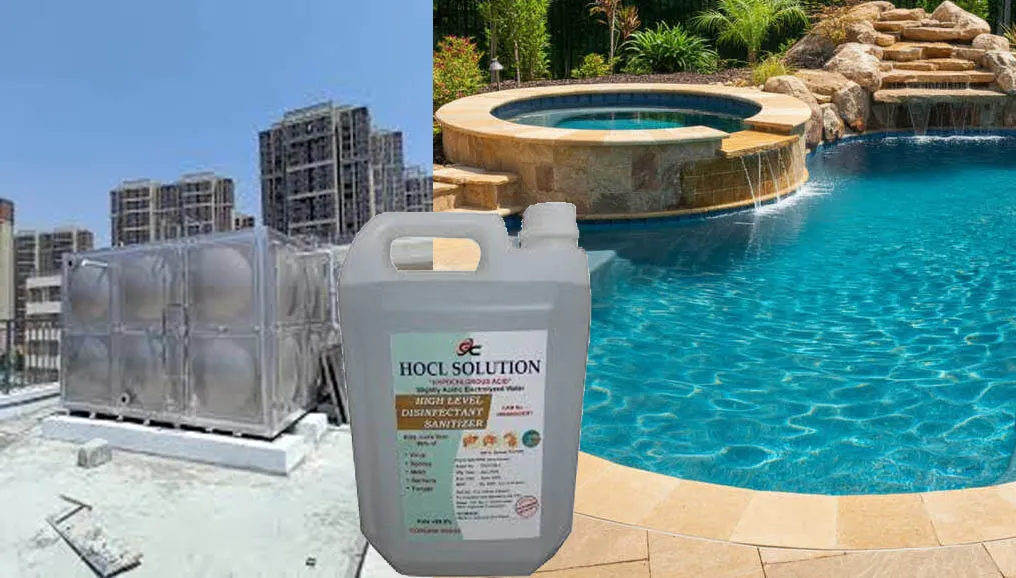
Why Hypochlorous Acid (HOCl) for Water Tank Disinfection
When chlorine, sodium hypochlorite, or bleaching powder is used for water disinfection, hypochlorous acid is the actual active sterilizing agent. However, in drinking water disinfection, the chlorine dosage is only 1 to 5 mg/L, resulting in an extremely low concentration of hypochlorous acid produced by hydrolysis. Additionally, chlorine is corrosive to metal objects. In contrast, hypochlorous acid disinfectant—when used at concentrations of hundreds of mg/L for water tank cleaning—offers unique advantages that make it ideal for the task. Pure hypochlorous acid (HOCL/HClO) is an efficient, safe disinfectant with the following key characteristics:
- Strong Oxidizing Property: Hypochlorous acid destroys the cell structure of microorganisms through oxidation to achieve sterilization. Its oxidizing power is stronger than sodium hypochlorite, and it is environmentally friendly, producing no harmful by-products.
- Broad-Spectrum Sterilization: Hypochlorous acid effectively kills bacteria, viruses, fungi, algae, and other microorganisms, making it suitable for disinfection in various water environments, including secondary water supply tanks.
- No Residual Pollution: Hypochlorous acid decomposes in water into water and oxygen, leaving no toxic residues. It is environmentally friendly and non-irritating to the human body, critical for drinking water-related applications.
- Wide Range of Applications: Beyond water tank cleaning, HOCl is widely used in medical wastewater treatment, swimming pool water treatment, drinking water purification, aquaculture, and agriculture—proving its versatility and reliability.
Corrosiveness Test on Tank Materials: Stainless Steel, PE, Ceramic
A key concern in water tank disinfection is the corrosive effect of disinfectants on tank materials, which can shorten tank service life and contaminate water. The study tested hypochlorous acid’s corrosiveness on common water tank materials: ceramic tiles, stainless steel, and PE (polyethylene). Results show that hypochlorous acid has no obvious corrosive effect on the inner walls of these materials, outperforming sodium hypochlorite and other traditional disinfectants that may cause wear or corrosion over time. This makes hypochlorous acid a safe choice for long-term water tank cleaning and disinfection.
Bactericidal Efficacy: Bacteria, E. coli & Broad-Spectrum Performance
The core function of water tank disinfection is to eliminate harmful microorganisms that pose risks to human health. The experiment verified that hypochlorous acid, at the concentrations used for water tank cleaning, effectively kills common bacteria and E. coli—achieving a higher bactericidal rate than sodium hypochlorite and liquid chlorine. Its broad-spectrum sterilization ability ensures that all potential pathogens in the tank are eliminated, safeguarding water quality and user health. Unlike some disinfectants, hypochlorous acid maintains stable bactericidal efficacy even in varying water conditions.
Safety for Operators & Wastewater Quality
Worker safety and environmental protection are critical considerations in any cleaning operation. Hypochlorous acid is non-irritating to the human body, reducing health risks for operators during the cleaning process. Additionally, the cleaning wastewater generated after using hypochlorous acid meets environmental discharge standards—its decomposition products (water and oxygen) do not cause secondary pollution, making it compliant with green and sustainable development requirements. This sets it apart from traditional disinfectants that may produce toxic wastewater.
HOCl Production & Equipment: Diaphragm Electrolysis Technology
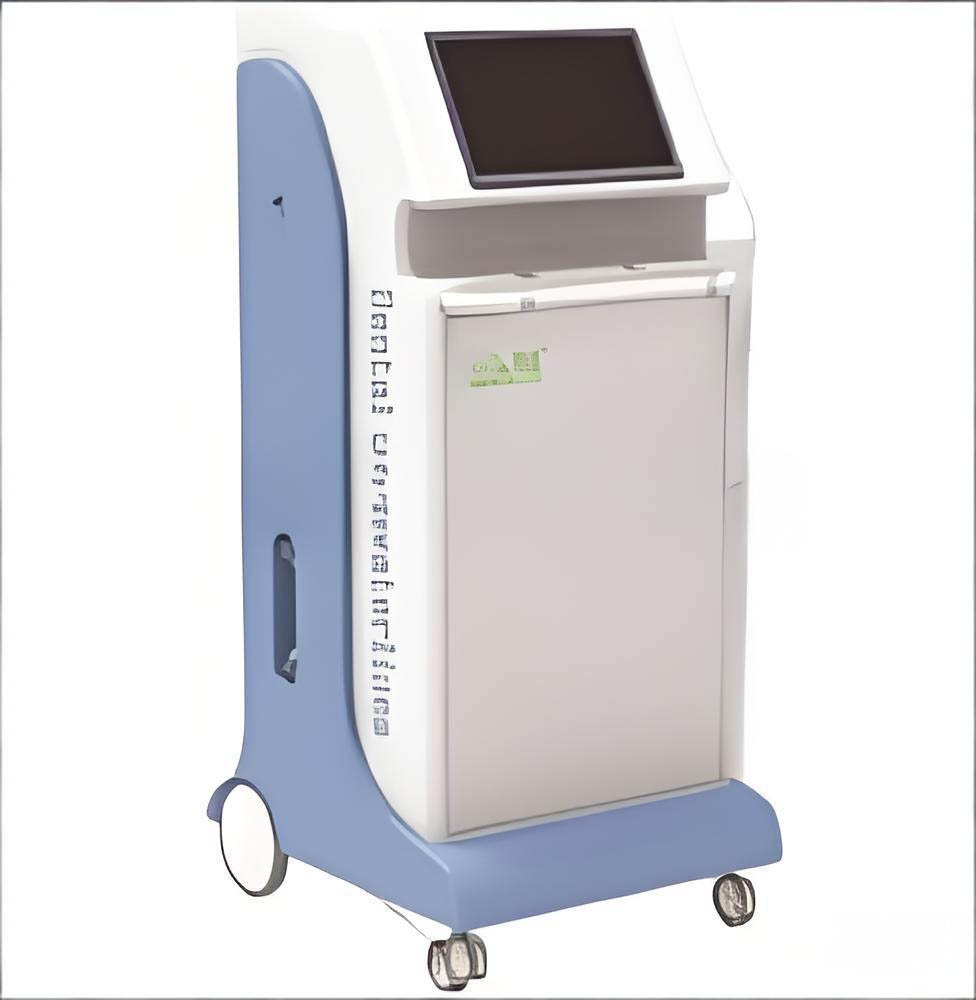
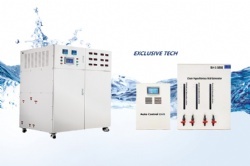
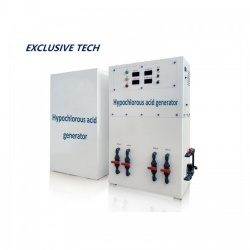
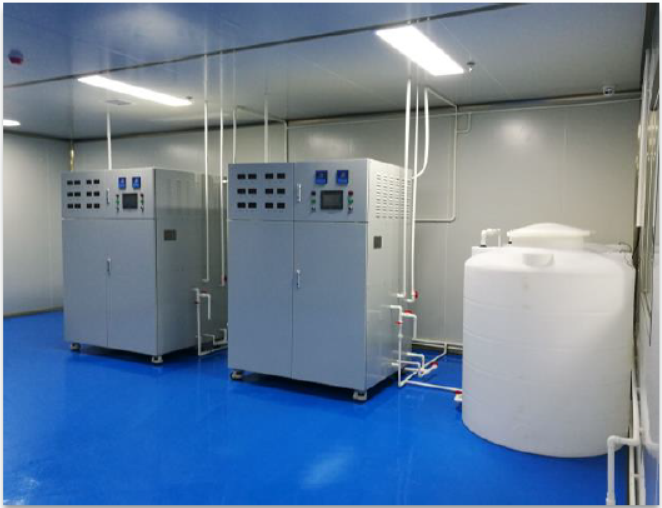
The effective use of hypochlorous acid disinfectant requires supporting production equipment and technical support. There are two main methods for producing hypochlorous acid on the market: water electrolysis and chemical synthesis. Water electrolysis can produce hypochlorous acid solution with a purity of nearly 99%, featuring easy operation and low cost. Chlory uses exclusive diaphragm electrolysis technology, which extends equipment service life, produces purer hypochlorous acid water, and leaves no residual salt—ensuring the disinfectant’s safety and effectiveness.
Chlory’s hypochlorous acid generator meets strict hygiene requirements, from raw material selection and equipment performance to operating specifications. The equipment is also equipped with an automatic dosing device, enabling unattended operation and improving work efficiency—ideal for large-scale or regular water tank disinfection tasks.
Cost-Benefit Analysis of HOCl Disinfection Systems
For enterprises and water supply units, cost-effectiveness is a key factor in choosing a disinfectant. Chlory’s hypochlorous acid generator offers significant advantages in this regard:
- Low Operating Cost: The equipment requires minimal initial investment, low daily operating costs, and no complicated maintenance—reducing long-term expenses compared to traditional disinfection methods.
- Stable Disinfection Effect: Unlike liquid chlorine, chlorine dioxide, and other disinfectants, hypochlorous acid’s disinfection effect is more stable and less affected by external conditions (such as water temperature and pH), ensuring consistent results.
- Environmental Protection: As a green disinfectant, hypochlorous acid’s decomposition products are harmless, avoiding fines or environmental risks associated with secondary pollution—aligning with global sustainability goals.
FAQ: Common Questions About Hypochlorous Acid for Water Tank Disinfection
Q: Is HOCl corrosive to water tank materials?
A: No. Tests show that hypochlorous acid has no obvious corrosive effect on common water tank materials such as stainless steel, PE, and ceramic tiles—making it safe for long-term use.
Q: Is HOCl disinfectant safe for drinking water tanks?
A: Yes. Hypochlorous acid decomposes into water and oxygen, leaving no toxic residues. It is non-irritating and meets drinking water safety standards, making it suitable for drinking water tank disinfection.
Q: What equipment is needed for on-site HOCl generation?
A: On-site HOCl generation requires a hypochlorous acid generator. Chlory’s diaphragm electrolysis generator is recommended—it is easy to operate, produces high-purity HOCl, and supports automatic dosing for unattended operation.
Conclusion: High Feasibility of HOCl for Water Tanks
Based on the above analysis, pure hypochlorous acid disinfectant is highly feasible for the cleaning and disinfection of live water tanks (pools). Its strong bactericidal efficacy, low corrosiveness to tank materials, safety for operators, environmental friendliness, and cost-effectiveness make it an ideal alternative to traditional disinfectants. For secondary water supply units and enterprises seeking efficient, safe, and sustainable water tank disinfection solutions, hypochlorous acid—supported by Chlory’s advanced equipment and technology—is the optimal choice.