
Industrial wastewater is complex in composition, often containing recalcitrant organic matter, heavy metals, cyanides, and large amounts of pathogenic microorganisms, making its treatment a major challenge in the environmental protection field. Among numerous water treatment technologies, disinfection and oxidation are key steps to ensure safe and compliant discharge of effluent. In recent years, hypochlorous acid, as a highly efficient and broad-spectrum green oxidizing disinfectant, has gained increasing popularity. Chlory's advanced hypochlorous acid generator technology provides a safe, economical, and efficient solution for this application.
Hypochlorous Acid: Why is it the Ideal Choice for Industrial Wastewater Treatment?
Hypochlorous acid is the core component of chlorine-based disinfectants that truly exerts its bactericidal and oxidizing effects. Its small molecular weight and electrical neutrality allow it to rapidly penetrate the cell walls of microorganisms, disrupting their enzyme systems and thus quickly killing bacteria, viruses, algae, and other harmful microorganisms. Its advantages are particularly prominent in industrial wastewater treatment:
- Highly efficient and broad-spectrum disinfection capabilities: Compared to traditional liquid chlorine and sodium hypochlorite, hypochlorous acid's bactericidal efficiency is tens to hundreds of times higher, effectively handling high-load and highly toxic industrial wastewater.
- Superior Oxidizing Performance: Hypochlorous acid effectively decomposes toxic substances such as cyanide and sulfides in wastewater and breaks the chemical bonds of some recalcitrant organic compounds, reducing COD and providing multiple functions including decolorization and deodorization.
- Higher Safety: Compared to liquid chlorine, hypochlorous acid does not involve high-pressure cylinders during on-site preparation and use, avoiding the risk of highly toxic chlorine gas leaks and greatly improving operational safety.
- Reduced Harmful Byproducts: Under appropriate pH and dosage control, hypochlorous acid disinfection effectively reduces the formation of carcinogenic byproducts such as trihalomethanes compared to chlorine, making it more environmentally friendly.
Chlory Hypochlorous Acid Generator: A Technology-Driven Revolution in On-Site Chlorine Production
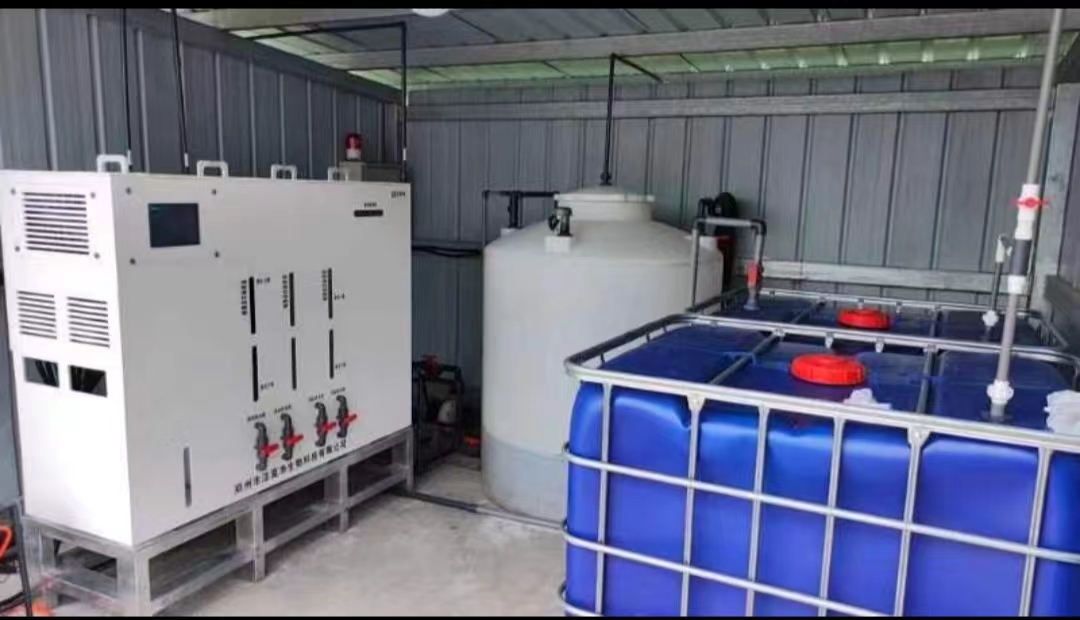
Despite the significant advantages of hypochlorous acid, its instability during storage and transportation limits its large-scale application. Chlory's hypochlorous acid generator perfectly solves this problem, achieving "on-demand production" through advanced electrolysis technology, converting ordinary salt and water into a high-purity, high-concentration hypochlorous acid solution.
The core technological advantages of Chlory hypochlorous acid generators:
- Easy-to-find raw materials and low operating costs: Requires only salt, water, and electricity. Raw materials are widely available, resulting in extremely low costs and significantly reducing the procurement and transportation costs of chemicals.
- Intelligent control and precise concentration adjustment:** Utilizing an advanced PLC automatic control system, the generator can precisely adjust the production and dosage of hypochlorous acid based on fluctuations in influent water quality and quantity, achieving intelligent and precise dosing. This ensures treatment effectiveness while avoiding chemical waste.
- High purity and high activity:** Chlory's electrolyzer employs patented membrane technology and high-efficiency electrodes. The hypochlorous acid solution produced by electrolysis has high purity, stable effective chlorine concentration, and few impurities, ensuring excellent oxidation and disinfection effects and extending equipment lifespan.
- Fully automated operation and reliable safety:** The equipment has a high degree of integration, featuring automatic dilution, automatic cleaning, and fault alarm functions. It achieves "one-button" operation, minimizing manual intervention and ensuring production safety.
- Green and environmentally friendly, no secondary pollution:** The entire preparation process does not produce harmful gases or hazardous waste, conforming to the concepts of modern clean production and a circular economy.
Typical Applications of Chlory Solutions in Industrial Wastewater Treatment:
- Advanced Treatment of Pharmaceutical and Chemical Wastewater:** For wastewater containing recalcitrant organic matter and high color, Chlory hypochlorous acid effectively oxidizes and decomposes large organic molecules, significantly reducing effluent COD and color, creating favorable conditions for subsequent biological or advanced treatment.
- Cyanide Removal and Detoxification of Electroplating and Metallurgical Wastewater:** Under alkaline conditions, the hypochlorous acid generated by Chlory rapidly oxidizes highly toxic cyanide into non-toxic carbon dioxide and nitrogen, a classic and efficient method for treating cyanide-containing wastewater.
- Decolorization and Disinfection of Dyeing and Papermaking Wastewater:** Hypochlorous acid's strong oxidizing properties can destroy the chromophores in dye molecules, achieving efficient decolorization while thoroughly killing microorganisms in the wastewater, ensuring the quality of reused water.
- Comprehensive End-of-Pipe Disinfection of Industrial Park Wastewater:** As the best alternative to traditional chlorine disinfection, Chlory hypochlorous acid generators provide safe, stable, and efficient disinfection for wastewater treatment plants throughout the industrial park, eliminating the risk of pathogen leakage.
In conclusion, with increasingly stringent environmental requirements and urgent needs for cost reduction and efficiency improvement among enterprises, hypochlorous acid, with its superior performance, has become a shining star in the field of industrial wastewater treatment. Chlory's hypochlorous acid generators, with their leading technology, stable performance, and economical operating costs, fully leverage the advantages of this star product. Choosing Chlory is not just choosing a highly efficient water treatment system, but also choosing a safe, green, and sustainable new paradigm for wastewater treatment, injecting strong momentum into the environmental compliance and sustainable development of industrial enterprises.