
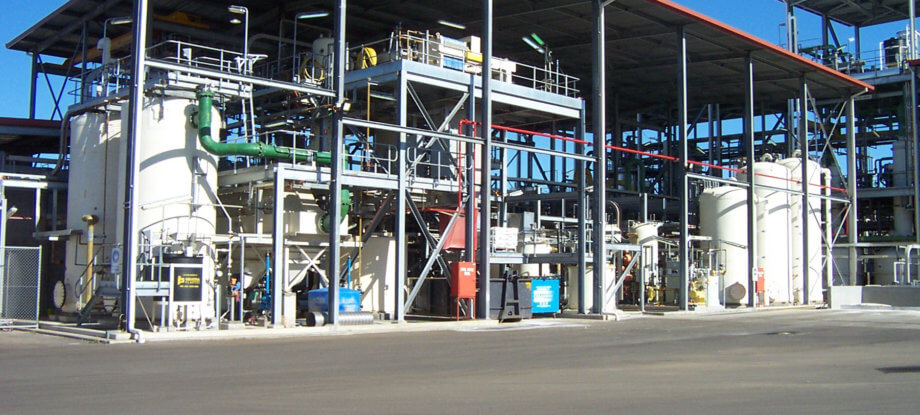
The chlor-alkali process is the most essential and widely used electrochemical manufacturing technology in the global chemical industry, serving as the core foundation for producing basic inorganic chemical raw materials. For decades, this mature and evolving process has dominated the production of chlorine-based and alkali-based chemicals, supporting countless downstream industrial chains including water treatment, chemical synthesis, textile processing, papermaking, metallurgy, and environmental protection. The chlor-alkali industry is known as the “mother of basic chemicals” because its derived products are indispensable to modern industrial manufacturing. As a professional manufacturer with 25 years of industry experience,Chloryadopts advanced ion-exchange membrane chlor-alkali technology, fully automatic production control, and modular production design to achieve low energy consumption, high efficiency, stable output, and customizable industrial chemical solutions for global B2B clients.
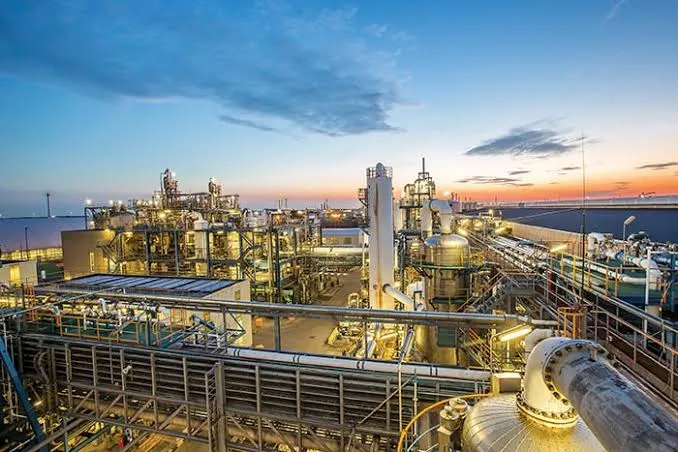
1. Basic Definition & Core Chemical Principle of Chlor-Alkali Process
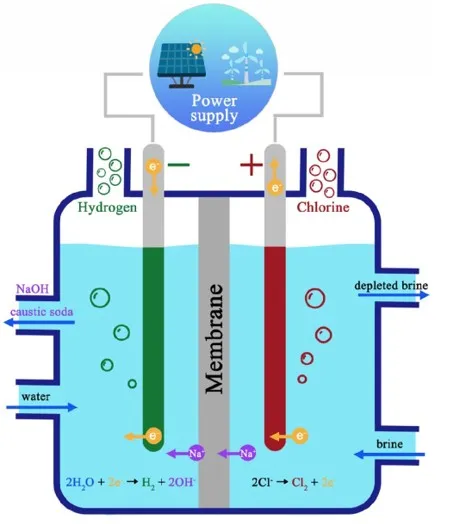
The chlor-alkali process refers to the electrolysis reaction of saturated refined brine (sodium chloride solution) under specific industrial conditions, which simultaneously produces three core industrial products: chlorine gas, hydrogen gas, and caustic soda (sodium hydroxide). The entire production process relies on electrochemical redox reactions inside electrolytic cells, with strict separation of anode and cathode reactions to avoid product mixing and ensure high-purity finished products.
The unified core chemical reaction formula of modern chlor-alkali production is as follows:2NaCl + 2H₂O → Electrolysis → Cl₂↑ + H₂↑ + 2NaOH
Specific electrode reaction principles are divided into anode oxidation and cathode reduction. At the anode, chloride ions in brine lose electrons and are oxidized to generate chlorine gas, which is the raw material for liquid chlorine products. At the cathode, water molecules obtain electrons and are reduced to produce hydrogen gas and hydroxide ions. Sodium ions penetrate the selective isolation membrane and combine with hydroxide ions to form high-purity caustic soda liquid. Scientific electrode reaction separation ensures no cross-contamination between products, laying a solid foundation for high-quality finished chemicals.
2. Three Generations of Chlor-Alkali Technology Evolution & Advantages Comparison
The global chlor-alkali industry has experienced three complete technological iterations, eliminating backward high-pollution and high-energy-consumption processes step by step, and forming the modern green and efficient production system currently adopted by mainstream manufacturers including Chlory.
Mercury Cell Process (Obsolete Technology): As the earliest chlor-alkali production technology, it uses mercury as the cathode medium. Although the product purity is high, it causes extremely serious mercury pollution, with huge energy consumption and severe environmental hazards. This process has been completely banned and phased out in most industrial countries and is no longer used in formal modern production lines.
Diaphragm Cell Process (Traditional Technology): This technology uses asbestos diaphragms to separate anode and cathode compartments. It reduces pollution compared with the mercury process, but has obvious defects including high energy consumption, low caustic soda purity, easy diaphragm blockage, and frequent equipment maintenance. It is only retained in a small number of old factories and is gradually being eliminated.
Ion-Exchange Membrane Process (Modern Mainstream Technology Adopted by Chlory): This is the most advanced, environmentally friendly, and energy-saving chlor-alkali technology in the global industry. It uses high-precision cation-selective ion-exchange membranes to isolate electrodes, featuring zero mercury pollution, zero asbestos hazard, ultra-low energy consumption, and high product purity. All core production lines ofChloryfully adopt this membrane electrolysis process, combined with fully automatic control systems and modular line design, realizing stable production, low loss, and high-efficiency operation, which fully complies with international industrial environmental protection and quality standards.
3. Complete Industrial Production Flow of Modern Chlor-Alkali Process
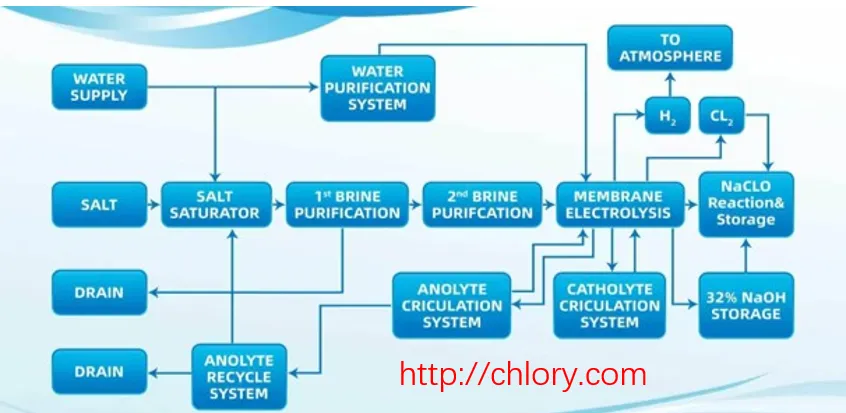
The standardized chlor-alkali production process is a complete and closed industrial system, including raw material purification, electrolysis reaction, gas-liquid separation, product refining, liquefaction processing, and finished product storage. Every link is precisely controlled by intelligent equipment to ensure product stability and consistency.
Step 1: Brine Purification: Raw industrial salt is dissolved into saturated brine, and impurity ions such as calcium, magnesium, and sulfate are removed through multi-stage filtration and chemical precipitation. Impurity removal is critical to prevent membrane damage, extend the service life of ion-exchange membranes, and avoid affecting product purity.
Step 2: Membrane Electrolysis: The refined brine is transported to fully automatic modular electrolytic cells. Under precise current and voltage control, electrochemical reactions occur to generate chlorine gas at the anode and hydrogen gas and crude caustic soda solution at the cathode.
Step 3: Gas Collection & Liquefaction: The generated chlorine gas is cooled, dried, purified, and compressed into high-purity liquid chlorine for industrial storage and transportation. Hydrogen gas is collected, purified, and recycled for industrial heating or chemical synthesis.
Step 4: Caustic Soda Refining & Concentration: The crude caustic soda solution is concentrated, filtered, and refined to form industrial-grade high-purity caustic soda liquid or solid caustic soda finished products.
Step 5: Finished Product Storage & Packaging: All finished products are stored in sealed professional containers, with standardized cylinder packaging and tank truck transportation, supporting long-distance transportation and long-term industrial use.
4. Core Products of Chlor-Alkali Process & Diversified Industrial Applications
The three major products produced by the chlor-alkali process cover almost all basic industrial fields, with wide market demand and strong industrial irreplaceability, forming a complete closed-loop industrial chain.
Liquid Chlorine & Chlorine Gas: As the core downstream product of the chlor-alkali process, high-purity liquid chlorine is widely used in municipal drinking water disinfection, industrial wastewater treatment, and circulating water algae removal. In the chemical industry, it is a key raw material for PVC, chlorinated rubber, and pharmaceutical and pesticide intermediates. In light industry, it is used for pulp and textile bleaching. In metallurgy, it is applied for rare metal purification and smelting. It is also used for environmental protection deodorization and aquaculture water quality improvement, covering multiple industrial scenarios.
Caustic Soda (Sodium Hydroxide): Industrial caustic soda is an essential alkaline reagent, widely used in textile printing and dyeing, papermaking degumming, alumina smelting, industrial oil decontamination, wastewater pH adjustment, and daily chemical production. It is an indispensable auxiliary material for light industry, metallurgy, and environmental protection industries.
Industrial Hydrogen: The by-product hydrogen from chlor-alkali production is high-purity and pollution-free, which can be recycled for factory heating, power generation, hydrogen fuel cells, and fine chemical hydrogenation reactions, realizing waste resource reuse and reducing enterprise energy costs.
5. Core Advantages of Chlory’s Chlor-Alkali Production System
Relying on 25 years of professional chlor-alkali production experience,Chloryhas built a modern intelligent chlor-alkali production base with multiple core advantages, solving the pain points of high energy consumption, unstable quality, and single service of traditional factories.
First, the whole production line adoptsfully automatic intelligent control, realizing unmanned monitoring of the whole process from feeding to finished products, effectively reducing manual errors and ensuring consistent batch quality. Second, themodular production line designmakes equipment maintenance and production adjustment more flexible, supporting switching between mass production and small-batch customized production. Third, the optimized membrane electrolysis process achievesultra-low energy consumption, greatly reducing production loss and carbon emissions, in line with global green industrial development trends.
In addition, Chlory providesone-stop customized services, which can adjust product purity, concentration, packaging specifications, and supply schemes according to customers’ industrial scenarios. With direct factory pricing and optimized process management, we deliver high-cost-performance chlor-alkali chemical products, helping global customers reduce procurement and operation costs while ensuring stable and sustainable supply.
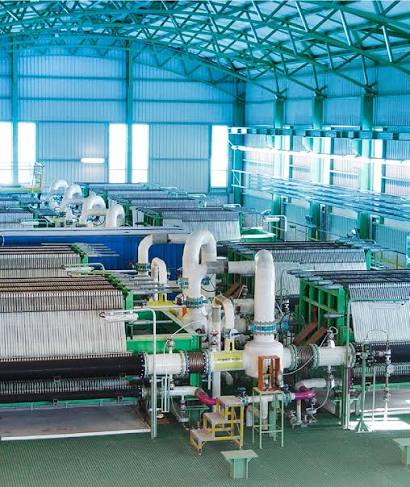
6. Development Trend of Modern Chlor-Alkali Industry
With the continuous upgrading of global environmental protection policies and industrial manufacturing standards, the chlor-alkali industry is gradually developing towards green energy saving, intelligent production, and high-end customization. Backward high-pollution and high-energy-consumption processes are completely eliminated, and intelligent membrane electrolysis technology has become the industry standard. Energy-saving transformation, waste gas and waste liquid recycling, and intelligent digital management have become the core competitiveness of modern chlor-alkali enterprises.
Boasting 25 years of professional industry experience in production and supply, Chlory factory delivers premium,cost-effective chemical products with reliable quality. Equipped with fully automatic production systems and scientific modular production line design, we achieve stable output, high efficiency and low energy consumption while strictly complying with industrial standards. Different from ordinary manufacturers, Chlory provides flexible customized services tailored to diverse customer needs on product specifications, packaging and solutions. With direct
factory pricing and optimized production processes, we help clients cut procurement costs and obtain high-quality, stable chemical supplies with comprehensive professional support.