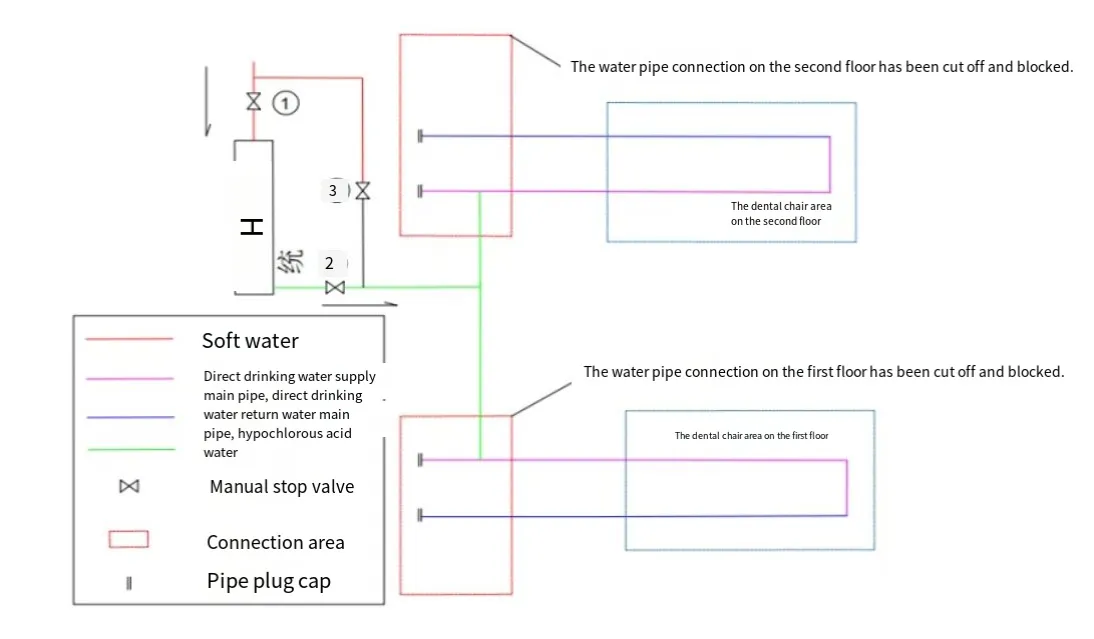

In the field of oral infection control, slightly acidic electrolyzed water (SAEW) is indeed the "star solution" for addressing biofilm problems in dental chair water systems (DUWLs). However, whether to switch to pure water (or distilled water) requires a balance between disinfection logic and equipment maintenance.
From an infection control perspective, continuous use of hypochlorous acid water is superior; however, from an equipment protection perspective, adding a pure water switching step (rinsing) can significantly reduce the risk of equipment failure.
Here are detailed recommendations:
1. Why is "no switching" more beneficial for infection control?
The core challenge of dental chair water systems is the biofilm.Continuous antibacterial action: The long, thin tubing of dental chairs is a breeding ground for bacteria. If disinfection is only performed between treatment sessions, followed by switching back to pure water, the residual pure water in the tubing lacks sterilization capabilities, and the biofilm will regenerate rapidly.
Low concentration advantage: Slightly acidic hypochlorous acid water (typically with 10-20 ppm effective chlorine and a pH of 5.0-6.5) has mild oxidizing properties and can be used directly in the patient's mouth as treatment water, achieving "disinfection during treatment."
2. Why is "increasing pure water switching" necessary?
Although slightly acidic hypochlorous acid water is much milder than "84" disinfectant or sodium hypochlorite, it still inherently possesses oxidizing properties and slight physical effects:Risk of metal corrosion: Precision valves and handpiece couplings inside dental chairs may contain copper, aluminum, or inferior stainless steel. Prolonged immersion in a chlorine-containing environment, even at extremely low concentrations, can cause minute precipitation or corrosion.
Crystallization and clogging: If the hypochlorous acid water produced by electrolysis contains trace amounts of salt (depending on the production process), it may form tiny crystals at the small-diameter nozzles of the three-way spray gun after prolonged standing and drying.
Patient perception: Although slightly acidic hypochlorous acid water has a very faint odor, a very small number of sensitive patients may perceive a slight "swimming pool smell."
3. Best practice recommendations: To balance sterilization effectiveness and equipment lifespan, the industry typically recommends one of the following two modes:
Solution A: Daily end-of-line flushing mode (recommended)Operation: Use slightly acidic hypochlorous acid water (low concentration) throughout the day's treatment.
Switching: 15 minutes before the end of each workday, switch the water source to pure water and continuously flush the handpiece tubing and three-way spray gun for 2 minutes.
Purpose: To drain residual chlorine from the tubing and allow precision parts to "rest" in pure water overnight.
Option B: Periodic Intensive Shock Therapy
Procedure: Use pure/distilled water for routine treatment.
Switching: Switch to high-concentration hypochlorous acid solution for 10-20 minutes of tubing immersion and flushing every week or every three days.
Disadvantages: This method is less effective at removing existing thick biofilms and is less stable than Option A.
If you have any further questions regarding water system disinfection for your dental chair, please leave a message. We offer free consultation services on everything from model selection and cost accounting to dental chair disinfection solutions.