As the global livestock industry moves toward scale-up and standardized breeding, odor pollution has become a major challenge for farms. Ammonia, hydrogen sulfide, and other malodorous gases generated from livestock manure, urine, and feed residues not only affect the living environment of breeding animals and the health of workers but also easily trigger conflicts with surrounding residents. Faced with increasingly stringent environmental regulations and the demand for green breeding, finding a safe, efficient, and sustainable deodorization solution has become a top priority for livestock farms. Hypochlorous acid (HOCl), with its unique chemical properties and environmental friendliness, has emerged as an ideal choice for livestock farm deodorization, bringing a new solution to the industry.
Why Traditional Deodorization Methods Fall Short
Many livestock farms still rely on traditional deodorization methods such as activated carbon adsorption, fragrance masking, or simple water spraying. However, these methods have obvious limitations. Activated carbon can only temporarily adsorb odorous molecules and needs frequent replacement, resulting in high operating costs; fragrance masking merely covers up odors rather than eliminating them from the source, and the mixed smell may even cause greater discomfort; water spraying has a weak deodorization effect and easily leads to secondary pollution of sewage. With the implementation of national ammonia emission standards and the increasing emphasis on animal welfare, traditional methods can no longer meet the needs of modern livestock breeding, making it imperative to adopt a more advanced deodorization technology.
The Science Behind Hypochlorous Acid Deodorization: Oxidation, Not Masking
Hypochlorous acid is a weak acid formed by the dissolution of chlorine in water, which has strong oxidizing properties and can react with malodorous molecules in livestock farms through a targeted chemical decomposition process—essentially different from traditional masking or adsorption methods. The main sources of farm odors are ammonia (NH₃) and hydrogen sulfide (H₂S), both of which are easily decomposed by hypochlorous acid.
Ammonia, a typical alkaline malodorous gas, undergoes a metathesis reaction with hypochlorous acid to produce chloramine and water, with no harmful by-products generated in the process. Hydrogen sulfide, a toxic and odorous gas, is oxidized by hypochlorous acid into non-irritating sulfate and water, completely eliminating the odor from the source. Unlike traditional chemical deodorants, hypochlorous acid does not leave harmful residues after reaction and naturally decomposes into a simple saline solution, which is environmentally friendly and non-polluting.
Key Advantages of Hypochlorous Acid for Livestock Farm Deodorization
For livestock farms and water treatment service providers, hypochlorous acid has unique advantages that make it stand out in deodorization applications, perfectly matching the actual needs of modern breeding.
Efficient and Rapid Deodorization: Hypochlorous acid can quickly react with malodorous molecules such as ammonia and hydrogen sulfide, with an odor removal rate of over 80% after reasonable application. In a typical pig farm case, after using hypochlorous acid solution for spray deodorization, the odor intensity at the outlet of the livestock house dropped significantly, and the odor in the composting house even reached zero.
Safe for Animals and Humans: Hypochlorous acid is non-irritating and non-toxic when used as directed. It is the same substance secreted by human neutrophils to kill pathogens, so it will not cause irritation to the skin and mucous membranes of livestock, and can even be used for in-stall disinfection without affecting the normal feeding and growth of animals. At the same time, it does not produce harmful fumes, ensuring the safety of breeding workers during operation.
Eco-Friendly and Compliant: Hypochlorous acid is prepared from salt, water, and electricity through electrolysis, with no harmful by-products during the preparation process. After use, it decomposes into salt and water, which conforms to the requirements of green development and environmental protection policies, helping farms meet the national ammonia emission standards and pass environmental inspections smoothly.
Cost-Effective and Easy to Operate: With the maturity of hypochlorous acid generator technology, farms can produce hypochlorous acid on-site as needed, avoiding the cumbersome transportation and storage of traditional deodorants and reducing safety risks. The equipment is easy to operate, requires no professional personnel on duty, and has low energy consumption, which can significantly reduce the long-term operating costs of farms compared with regular purchase of chemical deodorants.
Dual Effects of Deodorization and Disinfection: In addition to deodorization, hypochlorous acid also has broad-spectrum bactericidal properties. It can quickly kill Escherichia coli, Staphylococcus aureus, and other harmful microorganisms in the farm, as well as inactivate viruses such as African swine fever and avian influenza, reducing the incidence of livestock diseases and protecting animal health while deodorizing.
Practical Application Solutions of Hypochlorous Acid in Livestock Farms
Combined with the layout of livestock houses and the characteristics of air circulation, hypochlorous acid deodorization has formed mature application schemes, which can be flexibly adjusted according to the scale of the farm and the type of breeding, ensuring the deodorization effect.
Negative Pressure Fan End Deodorization: A closed treatment room is built outside the negative pressure fan of the livestock house. The odorous gas in the house is collected into the treatment room through the fan, and the atomized hypochlorous acid solution is sprayed through the nozzle. The fine mist droplets fully contact the odorous gas to complete the oxidation decomposition, and the purified gas is discharged through the fan, realizing up-to-standard emission. Some farms also install deodorant filter walls at the end of the fan, which use porous filter balls as carriers to circulate and spray hypochlorous acid solution, further increasing the contact area between the solution and the odorous gas.
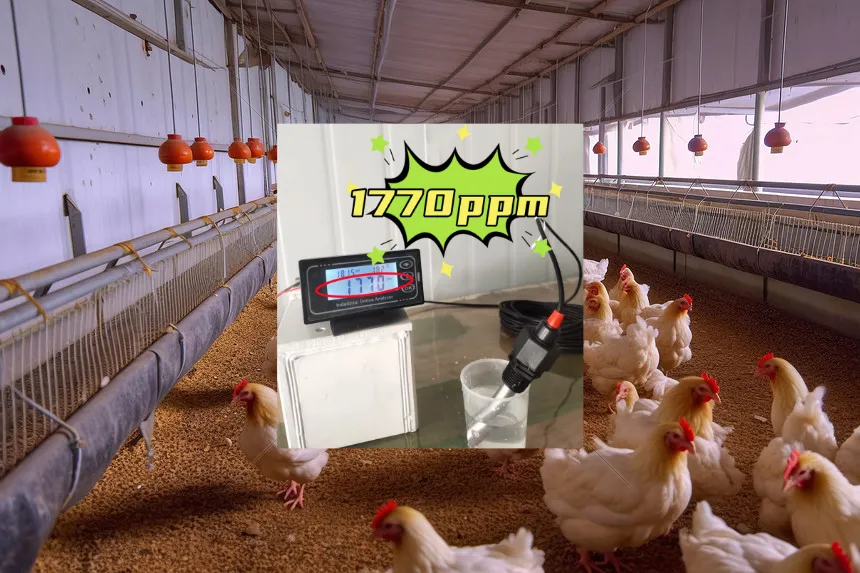
In-Stall Atomization Deodorization: Hypochlorous acid generators are connected to the intelligent atomization system in the livestock house, and the hypochlorous acid solution is sprayed into the air in the form of fine mist at regular intervals. This method not only removes odors but also achieves full coverage disinfection, effectively reducing the concentration of harmful microorganisms in the air and improving the breeding environment. It is especially suitable for closed livestock houses such as layer houses and pig houses.
Fecal Treatment Area Deodorization: For the fecal storage tank and treatment area where odors are concentrated, hypochlorous acid solution is sprayed regularly or circulated to treat the fecal water, which can decompose the malodorous molecules generated by fecal fermentation, reduce the spread of odors, and cooperate with anaerobic treatment processes to further improve the environmental quality of the farm.
Our Commitment: Providing Professional Hypochlorous Acid Deodorization Solutions for Livestock Farms
As a professional water treatment company, we have long been committed to applying efficient and environmentally friendly water treatment technologies to various industries, including the livestock breeding industry. We deeply understand the pain points of odor pollution in farms and the demand for compliance development. Based on years of experience in water treatment and environmental protection, we provide customized hypochlorous acid deodorization solutions for livestock farms of different scales and breeding types.
Our solutions cover the whole process from on-site preparation of hypochlorous acid to intelligent spray deployment, including high-quality hypochlorous acid generators, matching spray equipment, and professional technical guidance. We help farms achieve efficient deodorization, compliance emission, and cost reduction, while improving the breeding environment, protecting animal welfare, and enhancing the public image of breeding enterprises.
In the era of green breeding, choosing hypochlorous acid deodorization is choosing a sustainable development path. Let us work together to create a clean, safe, and environmentally friendly breeding environment, and promote the high-quality development of the livestock industry.