


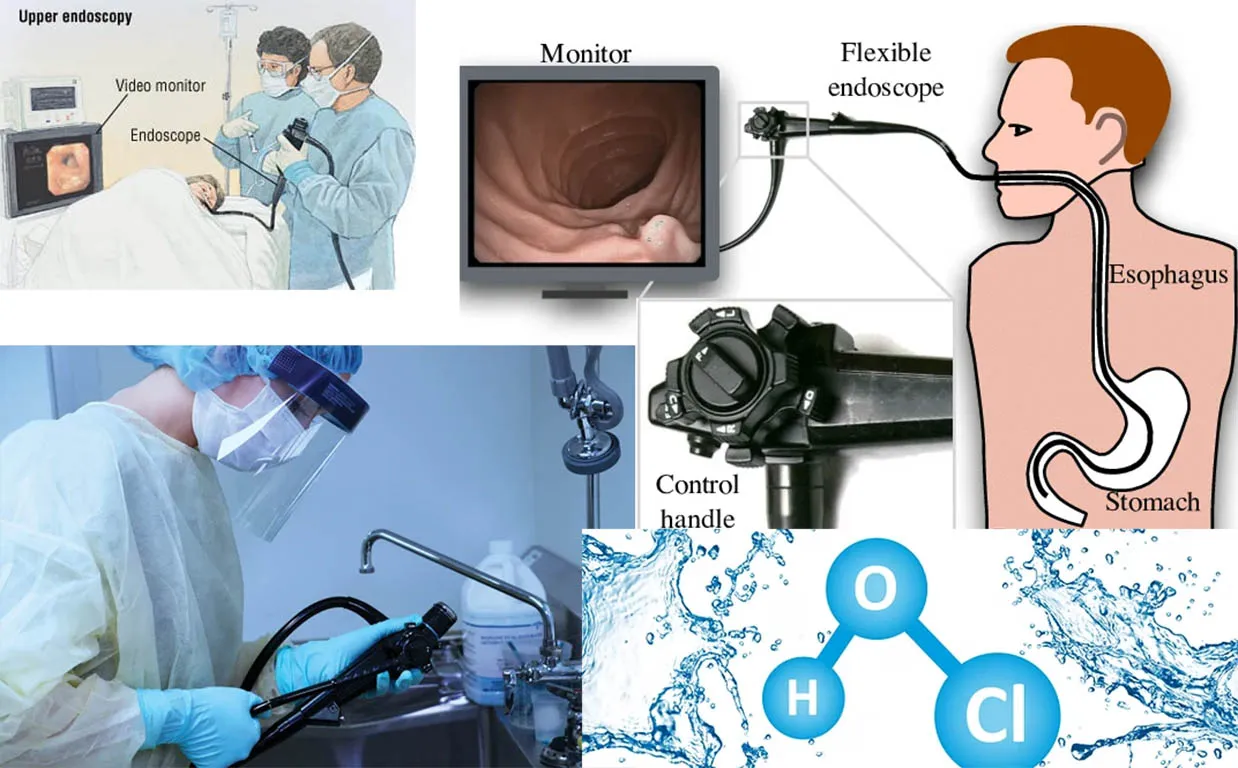
Flexible endoscopes are indispensable tools in modern clinical practice, used widely in digestive, respiratory, and urological diagnostics and treatments. However, their complex internal channels and frequent use make post-procedure cleaning and disinfection a critical step in preventing healthcare-associated infections (HAIs). The final rinse, the last stage of endoscope reprocessing, is often overlooked—but its quality directly determines the effectiveness of disinfection and the safety of patients. When final rinse water is contaminated with excessive bacteria or biofilm, it can render the entire disinfection process useless, putting patients at risk of cross-infection. This article explores why traditional rinse water solutions fail, and how continuous hypochlorous acid infusion emerges as a game-changing solution to ensure endoscope rinse water quality and compliance with national standards.
Why Endoscope Final Rinse Water Quality Is Non-Negotiable
The final rinse step is the last line of defense in endoscope reprocessing. After cleaning and high-level disinfection, any residual bacteria or contaminants in the rinse water can adhere to the endoscope’s internal channels, forming biofilm over time. Biofilm is a stubborn, protective layer of bacteria that resists conventional disinfection methods, leading to persistent contamination and increasing the risk of HAIs.
To address this risk, China’sTechnical Specifications for Cleaning and Disinfection of Flexible Endoscopes (WS507-2016)clearly mandates that endoscopes must be rinsed with purified water or sterile water, with a total bacterial count ≤ 10 CFU/100 mL. This standard is not arbitrary—it is designed to minimize the risk of post-procedure infections and ensure patient safety. Unfortunately, many endoscopy centers struggle to meet this requirement, even with advanced purified water systems.
The Hidden Crisis: Limitations of Traditional Rinse Water Solutions
For decades, purified water and sterile water have been the go-to choices for endoscope final rinsing. However, recent clinical studies and on-site monitoring reveal significant flaws in these methods, leading to unacceptably low qualification rates for terminal rinse water.
1. Bacterial Regrowth in Water Pipelines
One of the most common issues is bacterial regrowth in water supply pipelines. Domestic studies have shown that after tap water passes through purified water preparation systems, bacterial counts often increase—especially in newly built endoscopy centers, where pipeline materials and installation may introduce contaminants. Over time, bacteria attach to the inner walls of pipelines, forming biofilm that standard filtration cannot remove.
2. Low Qualification Rates in Clinical Practice
A survey of tertiary medical institutions in Shanghai found that even with purified water filtration devices installed for endoscope final rinsing, the qualification rate of terminal rinse water was only 63.09%. Worse, the longer the water pipelines are in use, the lower the qualification rate—indicating that traditional solutions cannot address long-term contamination risks. A 2021 monitoring study at the Endoscopy Center of Zhongshan Hospital Affiliated to Fudan University further confirmed this: the colony count in digestive endoscope final rinse water significantly exceeded the WS507-2016 standard, highlighting the urgency of a more effective solution.
3. Inability to Remove Biofilm
Traditional purified water and sterile water lack disinfectant properties, meaning they can only rinse away loose contaminants—not break down mature biofilm. Once biofilm forms in pipelines or endoscope channels, it becomes a persistent source of bacterial contamination, leading to repeated rinse water failures and increasing the burden of reprocessing and retesting.
Continuous Hypochlorous Acid Infusion: How It Solves Rinse Water Contamination
Continuous hypochlorous acid (HClO) infusion is an innovative, evidence-based solution that addresses the root causes of endoscope final rinse water contamination. Unlike traditional rinse water, which is passive and ineffective against biofilm, continuous HClO infusion transforms the rinse water into a mild, effective disinfectant that provides sustained protection throughout the rinse process.
How It Works
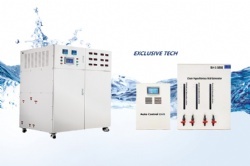
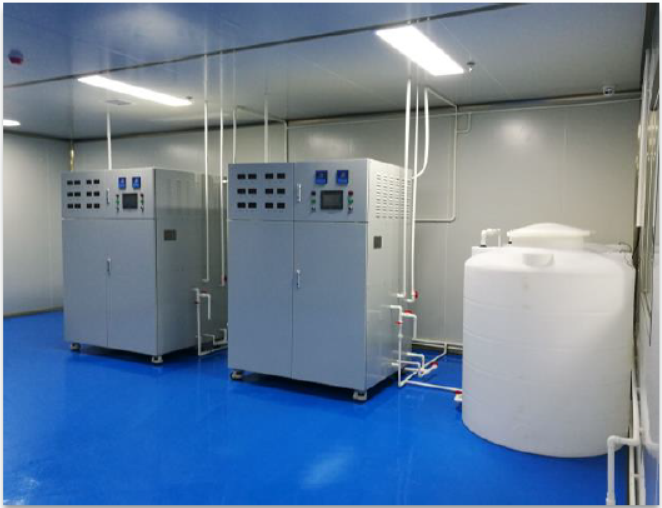
The process involves integrating a slightly acidic hypochlorous acid generator into the existing endoscope rinse water circuit. The generator uses electrolysis technology—typically with dilute salt water or an acidic aqueous solution—to produce a stable, low-concentration hypochlorous acid solution. This solution is continuously infused into the rinse water line, ensuring that every drop of rinse water contains a safe, effective level of disinfectant.
The hypochlorous acid solution used is slightly acidic (pH 5.0–6.5) with an effective chlorine concentration of 10–30 ppm. This formulation is a powerful oxidant that kills bacteria, fungi, and some viruses on contact, while also breaking down biofilm by disrupting the protective layer of bacterial colonies. Importantly, this concentration is gentle enough to be compatible with endoscope materials, causing no damage to internal channels or components.
Clinical Evidence: Proven Effectiveness
Multiple clinical studies and hospital practice reports have validated the effectiveness of continuous HClO infusion:
- After implementing continuous HClO infusion at the Endoscopy Center of Zhongshan Hospital Affiliated to Fudan University, repeated bacterial cultures of final rinse water showed no bacterial overload, with all samples meeting the WS507-2016 standard.
- A study using metagenomic next-generation sequencing (mNGS) confirmed that HClO infusion significantly reduces bacterial diversity and count in rinse water, effectively removing biofilm and preventing regrowth.
- In a multi-center trial involving 5 tertiary hospitals, continuous HClO infusion increased the qualification rate of endoscope final rinse water from 63.09% to 100%, with no adverse effects on endoscope performance.
Key Benefits of Continuous Hypochlorous Acid Infusion
Compared to traditional purified water and sterile water rinsing, continuous HClO infusion offers distinct advantages that make it an ideal solution for endoscopy centers:
1. Superior Antimicrobial Efficacy
HClO is a broad-spectrum disinfectant that kills 99.99% of bacteria, including drug-resistant strains, within seconds. It also effectively removes biofilm, addressing the root cause of persistent contamination.
2. High Safety and Compatibility
Slightly acidic HClO (pH 5.0–6.5, 10–30 ppm) is non-irritating to human tissues and compatible with all flexible endoscope materials, including rubber, plastic, and metal. It breaks down into water and salt, leaving no toxic residues—making it safe for both patients and staff.
3. Easy Integration and Operation
Continuous HClO infusion can be retrofitted into existing rinse water systems without replacing the entire pipeline. The hypochlorous acid generator is fully automated: users simply add dilute salt water or acidic solution, turn on the power, and the device produces a stable supply of HClO water—requiring minimal training and maintenance.
4. Eco-Friendly and Cost-Effective
The electrolysis process for producing HClO does not generate harmful byproducts such as chlorine oxides (HClO₃, HClO₄), oxygen, or ozone—making it environmentally friendly. Additionally, by reducing reprocessing failures, retests, and infection risks, HClO infusion lowers long-term operational costs for endoscopy centers.
5. Compliance with National Standards
Continuous HClO infusion ensures that final rinse water consistently meets the WS507-2016 standard (total bacterial count ≤ 10 CFU/100 mL), helping endoscopy centers avoid regulatory penalties and maintain high standards of patient care.
Implementation Guidelines for Continuous Hypochlorous Acid Infusion
Implementing continuous HClO infusion is straightforward, with minimal disruption to existing endoscope reprocessing workflows. Here are the key steps:
1. Select a High-Quality Hypochlorous Acid Generator
Choose a generator that uses advanced electrolysis technology (such as BLUEWAV’s system) to produce stable, consistent HClO water. Ensure the device meets medical-grade standards and is certified for use in healthcare settings.
2. Integrate with Existing Water Circuits
Connect the generator to the existing endoscope rinse water line, adding a terminal filter membrane to ensure additional safety. The system should be designed to deliver HClO water continuously during the final rinse cycle.
3. Set Optimal Technical Parameters
Adjust the generator to produce HClO water with a pH of 5.0–6.5 and an effective chlorine concentration of 10–30 ppm. Regularly monitor these parameters to ensure consistency.
4. Implement Routine Monitoring and Maintenance
Conduct weekly microbial testing of final rinse water initially; once compliance is stable, switch to monthly testing. Replace filters on schedule, optimize pipeline layout to avoid dead legs, and clean the generator regularly to maintain performance.
FAQ: Addressing Common Concerns About HClO Infusion
1. Will hypochlorous acid damage my endoscopes?
No. The slightly acidic HClO solution (10–30 ppm, pH 5.0–6.5) is specifically formulated to be compatible with all flexible endoscope materials. Clinical studies have shown no damage to endoscope channels, lenses, or rubber components after long-term use.
2. Do I need to replace my entire water system to use HClO infusion?
No. Continuous HClO infusion can be retrofitted into your existing rinse water lines with minimal installation. Most generators are compact and can be integrated without disrupting daily operations.
3. Is HClO infusion safe for patients?
Yes. HClO is a naturally occurring disinfectant (produced by the human immune system to fight infections) and is non-toxic when used at the recommended concentration. It breaks down into water and salt, leaving no residues that could harm patients.
4. How does HClO compare to other disinfection methods (e.g., UV, ozone)?
HClO is more effective than UV and ozone at removing biofilm and killing bacteria in hard-to-reach endoscope channels. Unlike UV, it does not require line-of-sight contact, and unlike ozone, it does not produce harmful byproducts. It also provides continuous disinfection, whereas UV and ozone are often intermittent.
Conclusion
Endoscope final rinse water contamination is a hidden risk that threatens patient safety and regulatory compliance. Traditional solutions—purified water and sterile water—are ineffective at addressing bacterial regrowth and biofilm, leading to low qualification rates and increased infection risks. Continuous hypochlorous acid infusion offers a safe, effective, and practical solution that transforms rinse water into a powerful disinfectant, ensuring compliance with WS507-2016 standards and protecting patients from HAIs.
Backed by clinical data from top hospitals, easy to integrate, and environmentally friendly, continuous HClO infusion is quickly becoming the gold standard for endoscope final rinsing. For endoscopy centers looking to improve reprocessing quality, reduce costs, and prioritize patient safety, this innovative technology is a worthwhile investment.