As a fundamental chemical production technology, the chlor-alkali industry plays a pivotal role in the global development of modern chemistry. While caustic soda is the primary product, chlorine and hydrogen are considered co-products; nevertheless, they serve indispensable functions across a wide range of industrial sectors.
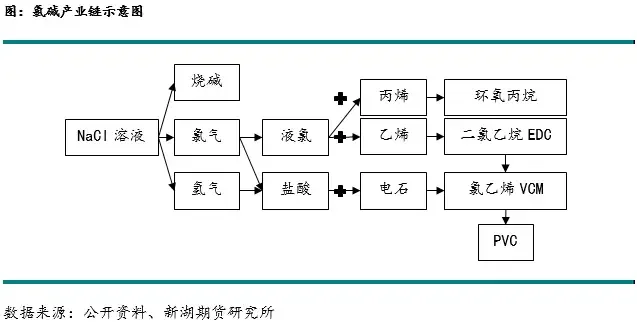
Currently, the chlor-alkali industry primarily employs three distinct production processes: the mercury cell process, the diaphragm cell process, and the ion-exchange membrane process. Although these processes share the same underlying chemical reaction—producing substances via the equation 2NaCl + 2H₂O = 2NaOH + Cl₂ + H₂—they differ in their operational characteristics. The mercury cell process utilizes mercury as an electrode, enabling the efficient production of high-purity sodium hydroxide free from chlorine contamination. However, this method requires the use and discharge of significant quantities of mercury, posing a severe risk of environmental pollution. With the tightening of environmental regulations in the early 1970s, countries such as Japan, the United States, and those in Western Europe enacted laws restricting mercury emissions, thereby driving the widespread adoption of the diaphragm cell process. The diaphragm cell process employs a separator within the electrolytic cell to keep chlorine and sodium hydroxide apart, thereby reducing impurity contamination; while it mitigates mercury usage and emissions compared to the mercury cell method, it still suffers from issues such as lower product purity and higher energy consumption. To address these challenges, the ion-exchange membrane process was successfully industrialized in Japan and the United States in 1975. Combining the advantages of both the mercury and diaphragm methods, the ion-exchange membrane process yields high-quality products with low energy consumption and generates no harmful emissions, making it the dominant technology in the modern chlor-alkali industry.
Downstream Demand for Caustic Soda and Chlorine
1. Caustic Soda
Caustic soda (sodium hydroxide, NaOH) is a highly corrosive, strong alkali. It exists in both solid and liquid forms: solid caustic soda is white and appears as flakes or granules, while liquid caustic soda is a colorless, transparent liquid. It is readily soluble in water, forming an alkaline solution; it is also hygroscopic and degrades upon absorbing carbon dioxide. Caustic soda is a fundamental chemical raw material; downstream demand spans sectors such as alumina production, general chemicals, papermaking, and textile printing and dyeing. In the metallurgical industry, caustic soda is widely used in aluminum smelting; by dissolving bauxite in a high-temperature caustic soda solution, high-purity alumina (Al₂O₃) is extracted, which is subsequently processed into pure aluminum metal via electrolysis. In the papermaking industry, caustic soda is used for pulp treatment—removing non-cellulosic components and neutralizing organic acids—to enhance paper quality and durability. In the textile and printing/dyeing sectors, it is used to remove oils, sizing agents, and fine fibers from fabric surfaces, softening the material to ensure uniform dyeing and improve the appearance and texture of the finished product.2. Liquid Chlorine
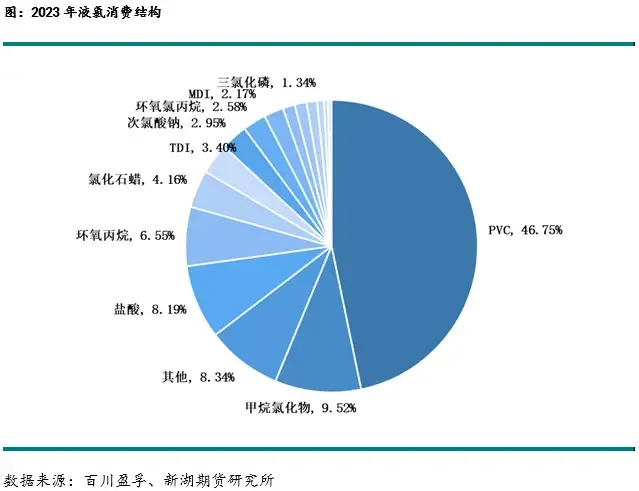
Chlorine gas is a crucial component of the chlor-alkali industry. While the production of chlorine-containing products was initially driven by the need to consume the chlorine gas generated during caustic soda production, these products have since become a primary source of profit for the industry as their market value has risen.Chlorine products can be categorized into inorganic and organic types. In terms of downstream consumption patterns, inorganic chlorine products account for a larger share of total chlorine usage. Currently, inorganic chlorine products—primarily inorganic chlorides and hydrochloric acid—make up more than half of my country's total chlorine consumption. They play a vital role in the synthesis of pesticides, pharmaceuticals, and chlorinated polymers. Hydrochloric acid, in particular, is a key raw material in the chemical industry, utilized in applications ranging from metal cleaning to oil well acidification. Organic chlorine products include polyvinyl chloride (PVC) and propylene oxide. PVC is a major organic chlorine product and one of the world's five most widely used general-purpose plastics; prized for its excellent physical and chemical properties, it is extensively used in construction materials, pipes, profiles, doors, windows, and flooring. PVC represents the largest segment of my country's organic chlorine product market and serves as a key product for balancing the chlor-alkali ratio.