Offshore platforms (oil & gas exploration, wind farms) and ports face unique water treatment challenges: limited freshwater resources, high salinity of seawater, strict requirements for corrosion control and environmental protection, and the need for stable, low-maintenance disinfection solutions. Traditional water treatment methods—such as transporting chemical chlorine (sodium hypochlorite, chlorine gas) or relying on freshwater-based disinfection—are costly, risky, and incompatible with marine environments. Seawater electrolysis chlorine generation systems (SECG systems) have emerged as the ideal solution: they use on-site seawater, electricity, and no additional chemicals to produce chlorine-based disinfectants (hypochlorous acid, sodium hypochlorite), achieving efficient disinfection, anti-corrosion, and fouling control. This article explores the application value, core advantages, and key use cases of SECG systems in offshore and port water treatment.
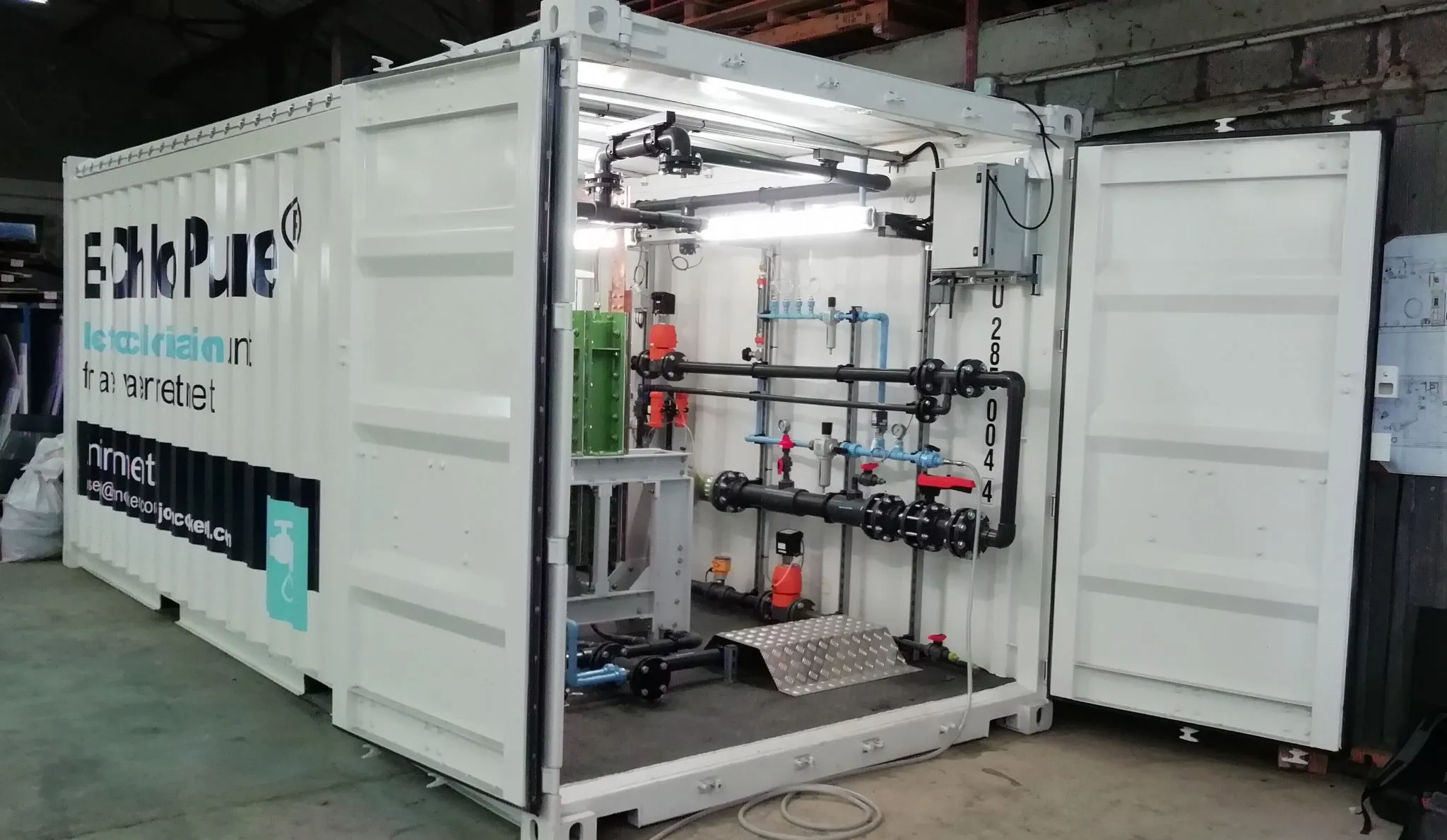
Core Working Principle of SECG Systems: On-Site Disinfectant Production from Seawater
Key Advantages of SECG Systems for Offshore Platforms & Ports
- Resource Independence, Low Operating Costs: SECG systems use seawater (an unlimited resource in marine environments) as the raw material, eliminating the need to transport and store chemical disinfectants or rely on freshwater. For offshore platforms, this reduces logistics costs by 60%-80% compared to transporting sodium hypochlorite, while avoiding the risk of chemical leakage during transportation and storage.
- Efficient Disinfection & Anti-Fouling: The chlorine-based disinfectants produced by SECG systems effectively inactivate bacteria, viruses, algae, and mussel larvae—key contributors to biofouling and corrosion in marine water systems. They can prevent biofilm formation on pipeline walls, heat exchangers, and underwater structures, reducing equipment corrosion rates by 70%-90% and extending the service life of marine facilities.
- Environmental Friendliness & Compliance: Unlike chemical disinfectants that may leave toxic residues or produce harmful by-products, the disinfectants from SECG systems decompose into harmless substances (water, salt) after disinfection. The discharged water meets international marine environmental protection standards (such as IMO MARPOL Annex IV) and local port regulations, avoiding environmental fines and ecological impacts.
- Compact Design & Easy Maintenance: SECG systems are designed with a compact structure, occupying a small footprint—critical for offshore platforms and ports with limited space. They have a simple operating principle, require no complex manual intervention (supports automatic control and remote monitoring), and only need regular cleaning of electrolytic cells and filters, reducing maintenance labor costs.
- Strong Adaptability to Harsh Environments: SECG systems are built with corrosion-resistant materials (stainless steel, titanium alloy) to withstand high salinity, high humidity, strong winds, and vibrations in marine environments. They can operate stably under extreme temperature conditions (-20℃ to 50℃) and fluctuating seawater quality, ensuring continuous water treatment performance.
Critical Applications in Offshore Platforms & Ports
1. Offshore Platform Water Treatment
- Cooling Water System Disinfection: Offshore platform cooling systems rely on seawater for heat exchange, but seawater contains a large number of microorganisms and marine organisms that easily cause pipeline fouling and corrosion. SECG systems dose disinfectant into the cooling water circulation system to prevent biofouling and algae growth, ensuring stable heat transfer efficiency and avoiding equipment downtime.
- Domestic Water Purification: Offshore platform personnel need safe domestic water (drinking, washing). SECG systems disinfect seawater (after desalination if needed) to remove harmful microorganisms, meeting WHO drinking water standards and ensuring the health of on-site personnel.
- Wastewater Treatment: Offshore platform wastewater (domestic wastewater, process wastewater) must be treated before discharge. SECG systems disinfect the treated wastewater to inactivate pathogens, ensuring compliance with marine discharge regulations and avoiding marine pollution.
2. Port Water Treatment
- Ship Ballast Water Disinfection: Ballast water is a major carrier of invasive marine species. SECG systems can be installed on ships or port terminals to disinfect ballast water, inactivating harmful organisms (algae, bacteria, larvae) and complying with IMO Ballast Water Management Convention (BWMC) requirements.
- Port Berth & Underwater Structure Anti-Fouling: Port piers, pile foundations, and underwater pipelines are prone to fouling by mussels, barnacles, and algae, which affect structural stability and increase maintenance costs. SECG systems release low-concentration disinfectant into the surrounding seawater to inhibit the attachment and growth of fouling organisms, reducing cleaning frequency and maintenance costs.
- Port Wastewater & Stormwater Treatment: Port wastewater (ship wastewater, dock cleaning wastewater) and stormwater contain oil, suspended solids, and microorganisms. SECG systems disinfect the treated wastewater to ensure safe discharge or reuse, protecting the port’s water environment.
Key Considerations for SECG System Selection & Operation
- Adapt to Seawater Quality: Select SECG systems with high-efficiency pre-filtration modules to handle high-salinity, high-sediment seawater in different marine areas. For seawater with high organic matter content, additional pre-treatment (e.g., activated carbon adsorption) can be added to avoid reducing electrolysis efficiency.
- Match Capacity to Demand: Calculate the required disinfectant dosage based on the water volume (cooling water, wastewater, ballast water) and disinfection standards, and select SECG systems with appropriate electrolysis capacity. Support modular expansion to meet changing water treatment needs (e.g., increased port throughput, expanded offshore platform operations).
- Strengthen Corrosion Protection: Although SECG systems use corrosion-resistant materials, regular inspection and maintenance of electrolytic cells, pipelines, and pumps are still required. Use anti-corrosion coatings for key components to adapt to the long-term harsh marine environment.
- Optimize Automatic Control: Equip SECG systems with online monitoring devices (chlorine concentration, pH, seawater flow) and automatic control systems to realize real-time adjustment of electrolysis parameters and remote operation—reducing manual intervention and ensuring stable operation in unmanned or remote scenarios.