Coastal power plants (thermal power, nuclear power) and seawater desalination plants rely heavily on seawater as their primary water source—for cooling systems, boiler feedwater, and domestic water supply. However, seawater contains a wealth of microorganisms (bacteria, viruses, algae), marine organisms (mussels, barnacles), and corrosive substances, which pose severe threats to water supply systems: microbial fouling causes pipeline clogging and equipment corrosion, marine biofouling reduces heat transfer efficiency and damages desalination membranes, and pathogenic microorganisms may contaminate finished water. As a reliable on-site disinfection and anti-fouling technology, electrolytic chlorination has become a core guarantee for water supply safety in these industries. This article explores the working principle, application value, and practical effects of electrolytic chlorination in coastal power plants and seawater desalination plants.
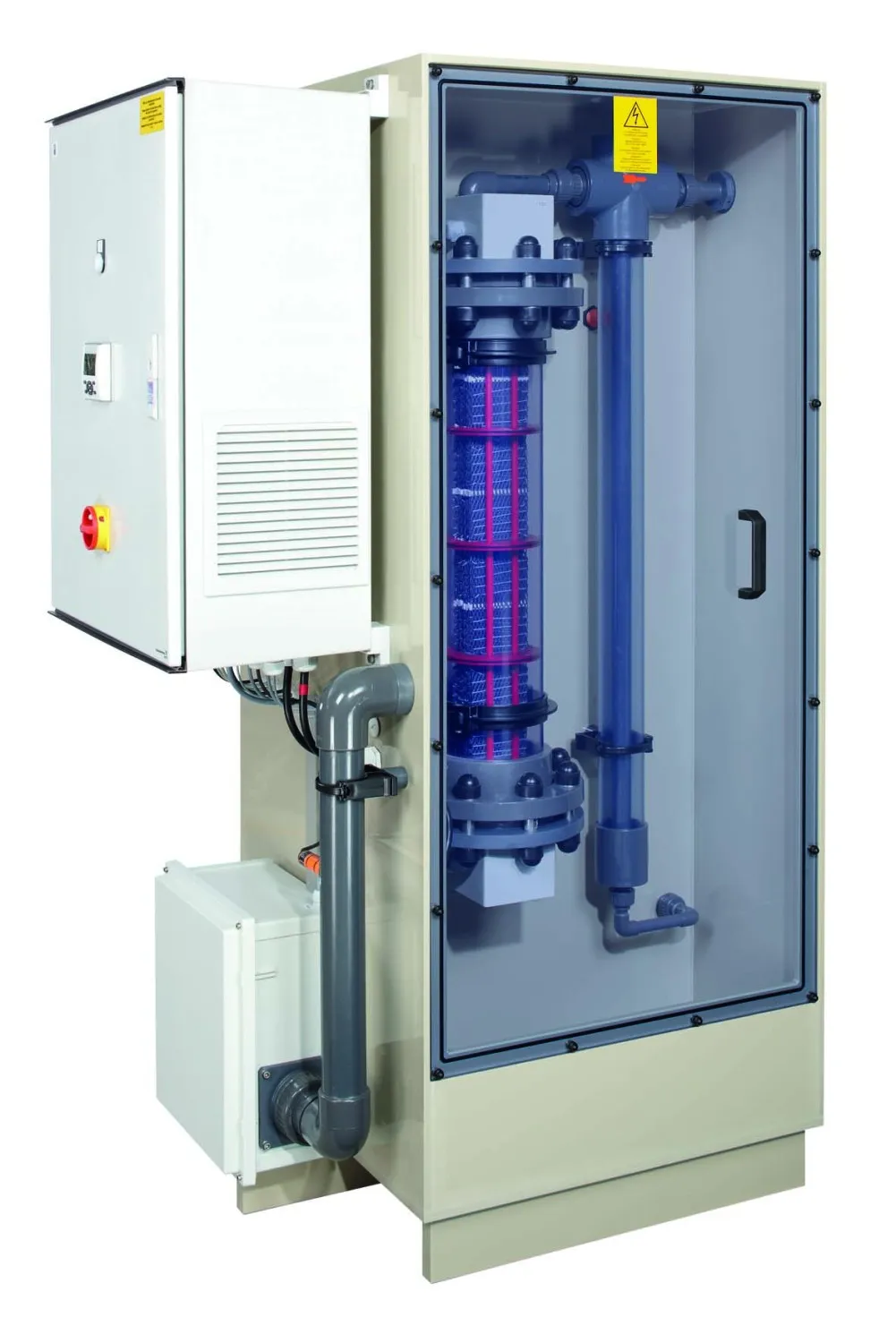
1. Overview of Electrolytic Chlorination: On-Site, Efficient, and Stable Disinfection
Electrolytic chlorination is a technology that converts chloride ions (Cl⁻) in seawater (or brine) into effective disinfectants (mainly hypochlorous acid HOCl and sodium hypochlorite NaClO) through electrolysis. The core equipment—electrolytic chlorinators—uses inert electrodes to electrolyze seawater directly, producing disinfectants on-site without the need for transportation or storage of dangerous chemicals (such as chlorine gas or liquid chlorine). This technology has three core advantages for coastal industries:
-
On-Site Production, High Safety: Eliminates the risks of leakage, explosion, and poisoning associated with traditional chlorine gas transportation and storage, which is crucial for coastal facilities located in densely populated or ecologically sensitive areas.
-
Adaptable to Seawater Characteristics: Seawater is rich in chloride ions (about 19,000 mg/L), which provides sufficient raw materials for electrolysis. The produced disinfectants have strong adaptability to high-salinity, high-chloride water environments, and their disinfection efficacy is less affected by water temperature and pH changes.
-
Adjustable Output, Cost-Effective: The disinfectant production capacity can be flexibly adjusted according to water demand and pollution levels, avoiding waste of chemicals. Compared to purchasing commercial sodium hypochlorite, electrolytic chlorination reduces annual disinfection costs by 25%-40% for large-scale coastal facilities.
2. Core Roles of Electrolytic Chlorination in Ensuring Water Supply Safety
For coastal power plants and seawater desalination plants, electrolytic chlorination plays an irreplaceable role in multiple links of the water supply chain, from raw water intake to finished water supply.
2.1 Raw Water Intake: Preventing Marine Biofouling and Microbial Invasion
The intake pipelines and intake structures of coastal power plants and desalination plants are prone to attachment and reproduction of marine organisms (mussels, barnacles, algae) and microorganisms. Marine biofouling can reduce pipeline flow by 30%-50% in a short period, and microbial slime can accelerate pipeline corrosion. Electrolytic chlorination doses a certain concentration of disinfectant (50-100 ppm as available chlorine) into the intake water, which can effectively inactivate marine organism larvae and microorganisms, inhibiting their attachment and growth on pipeline walls and equipment surfaces.
Taking a coastal thermal power plant as an example: After adopting electrolytic chlorination, the biofouling thickness on the intake pipeline inner wall decreased from 2-3 mm/month to less than 0.3 mm/month, and the pipeline maintenance cycle was extended from 3 months to 1 year, significantly reducing maintenance costs and downtime losses.
2.2 Cooling Water Systems: Controlling Fouling and Corrosion
Coastal power plants use a large amount of seawater for condenser cooling. The warm and humid environment in the cooling system is an ideal breeding ground for microorganisms and algae. Microbial biofilms attached to condenser tubes can reduce heat transfer efficiency by 10%-20%, increasing energy consumption for power generation. At the same time, the metabolic products of microorganisms can accelerate the corrosion of condenser copper tubes, shortening their service life.
Electrolytic chlorination adopts continuous dosing (30-50 ppm available chlorine) and periodic shock dosing (100-150 ppm available chlorine) in the cooling water circulation system. The produced disinfectants can penetrate microbial biofilms, inactivate bacteria and algae, and prevent the formation of new biofilms. In addition, the residual chlorine in the cooling water can form a thin protective film on the inner wall of the pipeline, reducing corrosion caused by seawater. Practice has shown that electrolytic chlorination can reduce the corrosion rate of condenser copper tubes by 60%-70% and improve heat transfer efficiency by 8%-12%, thereby reducing power generation costs.
2.3 Seawater Desalination Process: Protecting Membranes and Ensuring Finished Water Quality
Seawater desalination technologies (reverse osmosis RO, multi-stage flash distillation MSF) have strict requirements for raw water quality. Microorganisms, algae, and organic matter in raw seawater can cause fouling and degradation of desalination membranes, reducing membrane flux and service life. In addition, pathogenic microorganisms (such as Vibrio cholerae, Salmonella) in raw water may pass through the treatment process and contaminate the finished water, endangering human health.
Electrolytic chlorination is widely used in the pre-treatment stage of seawater desalination: after dosing 80-120 ppm available chlorine into raw seawater, it can effectively inactivate microorganisms and algae, decompose part of organic matter, and reduce the pollution load on desalination membranes. Before the seawater enters the RO membrane system, the residual chlorine is neutralized by sodium bisulfite to avoid membrane oxidation. For the finished water, a small amount of residual chlorine (0.2-0.5 ppm) can be maintained through electrolytic chlorination to ensure the microbiological safety of the water during storage and transportation.
A large-scale seawater desalination plant in the Middle East adopted electrolytic chlorination in its pre-treatment system, and the RO membrane fouling rate decreased by 45%, the membrane cleaning frequency was reduced from once a month to once every three months, and the membrane service life was extended by 2 years. At the same time, the finished water meets the WHO drinking water standards, with a 100% pass rate for microbiological indicators.
3. Key Application Considerations for Electrolytic Chlorination in Coastal Industries
To maximize the effect of electrolytic chlorination and ensure water supply safety, coastal power plants and seawater desalination plants need to pay attention to the following points in practical application:
-
Control of Dosing Concentration: Adjust the available chlorine concentration according to different application links (raw water intake, cooling water, pre-treatment). Too low concentration cannot achieve effective disinfection and anti-fouling, while too high concentration may cause equipment corrosion and environmental pollution.
-
Monitoring of Residual Chlorine: Install real-time residual chlorine monitoring equipment in key links (such as cooling water outlet, desalination pre-treatment outlet) to adjust the electrolysis intensity and dosing amount in real time, ensuring stable residual chlorine concentration.
-
Electrode Maintenance: The electrodes of electrolytic chlorinators are prone to scaling due to long-term contact with seawater. Regular cleaning and maintenance of electrodes can ensure stable electrolysis efficiency and extend the service life of the equipment.
-
Environmental Protection: The disinfected seawater discharged from coastal facilities should meet local environmental standards. When necessary, dechlorination treatment (such as adding sodium bisulfite) should be carried out to avoid adverse effects on marine ecosystems.
4. Comparison with Traditional Disinfection Technologies
Compared with traditional disinfection technologies (chlorine gas, liquid chlorine, commercial sodium hypochlorite) used in coastal industries, electrolytic chlorination has obvious advantages:
|
Disinfection Technology
|
Safety
|
Cost-Effectiveness
|
Adaptability to Seawater
|
Operational Complexity
|
|
Chlorine Gas/Liquid Chlorine
|
Low (high risk of leakage and poisoning)
|
Medium
|
Medium (efficacy affected by pH)
|
High (requires professional operation and storage)
|
|
Commercial Sodium Hypochlorite
|
Medium (risk of degradation and leakage)
|
Low (high transportation and storage costs)
|
Medium (efficacy decreases during storage)
|
Medium (requires regular replenishment)
|
|
Electrolytic Chlorination
|
High (on-site production, no dangerous chemical storage)
|
High (low raw material and maintenance costs)
|
High (adaptable to high-salinity water)
|
Low (automatic operation, easy maintenance)
|
Conclusion
For coastal power plants and seawater desalination plants, water supply safety is the foundation of stable operation and product quality. Electrolytic chlorination, with its on-site production, high safety, efficient disinfection, and anti-fouling capabilities, has become a core technology to solve the problems of microbial contamination, marine biofouling, and equipment corrosion in seawater utilization. By applying electrolytic chlorination in raw water intake, cooling water systems, and desalination pre-treatment, coastal facilities can effectively ensure water supply safety, reduce operational costs, extend equipment service life, and achieve sustainable development. As the demand for seawater utilization increases globally, electrolytic chlorination will play an increasingly important role in safeguarding the water supply safety of coastal industries.