In the era of intelligent livestock breeding, biosecurity has become the core pillar of sustainable development. Traditional disinfection methods, such as manual spraying of sodium hypochlorite or alcohol, are not only inefficient and labor-intensive but also have drawbacks like strong irritation, residual toxicity, and difficulty in precise control—failing to meet the requirements of large-scale, data-driven smart breeding. Hypochlorous acid (HOCl) generators, with their on-site production capability, broad-spectrum disinfection efficacy, and compatibility with intelligent systems, have emerged as a game-changer in the global livestock breeding industry. This article explores the application value of hypochlorous acid generators in intelligent livestock breeding disinfection through typical international cases, providing references for the upgrading of biosecurity systems in the industry.
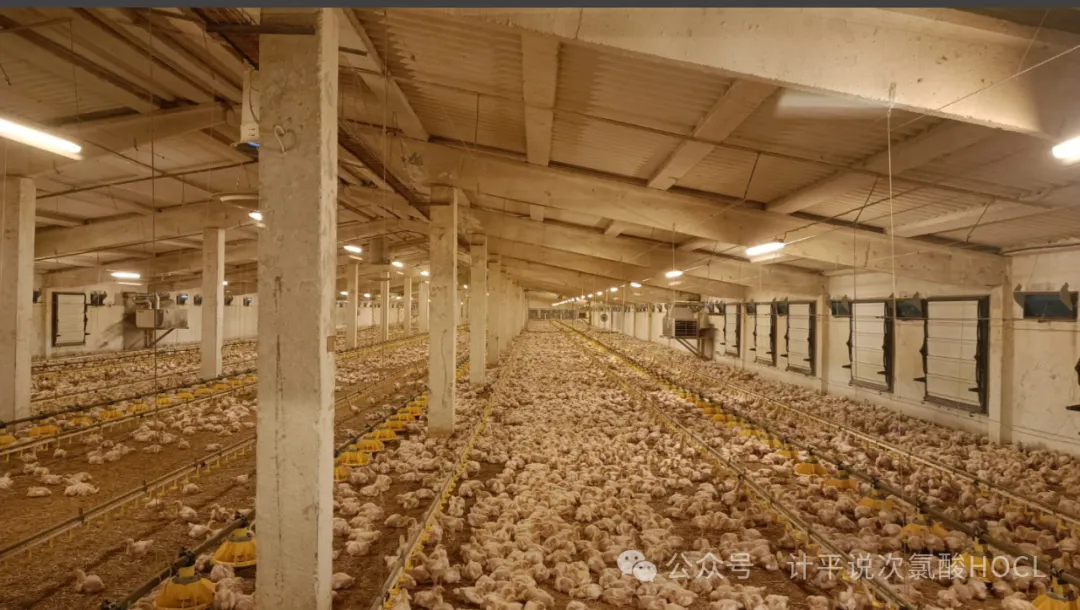
Core Advantages of Hypochlorous Acid Generator in Intelligent Livestock Breeding
Hypochlorous acid generators produce high-purity HOCl on-site by electrolyzing salt and water, which is inherently compatible with the intelligent breeding model characterized by "automation, dataization, and safety." Its core advantages are highly aligned with the needs of modern livestock breeding:
-
Safe and Harmless, Suitable for All-Scenario Disinfection: The produced hypochlorous acid has a pH value close to neutral (5.5-6.5), non-irritating to livestock and poultry, and can be used for in-situ disinfection (e.g., with chickens in pens), drinking water disinfection, and surface disinfection of equipment. It decomposes into water and salt after disinfection, leaving no harmful residues, which is crucial for ensuring food safety and realizing antibiotic-free breeding.
-
Intelligent Integration, Realizing Precise Control: Advanced hypochlorous acid generators can be integrated with IoT sensors, cloud management platforms, and automatic spray systems. They can automatically adjust disinfection concentration and frequency based on real-time monitoring data such as ammonia concentration, bacterial count, temperature, and humidity in the breeding environment, achieving "on-demand disinfection" instead of blind disinfection.
-
Cost-Effective and Efficient, Reducing Operational Burden: On-site production eliminates the costs of transportation, storage, and manual mixing of traditional disinfectants. The intelligent operation reduces labor input by 60% or more compared to manual disinfection. At the same time, its broad-spectrum disinfection effect (inactivating 99.99% of pathogens such as Escherichia coli, Salmonella, and avian influenza virus) can effectively reduce the incidence of diseases and improve breeding efficiency.
-
Green and Environmental Protection, Complying with Global Standards: The whole production and use process of hypochlorous acid does not produce harmful pollutants, which meets the environmental protection requirements of countries around the world for livestock breeding. It is an important technical support for promoting green and sustainable breeding.
International Case Analysis: Practical Application of Hypochlorous Acid Generators in Intelligent Livestock Breeding
Case 1: Danish Poultry Breeding—Improving Breeding Benefits Through Intelligent Disinfection
Background: Denmark, a global leader in livestock breeding, has strict requirements for biosecurity and food safety. Danish poultry farms, represented by DCW hypochlorous acid generator users, face challenges such as high breeding density, difficulty in controlling the spread of pathogens, and the need for antibiotic-free breeding. Traditional disinfection methods could not balance disinfection effect and poultry safety, and it was difficult to form a closed-loop management of disinfection data.
Implementation Plan: Danish poultry farms have widely adopted DCW intelligent hypochlorous acid generators, which are integrated with the farm's intelligent management system. The system is equipped with ammonia sensors, bacterial concentration detectors, and temperature and humidity sensors. When the ammonia concentration exceeds 80ppm or the bacterial count exceeds 100CFU/m³, the generator automatically starts and adjusts the hypochlorous acid concentration (50-200ppm) according to the pollution level. The disinfection data (time, concentration, area) is real-time uploaded to the cloud platform for traceability and analysis. At the same time, the generator is connected to the drinking water system to continuously disinfect the water supply pipeline, preventing the formation of biofilm and ensuring the safety of drinking water for poultry.
Application Effects: After long-term operation, the poultry farms have achieved remarkable results: the average weight gain of poultry has increased by 5%, the feed conversion rate has improved by 2%-5%, and the egg production rate has increased by 1%-8%. The use of antibiotics has been reduced by more than 70%, successfully realizing antibiotic-free breeding. The intelligent disinfection system has reduced manual management costs by 65%, and the disinfection effect has been traceable and controllable, fully meeting the EU's strict food safety and environmental protection standards.
Case 2: China's Large-Scale Poultry Enterprises—Building a Digital Biosecurity Barrier
Background: With the rapid development of intelligent breeding in China, leading enterprises such as Wen's Group (poultry sector) have been promoting the upgrading of their breeding systems. These enterprises have thousands of poultry breeding bases nationwide, with the characteristics of large scale, wide distribution, and high demand for centralized management. The traditional decentralized disinfection model has problems such as inconsistent disinfection standards, difficulty in monitoring, and high disease transmission risks among flocks.
Implementation Plan: These large-scale poultry enterprises have adopted intelligent hypochlorous acid generator solutions customized by domestic high-tech companies (e.g., Fangaoke Technology). Each breeding base is equipped with multiple sets of generators, which are connected to the group's unified cloud management platform. The platform monitors the operation status of each generator, disinfection concentration, and environmental parameters in real time (updated every 10 seconds). Managers can remotely start/stop disinfection, view disinfection records, and receive fault warnings through mobile apps. For example, in poultry farms, the system can analyze the health trend of the flock through daily water consumption fluctuations while disinfecting the drinking water, forming a quantifiable biosecurity management model.
Application Effects: The application of the intelligent disinfection system has significantly improved the biosecurity level of the enterprises. The incidence of respiratory diseases and digestive diseases of poultry has decreased by 60%-70%, and the survival rate of chicks has increased by 8% or more. The centralized management platform has realized the unified standardization of disinfection work in all bases, reducing the overall operational cost by 30%. At the same time, the zero-residue and green characteristics of hypochlorous acid have helped the enterprises' poultry products pass the strict inspection of domestic and foreign markets, enhancing market competitiveness.
Case 3: Sino-European Cooperative Intelligent Poultry Breeding Base—Integrating Advanced Technology to Optimize Disinfection Efficiency
Background: A Sino-European cooperative intelligent poultry breeding base located in Shandong, China, adopts the advanced breeding concept and equipment from Europe, aiming to build a benchmark for intelligent and green poultry breeding. The base faces the challenge of how to balance high-density breeding and biosecurity, especially the need to control the spread of pathogens through air and drinking water.
Implementation Plan: The base introduced a hypochlorous acid generator system with patented two-fluid spray technology, which can control the spray particles at 1-15 microns to achieve targeted disinfection and deodorization. The system is linked with the base's intelligent ventilation and environmental control system. It automatically increases the spray frequency when the temperature exceeds 30℃ (to suppress bacterial reproduction) and reduces the spray amount when the humidity exceeds 85% (to avoid poultry diarrhea). The drinking water disinfection system uses 50ppm hypochlorous acid for continuous disinfection, and the pipeline is automatically cleaned regularly to prevent biofilm formation.
Application Effects: After the system was put into use, the ammonia concentration in the poultry house was reduced by more than 95%, and the bacterial concentration was stably controlled below 50CFU/m³. The incidence of respiratory diseases of poultry dropped from 15% to 5%, and the survival rate and uniformity of the flock were significantly improved. The intelligent linkage mode ensures the stability of the breeding environment, and the energy consumption and disinfectant consumption of the system are 30% lower than the industry average, achieving the dual goals of high efficiency and energy saving.
Key Considerations for Popularizing Hypochlorous Acid Generators in Intelligent Poultry Breeding
Based on the above international cases, the popularization and application of hypochlorous acid generators in intelligent poultry breeding need to pay attention to the following key points to maximize their value:
-
Adapt to Breeding Scale and Scenarios: Select generators with matching capacity according to the scale of the farm (e.g., 5-10L/h for small poultry farms with less than 5,000 birds, 20-50L/h for large poultry farms with more than 20,000 birds) and customize disinfection schemes for different scenarios (poultry houses, drinking water systems, vehicle disinfection channels, feeding equipment surfaces).
-
Strengthen Intelligent System Integration: Prioritize generators that support IoT connection and cloud management, and realize data interconnection with the farm's existing environmental monitoring, health management, and other systems to form a closed-loop of "monitoring-analysis-disinfection-evaluation."
-
Focus on Equipment Quality and After-Sales Service: Choose generators with titanium-based coated electrodes and corrosion-resistant electrolytic cells to ensure long-term stable operation. At the same time, select suppliers that provide installation and commissioning, operation training, and regular maintenance services to avoid operational risks caused by equipment failures.
-
Comply with Local Regulatory Standards: Understand the relevant standards for disinfectants and breeding environmental protection in the region, ensure that the hypochlorous acid concentration and use method meet the regulatory requirements, and retain complete disinfection records for inspection.
Conclusion
The international cases from Denmark and China fully prove that hypochlorous acid generators, as a core component of the intelligent poultry breeding biosecurity system, can effectively balance disinfection efficiency, poultry safety, environmental protection, and cost control. With the continuous advancement of global intelligent breeding, the integration of hypochlorous acid generators with IoT, cloud computing, and other technologies will become more in-depth, helping the poultry breeding industry move towards a more efficient, safe, green, and sustainable development path. For water treatment and breeding technology companies, it is also an important opportunity to expand the application scenarios and promote the upgrading of the global poultry breeding industry.